
Phytomonas staheli
Phytomonas staheli
Description
Symptoms
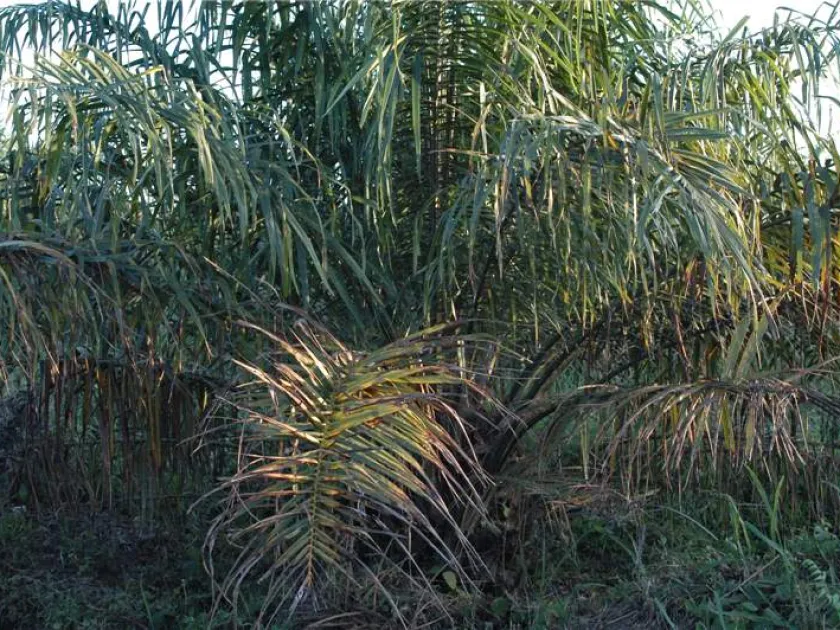
The primary symptom of this infection is known as coconut wilt or heart rot. Initial signs often involve a noticeable yellowing of the young leaves, which gradually lose their vibrant color and start to droop.
A hallmark of the disease is the mass shedding of immature fruit. Because the pathogen disrupts the vascular connection to the inflorescences, the tree is unable to provide the necessary nutrients for fruit development.
As the infection progresses, older leaves begin to wither and dry out. If the stem or leaf petioles are cut, one can often observe necrotic vascular bundles and a characteristic fluid containing the pathogen.
In the final stages, the apical bud or the growing point of the palm begins to rot. Once the meristem is destroyed, the tree loses its capacity for growth and eventually dies.
- Yellowing and premature wilting of foliage
- Abnormal shedding of immature nuts
- Necrosis of internal vascular bundles
- Rotting of the apical growing point
Pathogen
Phytomonas staheli is a unique plant pathogen classified as a flagellated protozoan (trypanosomatid). Unlike most plant diseases caused by fungi or bacteria, this pathogen inhabits the phloem (vascular tissue) of the host plant, disrupting its internal nutrient transport system.
The life cycle of this organism is strictly dependent on insect vectors, primarily specific types of lace bugs. The pathogen resides in the salivary glands of the insect and is transmitted to the plant during feeding.
Once inside the plant, the protozoa multiply rapidly within the sieve tubes. This colonization leads to the blockage of nutrient flow, causing systemic physiological stress throughout the entire host.
Scientific research identifies Phytomonas staheli as an obligate parasite. Because it is highly adapted to the internal environment of a plant, it cannot be easily cultivated in standard laboratory media without complex plant-based additives.
The pathogen's ability to survive within the insect vector for extended periods allows for its efficient transmission across large agricultural areas during the insect's active season.
Conditions for development
The spread of Phytomonas staheli is closely linked to the population density and activity of its insect vectors. Warm, humid tropical climates provide optimal conditions for the survival and rapid multiplication of these insects.
High-density plantations create a perfect environment for the pathogen, as the close proximity of trees allows insects to migrate and infect new hosts with minimal effort.
Agricultural practices that promote succulent vegetative growth, such as heavy nitrogen fertilization, can make plants more attractive to vectors, thereby increasing the likelihood of pathogen transmission.
The presence of abandoned or dead trees within or near the plantation provides a continuous reservoir of infection, ensuring that the vectors remain contaminated with the pathogen.
Environmental factors that trigger seasonal spikes in insect activity correlate directly with increased outbreaks of the disease, making monitoring during these periods essential.
Why it matters
Phytomonas staheli poses a significant threat to the agricultural economy, particularly in tropical regions where coconut production is a primary industry. Entire plantations can be decimated by the disease.
The main economic damage stems from the total cessation of fruit production and the subsequent loss of the trees. Once a tree is symptomatic, recovery is typically not possible, leading to a 100% loss for that individual unit.
The costs associated with managing the disease are high, as they involve labor-intensive surveillance, diagnostic testing, and the disposal of infected material, all while maintaining biosecurity.
Beyond individual farm losses, the presence of the pathogen often triggers international trade restrictions on agricultural products to prevent further geographic spread.
The long incubation period of the pathogen often hides the extent of the infection, meaning that by the time the first symptoms appear, a significant number of surrounding plants may already be colonized.
Protection
The most effective strategy for disease management is the systematic culling and destruction of infected trees. Removing the reservoir of the pathogen is critical to preventing further spread.
Implementing a strict insect control program using targeted insecticides can help reduce the population of vectors, though this requires consistent application and environmental monitoring.
Breeding and planting resistant or tolerant coconut palm varieties is considered the most sustainable long-term approach for managing this phytopathogenic threat.
Quarantine and strict movement control of nursery seedlings are essential to prevent the introduction of Phytomonas staheli into non-endemic, healthy agricultural zones.
Early detection using molecular diagnostic tools, such as PCR, allows for the identification of the pathogen before external symptoms develop, facilitating more proactive management of the plantation.
Discussion
No discussions yet — be the first.