
Physarum polycephalum
Physarum polycephalum
Description
Symptoms
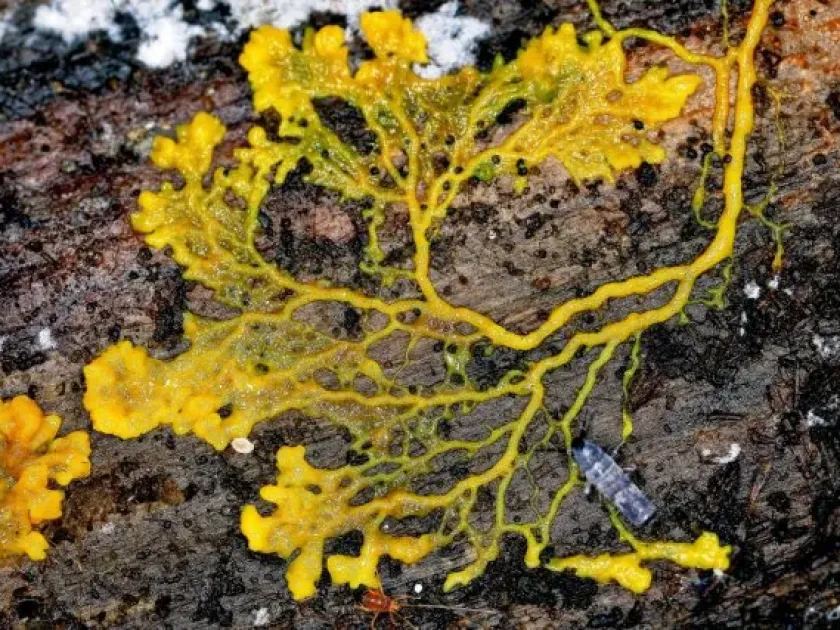
Physarum polycephalum is not a true plant pathogen, but it often appears as a noticeable yellow or orange slime-like network on soil or mulch.
The organism moves across surfaces, leaving behind a branching, vein-like pattern that can be quite extensive in humid environments.
In drier conditions, the plasmodium converts into fruiting bodies, appearing as small, dusty, grey or brown structures on the surface.
The presence of this organism is often a visual indicator of excessive moisture or decaying organic matter within the growing area.
While it does not feed on living plant tissue, the mat-like slime can cover small seedlings, potentially obstructing their growth.
Pathogen
Physarum polycephalum is a species of slime mold, classified biologically as a myxomycete, which is distinct from the kingdom Fungi.
It exists as a single-celled multinucleate organism, capable of amoeboid movement to actively hunt for food sources.
The organism feeds primarily on bacteria, fungal spores, and small organic particles by surrounding and digesting them.
Its life cycle involves transition between the active vegetative plasmodium stage and the dormant spore-producing stage.
It is strictly saprotrophic, meaning it only consumes dead or decaying organic matter and does not cause parasitic diseases in plants.
Conditions for development
High humidity and poor aeration are the primary conditions required for the development and spread of Physarum polycephalum.
Temperatures ranging from +20°C to +25°C are optimal for the rapid growth and movement of the organism across substrates.
Presence of abundant organic litter, such as mulch, wood chips, or uncomposted manure, serves as a nutrient-rich habitat for the slime mold.
Poorly drained soils or substrates that remain saturated for long periods provide the necessary environment for its vegetative stage.
Low light levels, typical of dense plant canopies or shaded greenhouse corners, allow the organism to thrive without the desiccation caused by sunlight.
Why it matters
Direct damage to healthy plants is minimal, but the organism can interfere with soil gas exchange, affecting root health in sensitive crops.
It may unintentionally transport pathogens like fungal spores on its surface, potentially spreading diseases within a greenhouse setting.
The aesthetic impact of yellow slime on crops or potting mix can reduce the marketability of ornamental plants and seedlings.
Over-reliance on the damp conditions that favor Physarum can lead to secondary problems like root rot or damping-off caused by other pathogens.
Although not a primary killer of plants, it serves as a bio-indicator of poor management practices regarding irrigation and site hygiene.
Protection
The most effective strategy is the optimization of irrigation and the improvement of soil drainage to reduce water saturation.
Increasing air circulation through active ventilation helps dry out the soil surface, effectively discouraging the survival of the plasmodium.
Regular sanitation of the growing area to remove excess plant debris is crucial to depriving the organism of its food source.
Physical removal of the slime-covered topsoil or mulch is an easy and safe way to reduce the population without chemicals.
In cases of severe infestation, surfaces can be disinfected using mild copper-based solutions or horticultural sanitizers to alter the local environment.
Discussion
No discussions yet — be the first.