
Physarales
Physarales
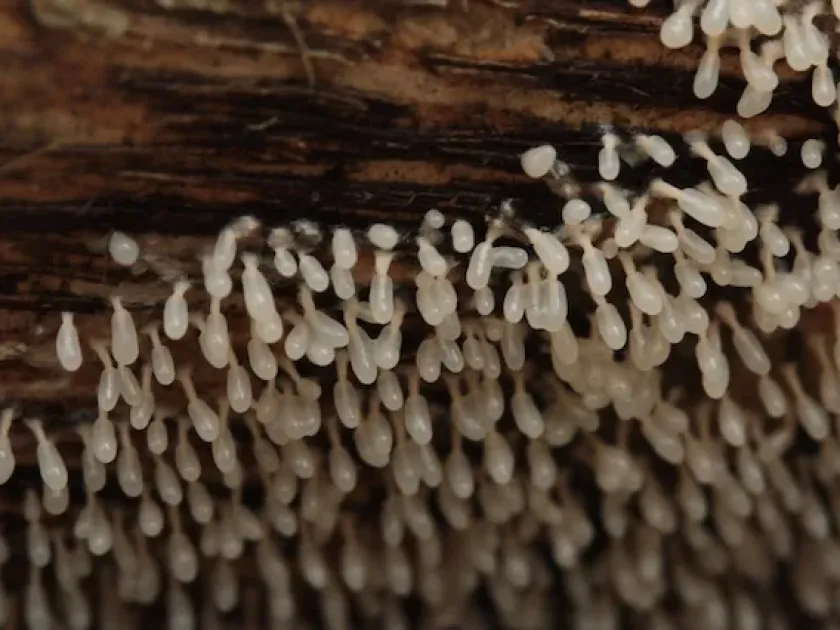
Description
Symptoms
A primary sign of Physarales slime mold infestation is the appearance of a characteristic growth on stems, leaves, or soil surfaces. These often manifest as small cushions or sporangia, typically yellow, orange, or white in color.
Slime molds frequently create a slimy, foam-like mass on plant surfaces, which eventually dries into a crust containing millions of spores.
It is important to note that the affected plant areas may appear stunted due to the mechanical covering of the leaf surface, which hampers normal photosynthetic activity.
At early stages, the pathogen appears as a translucent, gelatinous substance that spreads rapidly over moist organic debris or the lower parts of plant stems.
Unlike true fungal diseases, Physarales slime molds are not deep-tissue parasites and can often be removed mechanically without damaging the plant's structural integrity.
Pathogen
The causative agents are myxomycetes of the order Physarales. These organisms are unique in that they exhibit characteristics of both protozoa and fungi throughout their life cycle.
In the vegetative phase, they exist as plasmodium, a multi-nucleated cytoplasmic mass capable of amoeboid movement across a substrate.
Reproduction occurs via spores, which are formed in specialized structures called sporangia, often raised above the substrate on tiny stalks.
The biology of Physarales is closely tied to the presence of decaying organic matter, as these organisms act primarily as saprotrophs, feeding on bacteria and detritus.
While they are not pathogens in the traditional sense of invading host cells, their massive presence can be detrimental to agricultural crops and produce.
Conditions for development
The primary factor triggering the development of Physarales is high humidity and soil moisture, typically occurring during prolonged rainy seasons or excessive irrigation.
The optimal temperature for active plasmodium movement ranges from 15 to 25 degrees Celsius, which often aligns with the peak growth season of many crops.
The accumulation of rotting plant debris, mulch, or poor soil ventilation creates an ideal nutrient-rich substrate for colonization by these myxomycetes.
Dense crop stands lacking proper air circulation become high-risk areas because moisture lingers much longer in these enclosed microclimates.
Overhead irrigation during evening hours promotes foliage wetness, facilitating the spread of spores and the activation of plasmodia on the aerial parts of plants.
Why it matters
The main danger lies in the restriction of sunlight access to leaf surfaces, which leads to metabolic disruption and stunted growth in affected plants.
When stems are heavily covered by slime molds, the plants may experience an effect similar to suffocation, preventing gas exchange through the stomata and weakening the crop's immunity.
In ornamental and leafy green production, the presence of slime molds on marketable parts renders the produce unsalable due to the loss of aesthetic value.
Slime molds create a moist environment that encourages secondary infections, such as bacterial soft rots, as their slimy secretions serve as a substrate for other microbes.
Although Physarales do not feed directly on living host cells, their activity can cause physical damage to the epidermis, creating pathways for true pathogens to enter.
Protection
The most important preventive measure is to improve air circulation and drainage, which can be achieved through optimal planting spacing and timely weed control.
Avoid over-irrigation and stagnant water in the root zone, ensuring proper drainage systems are installed in fields or greenhouses.
Removing plant debris and maintaining high levels of garden hygiene significantly reduces colony counts by depriving the pathogen of its necessary food source.
- Use only well-composted organic material for mulching.
- Ventilate greenhouses regularly during the morning hours.
- Promptly remove and dispose of heavily infested plant parts.
- Apply copper-based fungicides if mass spreading is observed on sensitive crops.
Chemical control should be applied judiciously, as not all standard fungicides are effective against myxomycetes; mechanical cleaning and environmental management are usually sufficient.
Discussion
No discussions yet — be the first.