
Physaraceae slime molds
Physaraceae
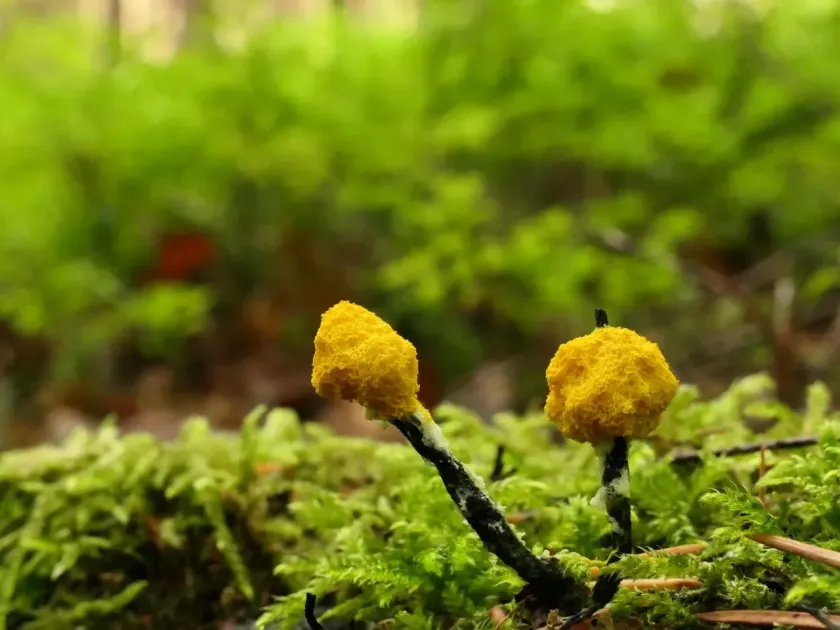
Description
Symptoms
The most common sign is the appearance of foamy, slimy, or crusty patches on plant stems, leaves, or mulch. Colors can range from white and yellow to orange or dark brown.
As the slime mold matures, it dries out and develops into fragile, powdery fruiting bodies called sporangia, which contain spores for dispersal.
These masses can grow rapidly overnight, often appearing as distinct patches that may cover large portions of an ornamental plant or a patch of lawn.
Although the plant tissues underneath are often healthy, the presence of the slime mold physically blocks sunlight, temporarily inhibiting photosynthesis.
During the early, mobile phase, the slime mold looks like a wet, jelly-like smear, which is highly recognizable in humid garden settings.
Pathogen
Physaraceae is a family of slime molds belonging to the class Myxomycetes. These organisms are fascinating biological entities that exhibit characteristics of both fungi and amoeboid protists.
Their life cycle includes a plasmodium stage, which is a mobile, multinucleated mass of cytoplasm capable of creeping across surfaces in search of nutrient-rich spots.
In the agricultural context, they are not true parasites, as they feed primarily on organic decay, bacteria, and fungal spores rather than directly attacking plant cells.
However, they use stems, leaves, and soil surfaces as a substrate to produce their fruiting bodies, which can be visually alarming for growers.
These organisms are most commonly observed in moist environments, particularly where organic matter is decomposing on the soil surface.
Conditions for development
High humidity and moisture are the primary drivers for slime mold development. Frequent rains or excessive irrigation create the perfect conditions for the plasmodium to move and thrive.
Temperature plays a significant role, with the most active growth occurring between 15°C and 25°C (60°F - 77°F) during periods of high ambient moisture.
Crowded plantings that prevent air circulation create a microclimate that remains moist for long periods, encouraging the colonization of plant surfaces.
Areas with poor drainage or heavy mulch layers provide an abundance of organic matter, which serves as a food source for these organisms.
Lack of direct sunlight in shaded areas allows moisture to persist on the foliage, making such spots particularly prone to slime mold outbreaks.
Why it matters
While slime molds do not directly extract sap or kill plant cells, their presence can be aesthetically damaging to high-value ornamental crops and turfgrass.
By covering the leaf surface, they interfere with gas exchange and light absorption, which can weaken the plant and stress it over time.
The moist, nutrient-rich environment created by the slime mold acts as a breeding ground for opportunistic bacteria and pathogenic fungi that can subsequently infect the plant.
In turf management, severe infestations can lead to local turf thinning or die-back due to suffocation under the thick slime layers, requiring reseeding or renovation.
Economic damage is largely related to reduced commercial value, increased labor for cleaning, and the need for corrective measures to manage the environment.
Protection
The most effective management strategy is to reduce moisture. Adjusting irrigation schedules to allow foliage to dry out completely is crucial for controlling outbreaks.
Physical removal is highly effective; in the early stages, simply washing the slime off with a strong stream of water or scraping it away is often sufficient.
Improving air circulation through pruning or spacing plants further apart helps minimize the microclimate conditions that favor slime mold growth.
Regular sanitation, such as removing excess mulch, dead leaves, and decaying organic matter, removes the food source that these organisms rely on.
Fungicides are rarely necessary and often ineffective against slime molds; focus instead on maintaining good overall plant health and ensuring proper environmental management of the garden.
Discussion
No discussions yet — be the first.