
Black rot of apple
Physalospora malorum
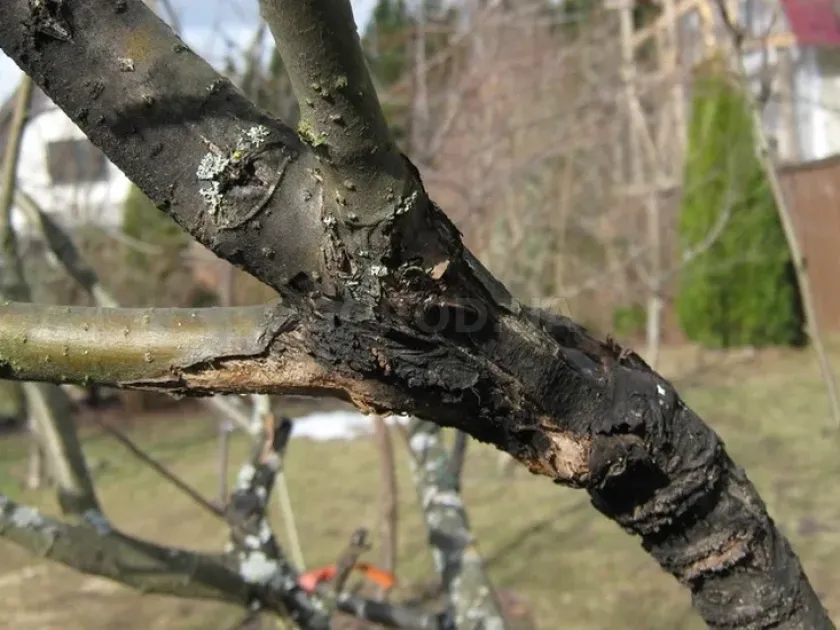
Description
Symptoms
On bark, symptoms appear as sunken, reddish-brown lesions that eventually turn black. The bark cracks and peels off, revealing the dead wood underneath, which looks charred.
Leaf symptoms appear as small, circular spots with purple margins. These spots enlarge, causing the leaves to turn brown, curl, and drop prematurely, leading to reduced tree vigor.
Fruits show signs of rot starting as small brown spots that expand rapidly. A key feature is the formation of concentric circles of black fruiting bodies (pycnidia) on the fruit surface.
In severe cases, the entire branch or trunk can be girdled by the disease. This leads to the total loss of the branch above the infection point, giving the tree a stunted and dying appearance.
Flower infections can also occur, leading to blossom blight and a total failure of the tree to produce fruit in the affected area.
Pathogen
The causal agent of black rot is the fungus Physalospora malorum (anamorph: Sphaeropsis malorum). This pathogen affects bark, leaves, fruits, and flowers of apple trees, pears, and occasionally stone fruits.
The fungus survives the winter in infected tissues, cankers, and mummified fruits. As spring arrives, spores are released and dispersed by wind, rain, and insects, infecting trees through wounds or natural openings.
The pathogen colonizes the woody tissues, disrupting the vascular system and preventing nutrient transport. Over time, this leads to the weakening and eventual death of the affected plant parts.
The fungus prefers weakened trees but can infect healthy ones if environmental conditions are favorable. It is a persistent disease that requires continuous management to keep the orchard healthy.
Biology of the fungus involves both sexual and asexual stages, ensuring that the pathogen remains viable in the orchard environment for many years if not strictly controlled.
Conditions for development
Warm and humid weather conditions are ideal for the development and spread of Physalospora malorum. Rain is a primary driver for the dispersal of spores throughout the tree canopy.
Trees stressed by drought, poor soil fertility, or inadequate maintenance are highly susceptible. The lack of proper pruning and canopy thinning creates a favorable microclimate for the fungus.
Mechanical injuries, such as those caused by hail, pruning tools, or harvesting, provide easy entry points for the fungus to establish an infection in the tree's vascular system.
Sunscald and frost damage on the trunk are frequent sites for initial infection. Once the bark is compromised by temperature stress, it becomes a perfect gateway for the pathogen.
Poor orchard sanitation, including the presence of old, decaying branches and fallen fruit, creates a reservoir for spores that will infect healthy trees in the following season.
Why it matters
Black rot is considered one of the most destructive diseases in apple orchards. If left unchecked, it can lead to the death of mature trees within a few growing seasons.
Yield loss is significant due to fruit rotting and tree defoliation. Affected fruits cannot be marketed or stored, resulting in substantial financial losses for growers.
The cumulative damage to the vascular system reduces the overall productivity and longevity of the apple trees, making the entire orchard less profitable over time.
Broken branches and weakened trunks caused by the disease pose a safety risk in the orchard and require expensive removal of affected trees.
Managing the disease requires frequent application of fungicides, pruning labor, and orchard sanitation, all of which add to the production costs for the grower.
Protection
Effective control starts with strict sanitation: pruning out all infected branches and removing mummified fruits. It is vital to disinfect tools after every cut to prevent cross-contamination.
Regular fungicide applications, especially copper-based sprays during the green tip and bloom stages, are essential for protecting the trees from new infections.
Maintaining tree health through proper fertilization and irrigation helps the trees build natural defenses. Keeping the trees in a vigorous state makes them more resistant to the fungus.
Protecting the bark from sunscald by using white latex paint or tree wraps on the trunk is a crucial preventative measure in many climates.
- Sanitary pruning of dead or diseased wood.
- Regular application of copper-based fungicides.
- Proper disposal of all infected plant debris.
- Whitewashing trunks to prevent sunscald.
- Monitoring the orchard for early signs of lesions.
Discussion
No discussions yet — be the first.