
Phyllosticta leaf spot
Phyllosticta hydrangeae
Description
Symptoms
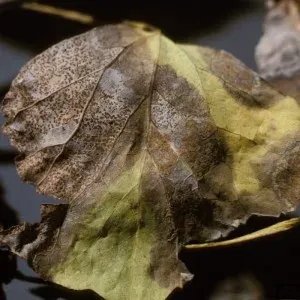
The initial symptoms include the appearance of small, circular or irregular spots scattered across the hydrangea leaves.
These spots typically display a light gray or tan center, which is clearly demarcated by a dark reddish-brown or purple margin.
As the disease advances, small black dots representing the fungal pycnidia become visible within the dead center of the lesions.
In cases of severe infestation, individual spots often merge into larger necrotic patches that can cover substantial parts of the leaf.
Eventually, the affected foliage begins to curl, turn brown, and fall prematurely, causing significant defoliation of the shrub.
Pathogen
The disease is caused by the fungus Phyllosticta hydrangeae, a pathogen frequently found in gardens and greenhouses.
This fungus is classified within the group of Coelomycetes and specializes in infecting the foliage of various hydrangea species.
The primary structures produced by the fungus are pycnidia, which appear as tiny, dark, speck-like fruiting bodies embedded in the leaf tissue.
The pathogen survives the dormant season as mycelium or as pycnidia within fallen, infected leaves that remain on the ground.
In the spring, these pycnidia release spores that are splashed onto healthy leaves by rain or irrigation, starting a new infection cycle.
Conditions for development
High humidity and consistent rainfall are the primary environmental drivers for the rapid development of Phyllosticta leaf spot.
Warm temperatures ranging between 20°C and 25°C provide the optimal conditions for spore germination and mycelial growth.
Overcrowded plantings that lack adequate airflow create a stagnant microclimate, which significantly accelerates the spread of the fungus.
Overhead irrigation, especially during the evening, keeps foliage wet for extended periods, favoring the entry of fungal spores into tissues.
Plants under stress from improper nutrient management or inadequate sunlight are more susceptible to becoming infected by the fungus.
Why it matters
The primary impact of the disease is the degradation of the hydrangea's aesthetic value, which ruins its use in landscape displays.
Damage to the leaf surface inhibits the plant's ability to perform photosynthesis efficiently, causing overall growth and vigor to decline.
Heavy infection leads to stress, making the hydrangea more vulnerable to winter injury and other opportunistic pests and diseases.
Defoliation reduces the plant's stored energy reserves, which can lead to reduced flower production in the following growing season.
If left unmanaged, the pathogen can persist in the local area, creating an ongoing cycle of infection that persists year after year.
Protection
Sanitation is the most crucial control measure; all fallen leaves must be collected and disposed of away from the planting site.
Providing sufficient spacing between bushes is essential to promote better air circulation and allow foliage to dry quickly after rain.
Protective fungicide sprays, particularly those containing copper or systemic active ingredients, can prevent further disease progression.
Proper irrigation practices, such as watering at the base of the plant rather than overhead, effectively reduce the risk of spore transmission.
- Monitor plants closely during periods of wet, warm weather.
- Ensure balanced fertilization to boost the plant's natural immunity.
- Prune out heavily infected branches to reduce the inoculum load.
Discussion
No discussions yet — be the first.