
Phyllactinia guttata
Phyllactinia guttata
Description
Symptoms
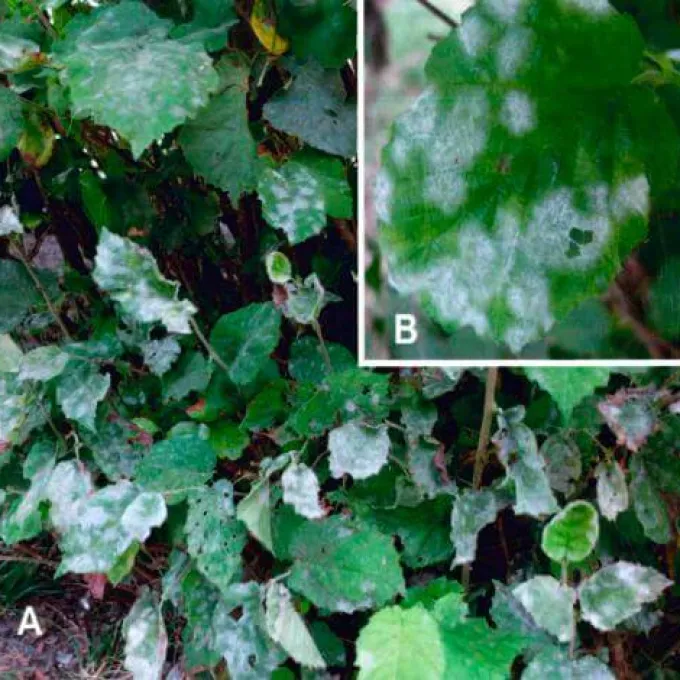
The earliest signs include the appearance of a thin, white, or grayish mycelial mat on the underside of the leaves. Over time, the fungus spreads, and the mycelium becomes denser, covering larger portions of the leaf surface.
Chlorotic spots develop where the fungus extracts nutrients, which eventually turn into necrotic lesions. The leaves may become deformed, curled, or scorched, and in cases of severe infection, they may fall prematurely.
As the season progresses, tiny specks appear within the mycelial mat. These are the developing cleistothecia, which transition from yellow-brown to deep black upon maturity. They are visible to the naked eye as distinct dots scattered across the leaf surface.
Young shoots and petioles can also be colonized by the fungus, leading to stunted growth and twisting. Such infections can interfere with the plant's ability to develop healthy terminal buds for the next growing season.
In humid conditions, the mildew growth can appear almost velvety. On highly susceptible hosts, the combination of necrotic spotting and mycelial growth creates a mosaic-like appearance that characterizes the late stages of infection.
Pathogen
Phyllactinia guttata is a fungus belonging to the order Erysiphales, specifically known as a powdery mildew pathogen. Unlike many other mildews, it is an obligate biotroph that relies strictly on the living tissues of its host plants to complete its life cycle.
The life cycle involves asexual reproduction through conidia during the growing season, facilitating rapid secondary infections. By late summer and autumn, the fungus develops sexual fruiting bodies called cleistothecia, which serve as the overwintering stage.
The cleistothecia of Phyllactinia guttata are morphologically distinct due to the presence of bulbous appendages at their base. These structures are specifically adapted for attachment to the host plant surfaces, allowing them to remain on fallen leaves throughout winter.
The host range of this pathogen is quite broad, affecting numerous deciduous trees and shrubs, including hazelnut (Corylus), birch, oak, alder, and ash. It demonstrates significant ecological versatility across different temperate forest ecosystems.
The mycelium grows primarily on the abaxial (underside) surface of the leaves, which is a characteristic feature of this species. This habit allows the fungus to remain hidden from casual observation until symptoms become severe or fruiting bodies appear.
Conditions for development
The pathogen thrives in conditions of moderate temperatures and high humidity, typical of late summer and early autumn. The presence of dew or high atmospheric moisture is essential for the germination of its spores.
Plantations with high density or poor canopy ventilation are particularly prone to outbreaks. When air circulation is restricted, moisture persists on the foliage, creating a perfect microclimate for the colonization of Phyllactinia guttata.
Shaded areas within forests or gardens provide a more stable environment for the fungus, as the leaves remain damp for longer periods compared to areas in direct, intense sunlight. These locations often become the initial centers of infection.
Plant stress, caused by poor soil fertility, drought, or prior pest damage, increases susceptibility to powdery mildew. Healthy, vigorous plants generally exhibit higher resistance to the initial stages of colonization.
Persistent rainfall in late summer promotes the maturation of sexual spores within the cleistothecia. These spores are highly resistant and enable the pathogen to survive harsh winters, ensuring a resurgence in the following year.
Why it matters
The most significant impact of Phyllactinia guttata is the premature defoliation of the host plant. By shedding leaves early, the tree loses its capacity for photosynthesis during a critical period, resulting in reduced nutrient storage for winter.
For fruit-bearing species like hazelnut, this disease can lead to a decrease in nut quality and overall yield. Sustained infections drain the plant's resources, causing the fruits to be smaller and less developed.
Chronic infestation weakens the structural integrity and long-term vitality of the host. Trees that suffer from repeated annual infections become significantly more prone to secondary attacks by wood-boring insects and other opportunistic pathogens.
Young plants or nursery stock are at a higher risk of being killed by the infection. If they fail to mature their wood properly before the first frost, they become highly vulnerable to cold damage during winter.
In ornamental landscaping, the disease reduces the aesthetic value of trees and shrubs. The unsightly appearance of necrotic leaves and white fungal growth necessitates expensive intervention or the replacement of affected plants.
Protection
Sanitation is the most critical management practice for Phyllactinia guttata. Because the fungus overwinters in fallen leaves, gathering and disposing of this organic debris significantly reduces the amount of primary inoculum for the next season.
Improving cultural practices, such as pruning to open the crown, is essential. Increased airflow and light penetration help the foliage dry quickly after rain, which drastically inhibits the ability of fungal spores to germinate and colonize.
Fungicidal treatments may be necessary in nurseries or high-value orchards. Applications should be timed when symptoms first appear and may include sulfur-based products, copper compounds, or systemic fungicides from the triazole or strobilurin classes.
Maintaining a balanced fertilization program is crucial. Over-application of nitrogen encourages rapid, succulent growth that is highly susceptible to mildew, so it is important to provide adequate potassium and phosphorus for cell wall strength.
Regular monitoring of plants throughout the growing season allows for early detection. Timely intervention prevents the development of the sexual stage (cleistothecia), thereby limiting the potential for a severe outbreak the following year.
Discussion
No discussions yet — be the first.