
Phyllachora leaf spot
Phyllachoraceae
Description
Symptoms
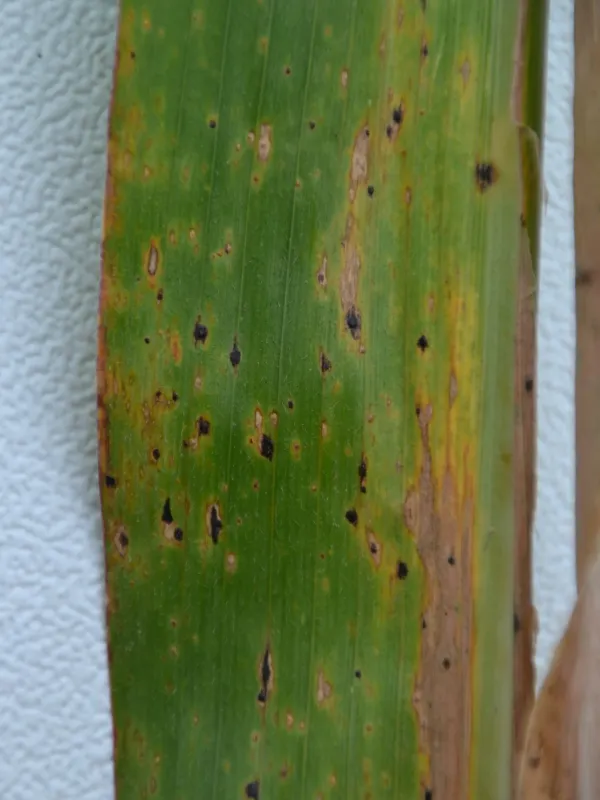
The primary symptom of the disease is the appearance of distinct, black, glossy spots on the leaves, which are typically circular or elongated in shape.
These spots are hard, raised, and firmly attached to the leaf surface, representing the fungal stromata, and they cannot be easily rubbed off by hand.
Chlorotic or yellowing halos often appear around the black spots as a result of the host plant's physiological stress and reaction to the fungal infection.
In cases of severe infestation, the spots may coalesce, covering large areas of the leaf blade, which leads to premature yellowing and necrosis of the leaf tissue.
On stems and leaf sheaths, the infection appears as dark streaks or irregular patches that compromise the structural integrity of the plant tissue.
Pathogen
Phyllachora leaf spot is caused by fungi belonging to the family Phyllachoraceae, with Phyllachora graminis being one of the most frequently identified species causing significant damage to grasses.
These fungi are obligate parasites that complete their life cycle within the host plant tissues. They produce characteristic black, shiny, and raised structures known as stromata on the leaf surface.
Within these stromata, the fungus develops perithecia—flask-shaped fruiting bodies—where asci containing ascospores are formed for reproduction and dispersal.
The mycelium of the pathogen penetrates deep into the intercellular spaces of the leaf, extracting nutrients from the host and causing significant metabolic disturbances.
The fungus survives during the winter period on infected plant debris, ensuring that a source of primary inoculum is available for the next growing season.
Conditions for development
The disease thrives under conditions of high humidity, frequent rain, and prolonged leaf wetness, which are critical for the germination of ascospores.
Moderate temperatures ranging from 18°C to 25°C are ideal for the rapid colonization of plant tissues and the development of reproductive structures.
Dense planting patterns that limit air circulation create a microclimate favorable for fungal proliferation and sustained infection cycles within the crop.
Field conditions with significant amounts of plant residue from previous harvests serve as the primary reservoir for the pathogen to spread to new seedlings.
Poor drainage in fields and heavy dew accumulation further contribute to the spread of the disease during the active growing season of the host plants.
Why it matters
Phyllachora leaf spot significantly reduces the green, photosynthetic surface area of the leaves, directly leading to a decrease in overall crop biomass production.
The impaired photosynthetic capacity causes a reduction in grain filling, ultimately leading to lower yields and a decrease in the quality of the harvested products.
For forage crops, the nutritional value of the foliage is compromised, which can impact the health and performance of livestock that consume the affected material.
Infected plants exhibit increased susceptibility to other biotic and abiotic stresses, as the disease weakens the plant's natural defense mechanisms.
Economic losses arise not only from the decline in total yield but also from the reduced marketability and quality grades of the harvested crops.
Protection
Proper field sanitation, including the deep burial or removal of crop residues, is a primary method to eliminate overwintering sources of the fungus.
Implementing effective crop rotation cycles prevents the buildup of the pathogen in the soil and interrupts the infection cycle for susceptible host species.
The application of preventive fungicides during periods of high humidity and critical plant growth stages can effectively control the spread of the disease.
Selecting and planting resistant or tolerant crop varieties is the most sustainable and efficient strategy for managing Phyllachora leaf spot in commercial agriculture.
- Ensuring optimal spacing to facilitate good airflow within the canopy.
- Managing irrigation systems to avoid prolonged periods of leaf wetness.
- Maintaining balanced soil nutrition to enhance plant vigor and resistance.
Discussion
No discussions yet — be the first.