
Phloeosporella leaf spot
Phloeosporella
Description
Symptoms
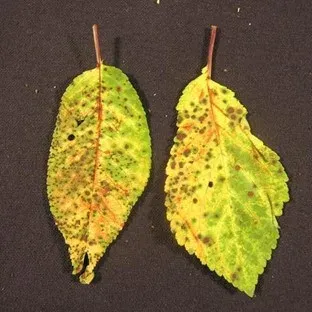
Initial symptoms typically appear in early summer as tiny, reddish-brown or purple spots scattered across the upper surface of the leaves. These spots are the hallmark of the disease.
As the infection progresses, the spots enlarge and can merge, causing significant leaf tissue death. On the underside of the leaves, white or cream-colored masses of spores appear within the lesions.
Severe infection leads to yellowing of the leaves, followed by premature defoliation. In some cases, trees may lose nearly all their foliage by mid-summer, severely stressing the plant.
Affected fruit stems may also show necrosis, causing the fruit to wither, shrivel, or drop prematurely. The quality of any remaining fruit is usually drastically reduced.
In chronic cases, or on highly susceptible varieties, small cankers may develop on young twigs, although this is less common than the foliar symptoms.
Pathogen
The disease is caused by fungi belonging to the genus Phloeosporella, with Phloeosporella padi being the most prevalent species. This pathogen is a significant threat to various stone fruit species, affecting their foliage and productivity.
The pathogen overwinters primarily as mycelium within infected leaf debris on the orchard floor. As temperatures rise in spring, the fungus develops conidia that serve as the primary source of infection.
The conidia are disseminated primarily through water splashes during rainfall and, to a lesser extent, via wind currents. Once they land on susceptible leaves, the spores germinate and penetrate the tissue through stomata.
The fungus produces multiple generations of spores throughout the growing season, allowing the disease to spread rapidly if environmental conditions are favorable.
Microscopic examination of the white, waxy pads on the undersides of the leaves confirms the presence of the pathogen’s conidial sporulation, which is essential for accurate diagnosis.
Conditions for development
The development of Phloeosporella is highly dependent on environmental moisture. Frequent rainfall, high humidity, and moderate temperatures are the primary drivers of disease outbreaks.
The optimal temperature for fungal growth and sporulation is between 18°C and 22°C. Periods of prolonged leaf wetness allow the pathogen to successfully colonize the host tissues.
Poor orchard ventilation due to high planting density or improper pruning creates a microclimate that retains moisture, significantly increasing the risk of infection.
Orchards that do not implement sanitary practices, such as removing fallen leaves, provide a continuous source of inoculum, leading to recurring disease cycles each year.
The disease tends to be more severe in rainy seasons and can reach epidemic levels if early-season protective measures are omitted by the grower.
Why it matters
The primary economic impact is caused by premature defoliation, which severely limits the tree's ability to photosynthesize. This leads to a lack of carbohydrate reserves for winter survival.
Reduced winter hardiness is a major consequence, often leading to significant dieback or death of trees during cold winters. This forces orchardists to replant earlier than expected.
The fruit yield suffers both in terms of quantity and quality. Small, misshapen, or shriveled fruit significantly reduces the commercial value of the harvest.
Long-term weakening of the trees makes them more susceptible to other biotic and abiotic stresses, reducing the overall lifespan and productivity of the orchard.
Increased reliance on chemical control methods to manage the disease raises production costs and complicates integrated pest management strategies.
Protection
Sanitation is the cornerstone of control. Raking and destroying fallen leaves during late autumn or winter is essential to eliminate the primary overwintering sites of the pathogen.
Pruning trees to open up the canopy improves air circulation and sunlight penetration, which helps foliage dry faster and reduces the duration of leaf wetness needed for fungal infection.
Chemical control programs involving the use of fungicides are typically applied starting before bloom and continuing through the growing season as needed.
- Application of copper-based fungicides during the dormant season.
- Use of systemic fungicides to prevent and curb active infections.
- Regular monitoring of foliage for the first signs of spots.
Selecting and planting resistant cultivars remains the most sustainable approach to managing the disease and reducing the need for intensive chemical applications.
Discussion
No discussions yet — be the first.