
Phaeoseptoria leaf spot of eucalyptus
Phaeoseptoria eucalypti
Description
Symptoms
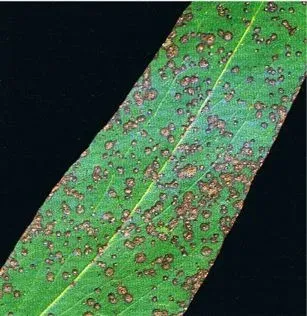
Initial symptoms include the appearance of small, irregular chlorotic spots on the leaves. Over time, these spots expand and turn brown or dark grey, often with a darker margin.
The presence of pycnidia is a definitive sign of Phaeoseptoria eucalypti. These appear as minute, black, pimple-like structures scattered across the surface of the necrotic leaf spots.
Severe infections lead to chlorosis followed by premature abscission of the leaves. Large portions of the canopy can be affected, giving the tree a sparse and unhealthy appearance.
On young shoots, the infection may manifest as lesions that can cause the stem to girdle, leading to tip dieback and growth stunting in saplings.
Symptoms are typically most pronounced following periods of high moisture, as the fungus actively reproduces and spreads across the leaf surface during these times.
Pathogen
The disease is caused by the fungus Phaeoseptoria eucalypti, a coelomycetous pathogen that specifically targets eucalyptus species. It is recognized as a significant foliar pathogen in various regions where eucalyptus is grown.
The pathogen completes its life cycle by forming pycnidia on the necrotic leaf tissues. These structures produce conidia that serve as the primary inoculum for spreading the infection.
Dissemination of the spores occurs primarily through rain splash and wind currents. The conidia land on healthy leaf surfaces and initiate infection under suitable humidity conditions.
The fungus survives during unfavorable periods by persisting in fallen leaves and infected twigs on the tree. This ensures the pathogen is present at the start of the next growing season.
Host specificity is a key feature of this fungus, meaning it is highly adapted to the physiological characteristics of eucalyptus trees, allowing it to colonize host tissues efficiently.
Conditions for development
High relative humidity and frequent rainfall are the most critical factors for the development of the disease. Water films on leaf surfaces are essential for spore germination.
Temperatures ranging from 18°C to 25°C provide the optimal metabolic environment for the fungus to thrive and colonize host tissues rapidly.
Poor air circulation within dense plantations prevents foliage from drying out quickly, which significantly increases the risk of infection spread between individual trees.
Environmental stress, such as nutrient deficiency or damage from other pests, weakens the plant’s defenses and makes it more susceptible to pathogen colonization.
Large quantities of leaf litter left around the base of the trees serve as a constant source of inoculum, fueling recurring outbreaks of the disease.
Why it matters
The primary impact of the disease is the loss of photosynthetic area due to leaf necrosis and early leaf fall. This directly correlates with reduced biomass production and slower growth rates.
In nurseries, the pathogen can cause significant mortality among seedlings, leading to high economic losses for producers and plantation managers.
Continued stress from the disease makes the trees more vulnerable to secondary pathogens and abiotic stressors, potentially leading to long-term decline.
For ornamental or urban eucalyptus plantings, the aesthetic value is severely compromised, rendering the trees unsuitable for landscaping purposes.
Failure to control the spread in young plantations can lead to uniform infection across a site, which complicates management and necessitates costly mitigation strategies.
Protection
The cornerstone of management is sanitation. Regularly removing and destroying fallen leaf litter reduces the amount of primary inoculum available for infection.
In nursery settings, spacing seedlings appropriately to ensure good airflow and reducing overhead irrigation can help keep foliage dry and inhibit fungal growth.
Chemical control involving fungicides may be necessary during periods of high disease pressure. Copper-based compounds are often effective as a preventative measure.
- Implement regular scouting to detect initial symptoms.
- Prune and remove heavily infected branches to limit pathogen spread.
- Maintain tree vigor through proper fertilization and watering practices.
Selecting and breeding eucalyptus cultivars with inherent resistance or tolerance to Phaeoseptoria eucalypti is the most effective long-term strategy for disease management.
Discussion
No discussions yet — be the first.