
Phaeolus schweinitzii
Phaeolus
Description
Symptoms
Early symptoms are often subtle and difficult to detect. Infected trees may show a decline in growth, sparse foliage, and chlorosis (yellowing of needles) as the compromised root system becomes unable to supply sufficient water and nutrients.
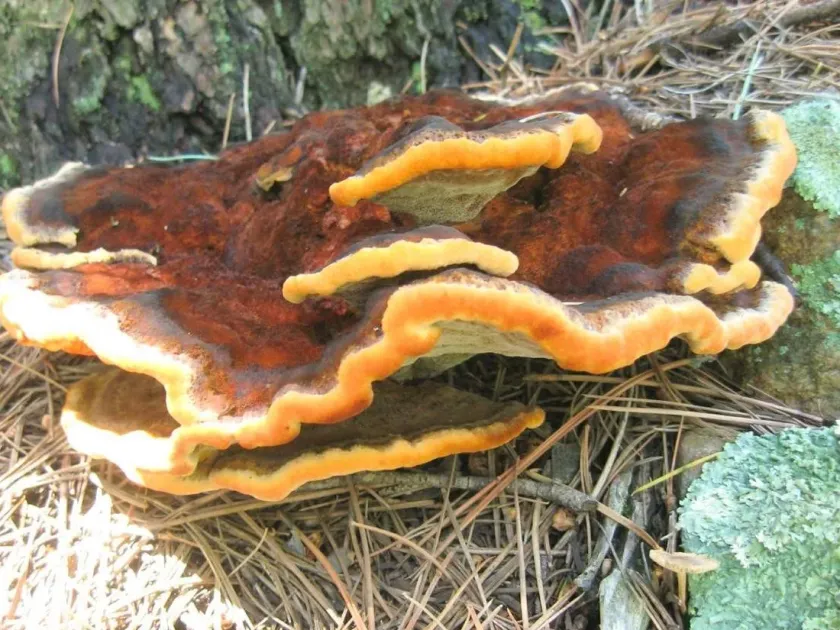
The most visible indicator of a severe infection is the presence of fruiting bodies around the base of the trunk. These brackets are often stalked, funnel-shaped, and display a rusty-brown color as they age.
Inside the tree, the wood undergoes a transformation: it becomes brittle, turns a dark brown color, and breaks into cubical segments. In advanced stages of decay, hollow areas filled with white fungal mycelium may develop within the butt section.
Heavy resin flow (resinosis) at the base of the trunk is a common reaction of the tree to the invading pathogen, though it is rarely sufficient to stop the progression of the decay.
Windthrow is a frequent sign of a long-standing infection. Because the roots have been decimated by the fungus, the tree loses its anchorage in the soil and can topple even during moderate wind events.
Pathogen
The causative agent of the disease is the wood-decay fungus Phaeolus schweinitzii, classified as a Basidiomycete. It is a notorious root and butt rot pathogen that primarily targets coniferous trees, including pines, spruces, and larches.
The fungus produces large, distinctive fruiting bodies, often called "velvet top fungus," which emerge near the base of the tree or directly from roots. These structures are typically annual and exhibit a yellow-brown to dark brown velvety texture.
The fungus invades the tree through wounds in the roots or the lower stem. Once established, it causes a progressive brown cubical rot, breaking down cellulose and leaving behind brittle lignin, which eventually compromises the entire structural integrity of the root system.
Phaeolus schweinitzii is known to persist for many years in stumps and root remnants within the soil. It spreads vegetatively via root contact between adjacent trees, creating expanding disease centers in forest stands.
In addition to vegetative spread, the fungus produces spores (basidiospores) that are carried by the wind. These spores can colonize fresh wounds on trees, leading to the establishment of new infection sites across the forest landscape.
Conditions for development
The fungus thrives in environments with high soil moisture, as these conditions favor spore germination and mycelial spread. Poorly drained sites are particularly susceptible to the development of disease centers.
Mechanical injuries are a major contributing factor to infection. Any damage caused by forestry equipment, animal grazing, or human activity creates an entry point for the fungal spores to colonize the wood.
Stand age is a critical variable, as older trees are generally more susceptible to root rot. Trees that have reached the age of 30–40 years provide a larger root volume for the fungus to colonize and exploit.
Optimal temperatures for the development of the fungal mycelium and fruiting body formation typically occur in late summer and autumn when moisture levels are sufficient for metabolic activity.
Soils that harbor decaying organic matter or old stumps provide a reservoir for the pathogen. In such areas, the fungus can survive for decades, posing a risk to any new trees planted nearby.
Why it matters
The primary impact of Phaeolus schweinitzii is tree mortality. As the root system is destroyed, the tree loses its vitality, growth stalls, and it eventually dies, resulting in canopy gaps and loss of biomass.
Economically, the fungus is devastating to the timber industry. The butt rot can extend several meters up the trunk, rendering a large portion of the most valuable, high-quality timber useless for lumber production.
In urban and recreational settings, infected trees represent a serious safety hazard. The risk of sudden failure and collapse poses a threat to public property, infrastructure, and personal safety.
The disease can significantly complicate forest management, as it forces the early harvest of stands that were intended for longer rotations, leading to significant financial losses for forest owners.
In forest nurseries, the fungus can infect young seedlings through contact with infested soil or wood debris, causing high mortality rates and forcing the abandonment or sterilization of infested nursery beds.
Protection
Effective control requires rigorous sanitation practices. This includes the removal of stumps and all affected root systems from the site during harvesting to eliminate the fungal reservoir for subsequent plantings.
Minimizing mechanical injury to remaining trees during thinning and other silvicultural operations is essential to prevent the spread of the pathogen through fresh wounds.
In areas known to be infested, planting species with higher resistance to Phaeolus or promoting mixed-species stands can help reduce the impact and rate of spread within the forest.
Regular monitoring for fruiting bodies is crucial for early detection. Once an infection center is identified, isolating the area or removing infected trees can help contain the disease.
Chemical control is generally impractical in large forest settings. Therefore, preventative measures, such as avoiding high-risk sites and ensuring proper soil drainage, remain the most sustainable approaches to managing this disease.
Discussion
No discussions yet — be the first.