
Phacus
Phacus
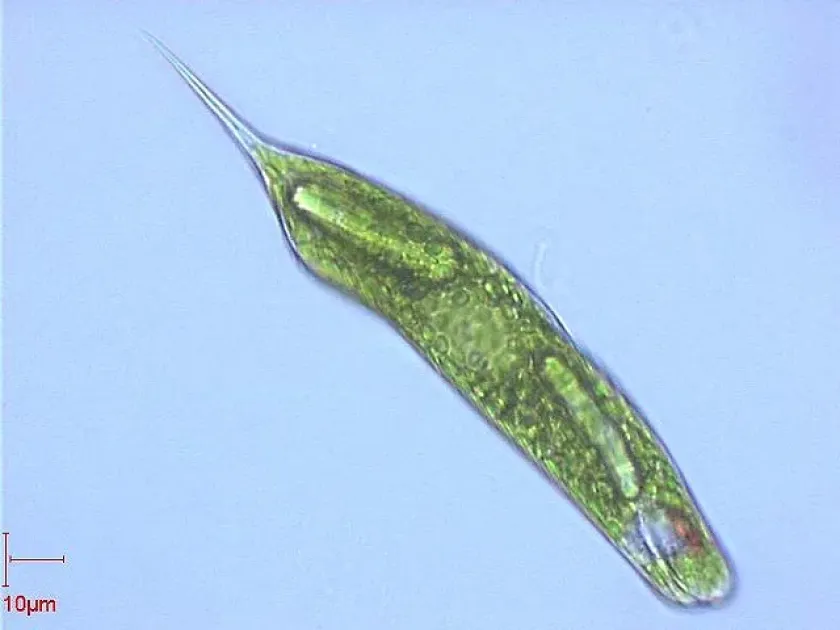
Description
Pathogen
Phacus is a genus of single-celled flagellated euglenoid algae, which acts as a bio-indicator of organic enrichment rather than a direct pathogen of terrestrial plants.
These organisms possess a rigid, often flattened cell wall (pellicle) with a prominent caudal spike, giving them a distinct leaf-like appearance under a microscope.
In agronomy, Phacus is frequently observed in hydroponic systems and stagnant irrigation water, signaling an imbalance in the nutrient solution.
They exhibit mixotrophic feeding, combining photosynthesis with the uptake of dissolved organic matter, which allows them to thrive in nutrient-rich water.
Their life cycle involves rapid longitudinal binary fission, enabling them to form dense populations in a short timeframe under favorable conditions.
Conditions for development
Phacus thrives in warm, well-lit environments characterized by high concentrations of nitrogen and phosphorus compounds.
Water temperatures between 20°C and 28°C provide the metabolic stimulation necessary for rapid cellular division and expansion.
Poor water circulation in irrigation tanks and the overuse of liquid organic fertilizers significantly encourage the proliferation of this genus.
A pH range that is slightly acidic to slightly alkaline is optimal for maintaining the physiological structure and reproductive rate of the cells.
The lack of competition from beneficial aquatic vegetation or microorganisms allows Phacus to dominate the planktonic community in confined water systems.
Why it matters
The primary agricultural risk is the bloom of Phacus, which causes significant depletion of dissolved oxygen, particularly during night hours, causing root stress.
In hydroponic and aquaponic setups, the accumulation of algae causes physical clogging of emitters, nozzles, and filtration systems, increasing maintenance needs.
Metabolic byproducts from dense Phacus populations can alter the chemical balance of nutrient solutions, leading to nutrient uptake inhibition in crops.
The dense layer of algae on the water surface limits light penetration, disrupting the growth of other aquatic organisms and affecting the ecosystem stability.
Decomposition of accumulated algal biomass creates an anaerobic environment that fosters the growth of root-rotting pathogens and other harmful bacteria.
Protection
Effective control requires strict management of nutrient levels and the prevention of organic buildup within the water supply infrastructure.
Ultraviolet (UV) sterilization is a highly effective method for eliminating Phacus cells in closed-loop hydroponic systems without using harsh chemicals.
Routine mechanical cleaning of tanks and pipe networks is essential to prevent biofilms and algae colonies from establishing themselves.
Managing lighting conditions by covering water reservoirs prevents photosynthesis, effectively starving the algae populations.
- Regular monitoring of nitrate and phosphate levels.
- Periodic flushing and sanitation of hydroponic systems.
- Use of micron-rated mechanical filters to remove algal cells.
Discussion
No discussions yet — be the first.