
Pezizellosis
Pezizella
Description
Symptoms
The earliest sign of infection is the development of irregular, localized lesions on the leaves, stems, or bark, which often turn dark and necrotic over time.
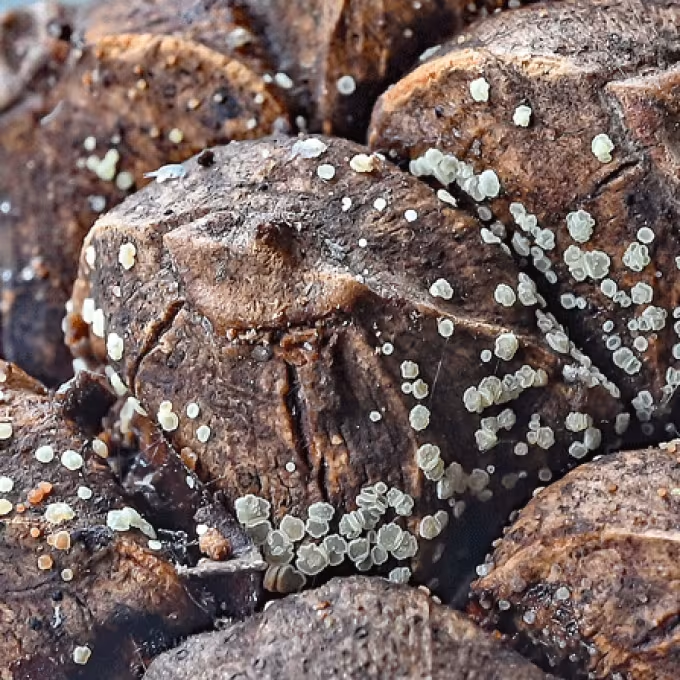
On woody stems, one may observe splitting or cracking of the bark, where the characteristic tiny cup-shaped apothecia appear as small spots.
Affected foliage tends to yellow prematurely, curl, and wilt, eventually leading to senescence and leaf drop, significantly reducing the plant's vigor.
In severe cases, the infected branches may die back completely, leading to an asymmetric or stunted appearance of the entire plant structure.
The presence of minute, disc-like fungal structures on decaying surfaces is a diagnostic feature used to distinguish Pezizellosis from other necrosis-related diseases.
Pathogen
Pezizellosis is caused by fungi belonging to the genus Pezizella, which are members of the Ascomycota division. These fungi act as opportunistic pathogens.
The fungus produces small, cup-shaped fruiting bodies called apothecia, which are typically light in color, ranging from white to yellow or pale brown.
The life cycle involves the release of spores that are easily disseminated by air currents, wind, and splashing water, allowing the fungus to spread rapidly.
It can overwinter in necrotic tissue or dead plant debris, surviving as mycelium until conditions for new growth become favorable in the spring.
Biologically, the pathogen exploits weakened tissues to colonize the host, gradually infiltrating the plant structure and disrupting its normal metabolic functions.
Conditions for development
High relative humidity and consistent moisture on leaf surfaces are critical environmental triggers that promote the rapid germination of fungal spores.
The fungus thrives in moderate temperature ranges, typically between 15°C and 22°C, which are common during the spring and autumn growing seasons.
Poor airflow, often caused by excessive planting density or lack of pruning, creates a microclimate with high humidity that favors infection outbreaks.
Plants suffering from environmental stress, such as frost damage or nutrient deficiency, are significantly more susceptible to successful colonization by Pezizella.
The accumulation of plant debris near the base of the crop acts as a primary reservoir for the pathogen, allowing it to persist throughout the year.
Why it matters
Pezizellosis can cause severe economic losses in nursery production, where seedling survival rates decrease due to stem girdling and systemic necrosis.
In mature crops, the disease reduces the overall yield and compromises the quality of harvestable products, making them unsuitable for storage or fresh market sale.
Long-term infestation can weaken woody perennials, leading to reduced growth, susceptibility to secondary pests, and eventually the death of the plant.
Increased expenditures on chemical control and labor-intensive sanitation measures significantly drive up the production costs for affected agricultural businesses.
If left unmanaged, the pathogen can quickly spread throughout an entire plantation, causing widespread defoliation and destruction of valuable crop varieties.
Protection
Strict sanitation is the foundation of control; all infected plant parts should be pruned promptly and destroyed or removed from the field to prevent sporulation.
Chemical control involving copper-based or systemic fungicides applied as a preventative measure can protect healthy tissues during high-risk weather periods.
Optimizing plant spacing and performing regular pruning ensures better air circulation, effectively drying out the canopy and discouraging fungal growth.
Promoting overall plant health through balanced fertilization and proper irrigation helps strengthen cell walls, making them more resistant to fungal invasion.
- Sanitizing pruning tools with alcohol or bleach solutions.
- Removing debris to minimize primary inoculum sources.
- Monitoring weather patterns for early warning of infection.
- Choosing resistant varieties for high-risk regions.
Discussion
No discussions yet — be the first.