
Downy mildew of crucifers
Peronospora parasitica
Description
Symptoms
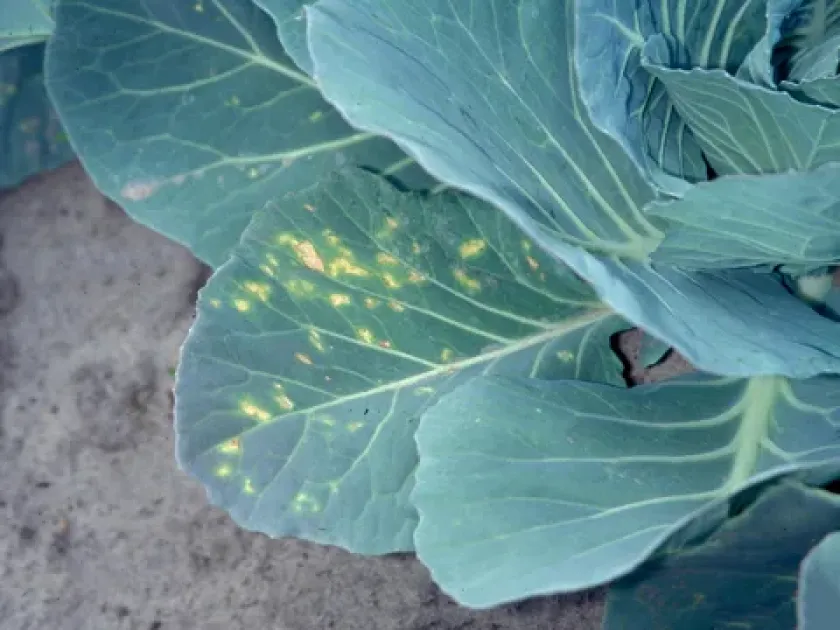
Initial symptoms include the appearance of small, yellow, angular spots on the upper leaf surface, which correspond to the location of the fungal growth on the underside.
The most characteristic sign is the development of white or grayish, fuzzy fungal growth on the underside of the leaves, especially during periods of high humidity and morning dew.
Severe infections lead to leaf yellowing, tissue necrosis, and eventual desiccation. In seedlings, the infection can cause stunted growth, leaf curling, and total collapse of the plant.
On mature cabbage heads, the disease may manifest as dark spots, reducing the marketability of the product and making it susceptible to secondary decay.
Visual identification is often confirmed by the presence of sporulation (fuzzy growth) on the underside of symptomatic leaves during damp weather.
Pathogen
The causal agent of this disease is the oomycete Peronospora parasitica, an obligate parasite specific to the Brassicaceae family. It survives as thick-walled oospores in soil and debris for several seasons.
The life cycle involves the production of sporangia, which are disseminated by wind, rain splashes, and irrigation water. Upon landing on host leaves, the pathogen enters through stomata or directly through the cuticle.
This pathogen has evolved a high degree of host specificity, infecting major agricultural crops such as broccoli, cabbage, cauliflower, and oilseed rape. It thrives in temperate, humid climates.
After penetration, the mycelium spreads within the intercellular spaces of the host tissue, extracting nutrients and disrupting the plant's metabolic functions.
Under favorable environmental conditions, the pathogen rapidly produces a new generation of spores, allowing for multiple infection cycles within a single growing season.
Conditions for development
Downy mildew development is heavily dependent on moisture. High relative humidity (above 85%) and the presence of free water on leaf surfaces are essential for spore germination and infection.
Temperatures between 15°C and 22°C are optimal for the pathogen. Cooler nights followed by warm, humid days often create the perfect environment for rapid disease outbreaks.
In greenhouse environments, poor ventilation, dense plant spacing, and overhead irrigation create stagnant microclimates that promote the spread of the pathogen.
Poor drainage in fields and heavy dew formation are also significant contributors to the persistence of the disease in commercial farming areas.
Cloudy, overcast weather conditions prolong the survival of spores on leaf surfaces, increasing the likelihood of successful infection.
Why it matters
The disease causes significant economic loss by reducing crop yield and quality. In severe cases, entire seedling nurseries can be rendered unsalable due to foliar damage.
In mature crops, downy mildew reduces the photosynthetic efficiency of the leaves, resulting in smaller, less dense heads and delayed maturity.
Infected crops are significantly more prone to secondary bacterial rots, which can lead to complete spoilage during storage and transit, causing major financial impact.
Repeated chemical control measures add to the cost of production, reducing the overall profitability for farmers and agricultural enterprises.
The disease also limits the potential for long-term storage of cruciferous vegetables, as even minor infections can progress into destructive decay.
Protection
Integrated Pest Management (IPM) is essential. Crop rotation with non-cruciferous crops for at least 3 years is a primary recommendation to reduce soil-borne oospore levels.
Sanitation practices, including the removal and destruction of crop debris, are crucial to reducing the primary inoculum for the following season.
- Use certified, disease-free seed and treat seeds before planting.
- Optimize plant spacing to improve airflow and minimize leaf wetness duration.
- Ensure greenhouses are properly ventilated to lower humidity levels.
Preventative fungicide applications, particularly during high-risk weather windows, are necessary for professional crop management.
Selecting resistant or tolerant cultivars is the most sustainable approach to long-term control and should be prioritized in variety selection.
Discussion
No discussions yet — be the first.