
Peniophora oak crust
Peniophora quercina
Description
Symptoms
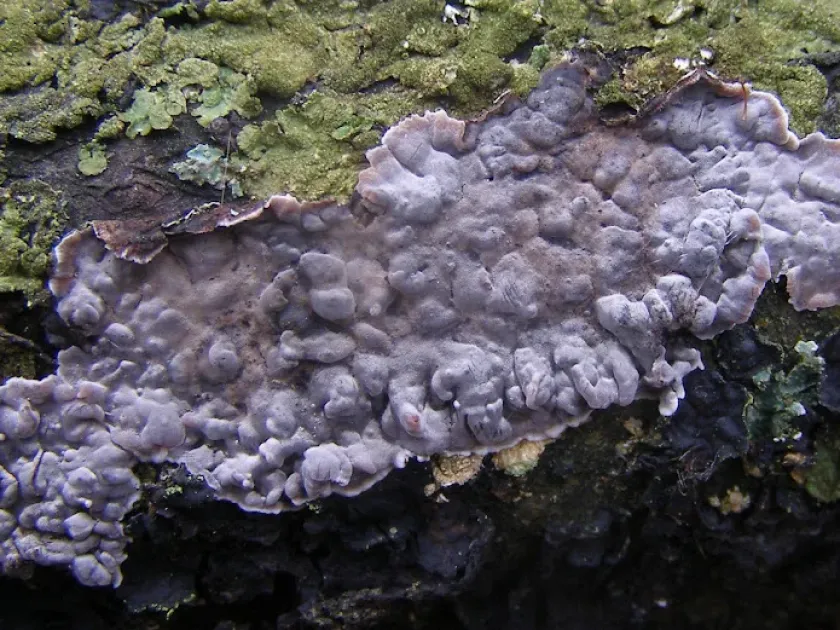
The primary symptom is the appearance of distinct, flat, and leathery crust-like fruit bodies on the bark of trunks and branches, ranging in color from grey-brown to purplish-grey.
As the fungal colony expands, the bark in the affected area loses its elasticity, becomes brittle, and eventually cracks or peels away from the wood surface.
One can often observe a white or creamy margin around the edge of the fruit body, which represents the active zone of mycelial growth spreading across the bark.
Beneath the damaged bark, the wood often displays signs of decay, including color changes or softening, which indicates that the fungus is digesting the cellular components.
- Presence of leathery, crust-like growths on the bark.
- Cracking and peeling of the bark layer.
- Localized death of the cambium layer.
- Darkening and softening of the underlying wood.
- Premature yellowing and drying of individual branches.
Pathogen
The causative agent of the disease is the basidiomycetous fungus Peniophora quercina, a common wood-decay organism that primarily acts as a saprotroph but can become a weak pathogen on stressed trees.
The fungus develops mycelia within the inner bark, which gradually invade the cambium and phloem layers, compromising the tree's vascular system.
It forms resupinate (crust-like) fruit bodies that are tightly attached to the bark. These fruit bodies are often leathery or waxy in texture and can merge to cover large areas of the trunk.
Dissemination occurs via basidiospores, which are spread by wind currents or water splashes during rainy periods, allowing the fungus to infect new hosts through bark crevices.
As an opportunistic pathogen, it exploits the vulnerability of dying wood or stressed tissues, playing a dual role in the ecosystem as both a recycler and a potential threat to weakened specimens.
Conditions for development
Peniophora quercina thrives in high-humidity environments with moderate temperatures, making spring and autumn the most active periods for fungal growth.
The fungus primarily targets trees already weakened by drought, nutrient deficiencies, or mechanical injuries such as frost cracks and pruning wounds.
Poor aeration in dense stands or thick canopies creates a microclimate that prevents the bark from drying out, which significantly favors the colonization of the fungus.
The presence of significant amounts of dead or decaying wood nearby acts as a constant reservoir of spores, facilitating the infection of adjacent weakened trees.
Susceptibility is greatly increased when the tree's natural defense mechanisms are suppressed, allowing the mycelium to overcome the bark barrier effectively.
Why it matters
The primary damage is the disruption of the tree's nutrient transport system, which leads to a gradual decline in tree vigor and the eventual death of affected branches.
By killing the cambium, the fungus stops the radial growth of the tree, creating "cankers" or girdled areas that restrict the flow of water and minerals.
The loss of bark integrity exposes the inner wood to secondary infections, such as more aggressive rot-causing fungi or wood-boring insects, further accelerating the tree's decline.
In forestry, the presence of this fungus lowers the timber quality, making the wood less desirable for high-value applications due to associated decay.
In ornamental settings, severe infections detract from the aesthetic value of the tree and, if left unmanaged, may result in the need for complete tree removal.
Protection
The foundation of management is rigorous sanitation, which includes the prompt removal and destruction of dead wood and heavily infected branches containing fruit bodies.
Proper maintenance, including consistent watering and mulching, helps boost the tree's immune system, making it more resilient against opportunistic pathogens.
Any pruning wounds or accidental bark injuries should be treated immediately with appropriate wound dressings or disinfectants to prevent spore entry.
Thinning out dense stands or overly thick canopies improves air circulation and sunlight penetration, which helps keep the trunk drier and inhibits fungal growth.
If necessary, targeted fungicide applications can be used in nurseries or high-value landscapes, but these must always be paired with good cultural practices to be truly effective.
Discussion
No discussions yet — be the first.