
Peach latent mosaic viroid
Pelamoviroid latenspruni
Description
Symptoms
The term "latent" in the name describes the primary diagnostic challenge. Many infected trees show no obvious symptoms for years, functioning as asymptomatic carriers while spreading the infection.
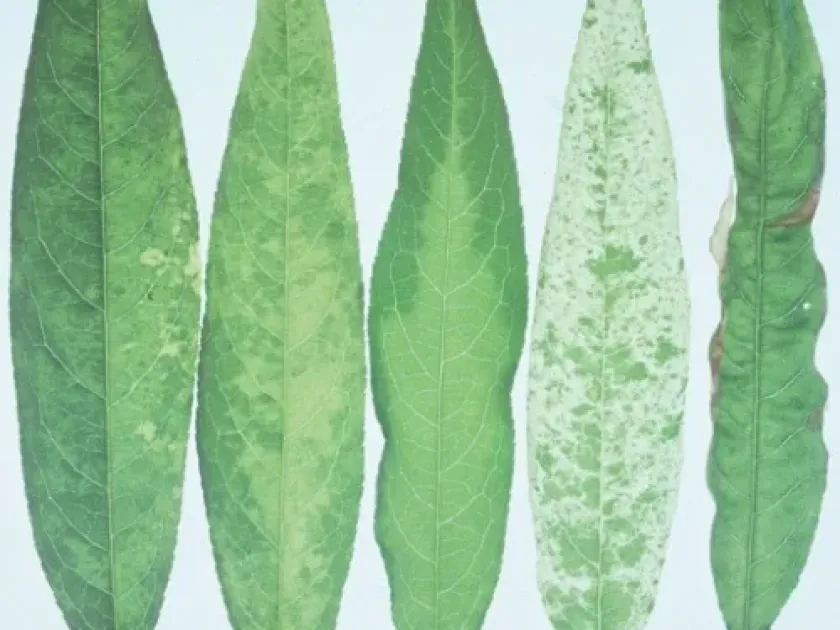
Visible symptoms, when they occur, often include leaf mosaic patterns, yellowing (chlorosis), or reddish discoloration of the leaves. Leaf deformation or crinkling may also be observed in sensitive cultivars.
Branch symptoms may include the development of cracks in the bark or excessive gummosis. In some cases, the trees display stunted growth, with shortened internodes leading to a bushy or dwarfed appearance.
Fruit symptoms are often the most economically damaging, including deformation, irregular ripening, and surface pitting. These defects reduce the commercial value of the crop significantly.
- Mosaic patterns or chlorotic spots on foliage.
- Leaf deformation and crinkling.
- Bark cracking and gum exudation.
- Reduced vigor and dwarfing of trees.
- Deformed and poor-quality fruits.
Pathogen
The causal agent of this disease is Pelamoviroid latenspruni, a member of the Pospiviroidae family. Unlike viruses, it consists solely of a small, circular, single-stranded RNA molecule without a protein coat.
The viroid replicates within the host cell's nucleus using the plant's own enzymatic machinery, specifically RNA polymerase II. Its simplicity allows it to evade many standard plant immune responses for extended periods.
Transmission occurs primarily through infected propagation material, such as budwood or rootstocks. Once a tree is infected, the viroid becomes systemic, spreading through all vascular tissues.
Mechanical transmission is a significant risk in orchards. Pruning tools, saws, and grafting equipment that are not disinfected between trees can easily transfer the viroid from infected to healthy plants.
This pathogen is highly stable in the environment. Its ability to remain latent (hidden) within the host allows it to persist in the orchard long before growers notice any impact on productivity.
Why it matters
The harm caused by the Peach latent mosaic viroid is cumulative. It disrupts the metabolic balance of the tree, leading to a steady decline in both the quantity and quality of the harvest over several seasons.
Economic losses are severe in commercial orchards, as the infection is irreversible. Once a tree is contaminated, it remains a reservoir of the pathogen for its entire life span, threatening adjacent healthy trees.
Infected trees exhibit reduced tolerance to environmental stressors. Drought, frost, and heatwaves can cause more damage to viroid-infected orchards compared to healthy ones, leading to premature tree mortality.
The viroid impairs the tree's ability to efficiently utilize nutrients. Even with optimal fertilization and irrigation programs, infected trees fail to reach their full growth or production potential.
There is no curative treatment for viroid-infected trees. This forces growers into expensive orchard removal and replanting programs, making prevention the only sustainable management strategy.
Protection
The primary control measure is the use of certified viroid-free nursery stock. Sourcing plants from reliable, audited suppliers significantly lowers the risk of introducing the pathogen into the orchard.
Strict sanitation protocols during pruning and grafting are essential. All tools must be disinfected using appropriate solutions, such as sodium hypochlorite (bleach) or specialized disinfectants, between every tree.
Regular monitoring of the orchard is necessary. Any tree suspected of being infected should be tested via molecular methods (such as RT-PCR) and, if confirmed, promptly removed and destroyed to prevent further spread.
Growers should maintain a buffer zone or isolate new plantings from older, potentially infected orchards to prevent accidental transmission through tools or accidental movement of infected vectors.
Educating staff on the importance of tool hygiene and identification of early warning signs is a critical component of a successful integrated management program against Pelamoviroid latenspruni.
Discussion
No discussions yet — be the first.