
Description
Symptoms
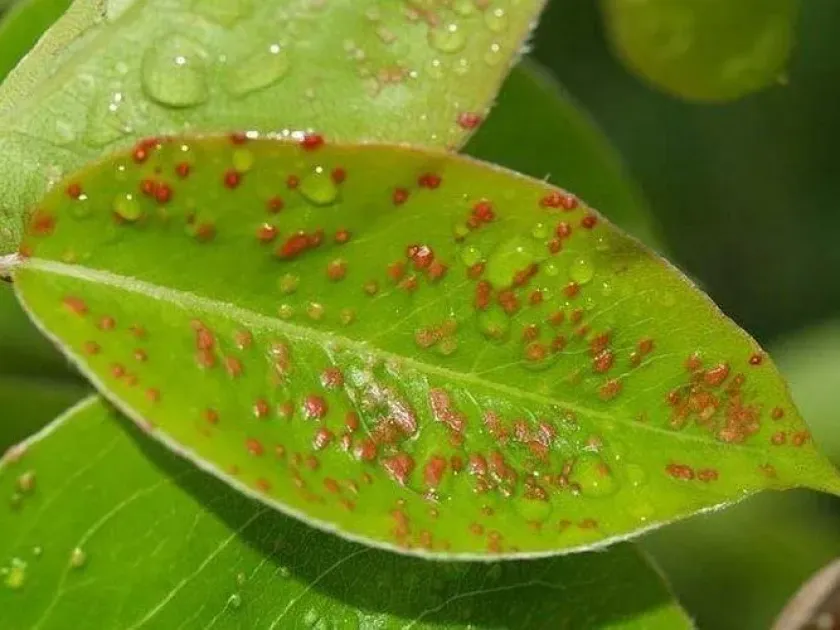
The primary symptoms of Pear red mottle appear on the leaves during the active growing season. The infection manifests as distinctive red or reddish-brown spots scattered across the leaf surface, which can vary in shape and size.
Unlike common fungal leaf spots, these lesions do not typically exhibit visible mycelium or spore masses on the underside of the leaf. As the disease progresses, the infected tissue may become thickened, leading to curling or general distortion of the foliage.
The severity of symptoms often depends on the specific cultivar of the pear tree. Some varieties may show clear, bold red spots, while others display milder chlorotic or mottled patterns, making initial diagnosis quite challenging for orchardists.
In addition to leaf symptoms, systemic infection often impacts the overall vigor of the tree. Infected branches may show reduced internode length, and the foliage may exhibit early yellowing or premature senescence compared to healthy trees.
Monitoring is most effective during the peak growth months. The contrast between the vibrant red spots and the healthy green tissue makes the disease easier to spot before it spreads further throughout the canopy.
Pathogen
Pear red mottle is caused by the Pear red mottle virus (PRMV), an infectious agent that systemically colonizes the phloem tissues of the host plant. It is a persistent virus that impacts the physiological functions of the tree.
As an obligate parasite, the virus requires living plant tissue to survive and replicate. The primary reservoir for this pathogen is established in infected trees, which serve as long-term sources of inoculum within the orchard.
Transmission occurs primarily through the use of infected propagation material. When grafting scions from an infected tree onto a healthy rootstock, the virus is introduced into the new plant, ensuring it will develop the disease.
Vectors also play a significant role in the spread of PRMV. Sap-sucking insects, such as aphids and leafhoppers, acquire the virus while feeding on infected trees and transfer it to healthy specimens during subsequent feeding bouts.
Mechanical transmission is a critical risk factor. The virus can be spread by pruning tools that have not been adequately sterilized, allowing the pathogen to enter through fresh cuts and vascular wounds.
Conditions for development
The development of Pear red mottle is closely linked to the presence of viral sources and the activity of vector insects. Environmental factors do not directly cause the disease but rather influence the behavior and population of the vectors.
Warm and humid weather conditions are ideal for the rapid reproduction of aphid populations. During these peak periods, the frequency of feeding and migration between trees increases significantly, heightening the risk of disease transmission.
The overall state of the orchard's agronomy influences disease susceptibility. Trees under stress—due to nutrient deficiencies, water shortages, or environmental factors—often exhibit more severe symptoms and reduced ability to withstand viral impact.
High-density planting systems, common in modern commercial orchards, create favorable conditions for viral spread. When canopies touch or are in close proximity, the movement of vectors between trees becomes extremely efficient.
Neglecting sanitation protocols regarding orchard tools significantly increases the speed at which the virus spreads through a block. Consistent use of non-disinfected shears is often the silent catalyst for widespread infection.
Why it matters
Pear red mottle causes systemic disruption of the tree's metabolic and transport processes. By interfering with the flow of nutrients and photosynthates, the virus induces chronic stress that weakens the tree over time.
Fruit production is negatively impacted by this infection. Harvest yields typically decrease in volume, and the quality of the fruit is compromised, resulting in smaller, less marketable, and lower-sugar content pears.
Chronic viral infection leaves trees vulnerable to secondary stresses. Infected trees often show poor cold hardiness, decreased tolerance to drought, and a higher propensity to succumb to opportunistic fungal or bacterial infections.
Over time, the virus leads to the progressive degradation of wood tissue and loss of tree vigor. In severe cases, it can cause branch dieback, ultimately reducing the productive lifespan of the orchard and necessitating premature removal.
Because the virus is systemic and incurable, a single infected tree poses a threat to the entire surrounding population. Managing such risks is essential to protect the long-term economic viability of the orchard operation.
Protection
Since there are no chemical treatments available to cure a plant infected with a virus, the management of Pear red mottle focuses entirely on strict preventative strategies and exclusion.
The foundation of effective control is sourcing propagation material exclusively from certified, virus-tested nurseries. Ensuring that all new trees are healthy at the time of planting is the most important step in prevention.
Regular visual scouting for symptomatic trees is necessary. Once a tree is identified as infected, it should be promptly removed, including the root system, and destroyed to prevent the spread of the virus to healthy individuals.
Integrated Pest Management (IPM) is crucial to control vectors. By monitoring and maintaining low populations of aphids and other sucking insects during the growing season, orchardists can significantly reduce the risk of viral transmission.
- Thoroughly sanitize all pruning tools between each tree using alcohol or bleach solutions.
- Maintain optimal tree health through proper fertilization and irrigation to support tree vigor.
- Establish spatial buffers to separate new plantings from older, potentially infected orchard blocks.
Pathogens and affected parts
Affects crops · 1
Discussion
No discussions yet — be the first.