
Pear scab
Pear freckle pit agent
Description
Symptoms
Symptoms typically appear on the undersides of young leaves as small, olive-green to black velvety spots that gradually enlarge.
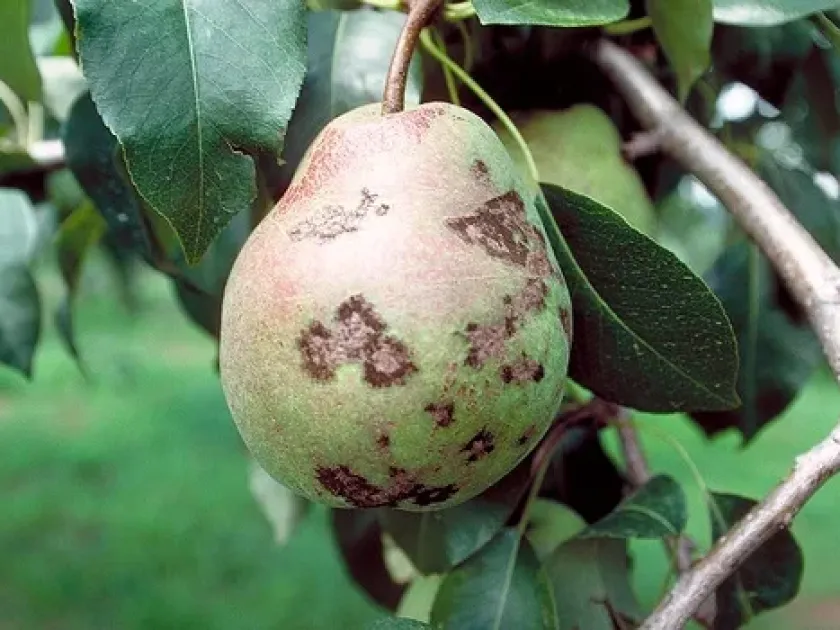
On developing fruit, the disease manifests as distinct, dark, circular lesions that may become scabby and cause the fruit to crack or deform.
Infected flower stalks and fruitlets often wither and drop prematurely, leading to significant yield losses early in the season.
Young twigs can also show signs of infection through the development of small blisters or pustules that rupture and release spores.
Severe infections can cause extensive defoliation, which stresses the tree and negatively affects its overall vigor and future productivity.
Pathogen
Pear scab is caused by the fungus Venturia pirina, a host-specific pathogen that primarily infects Pyrus species.
The life cycle involves both sexual and asexual stages, with the fungus overwintering in infected plant debris such as fallen leaves and woody twigs.
In spring, primary infection occurs when ascospores are discharged from pseudothecia on old leaves and carried by wind to new growth.
Once established, the pathogen produces conidia, which facilitate secondary infections throughout the growing season whenever weather conditions are conducive.
The fungus is highly resilient and can persist in an orchard environment for years if not managed through proper sanitation and intervention.
Conditions for development
High relative humidity and leaf wetness duration are the most critical factors required for spore germination and successful infection.
The fungus thrives in cool to moderate temperatures, typically ranging from 15 to 20 degrees Celsius, which often coincides with the spring bloom.
Poor orchard sanitation, specifically leaving leaf litter under the trees, provides an abundant source of inoculum for the following spring.
Dense canopy structures with limited air movement create microclimates that keep leaves and fruit wet for extended periods.
Rainy springs are particularly dangerous, as the repeated splashing of water distributes the spores throughout the tree canopy.
Why it matters
The primary economic impact is the reduction in fruit marketability due to the presence of scabby, cracked, or misshapen lesions.
Infected fruit are highly susceptible to secondary infections, such as storage rots, which can lead to complete loss of harvested produce.
Chronic infection reduces the tree's photosynthetic capacity, causing stunted growth and limiting the energy available for fruit bud development.
Persistent scab pressure significantly decreases the tree's winter hardiness, potentially leading to branch dieback or long-term decline.
Total crop failure can occur in neglected orchards where environmental conditions remain favorable for the pathogen over several months.
Protection
Sanitation is paramount: raking and removing fallen leaves or composting them helps reduce the primary inoculum load in the orchard.
Pruning trees to open the canopy improves air circulation and sunlight penetration, which helps dry foliage faster after rain.
Selecting and planting scab-resistant pear cultivars is the most sustainable long-term strategy for managing the disease.
- Application of protective fungicides during the green-tip stage.
- Systemic fungicide treatments during high-risk rainy periods.
- Regular monitoring of weather patterns to time fungicide applications.
- Using copper-based dormant sprays to minimize overwintering populations.
Discussion
No discussions yet — be the first.