
Peach wart
Peach wart agent
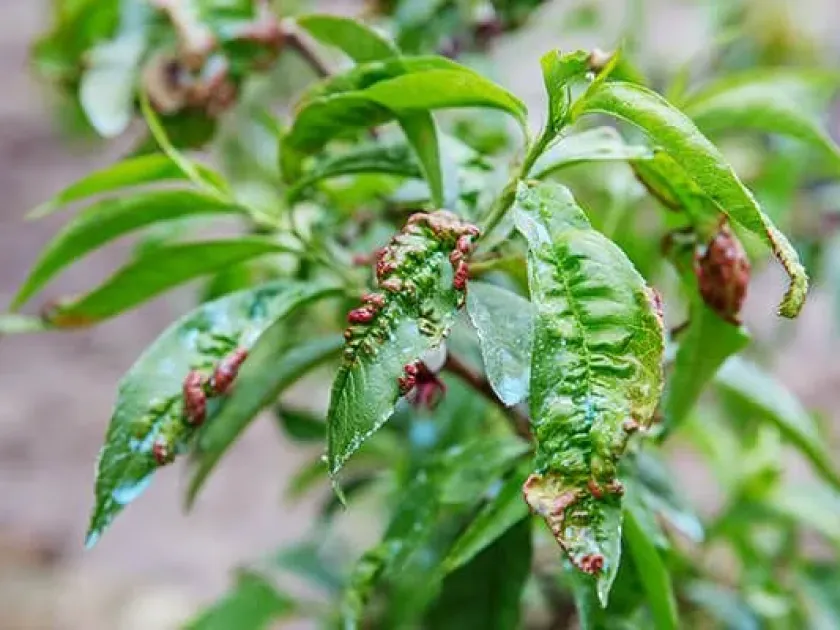
Description
Symptoms
Peach wart is characterized by severe malformation of the fruit, marked by the development of numerous warts, bumps, and irregular growths on the skin. Affected fruits lose their smooth texture and become unattractive for consumption or market sales.
In the areas where warts appear, the fruit tissue becomes hardened and corky, preventing normal development and often causing the fruit to become lumpy and asymmetrical. These symptoms can affect only specific parts of the canopy, but they gradually spread across the tree.
The disease may also cause systemic issues, leading to general tree decline, reduced growth of new shoots, and chlorosis on leaves. The tree’s overall physiological balance is disrupted, hindering its ability to produce quality fruit.
Early diagnosis is challenging because trees can remain asymptomatic for long periods, showing no signs of infection until the fruit begins to ripen and develop the characteristic wart-like deformities.
Chronic infestation weakens the structural integrity of the tree, leading to sparse foliage and decreased resilience against environmental stressors over the years.
Pathogen
The causative agent of this disease is the Peach wart virus, a systemic pathogen that specifically targets Prunus species. Being a virus, it integrates into the host's system, causing lasting cellular changes.
The virus is primarily spread through the use of infected propagation material, such as scion wood or rootstocks obtained from unhealthy mother trees. This highlights the critical importance of utilizing virus-indexed nurseries.
Insect vectors, including aphids and eriophyid mites, play a major role in the natural transmission of the virus within an orchard. They acquire the virus by feeding on infected phloem and transmit it to healthy trees during subsequent feeding sessions.
Because there is no cure for viral infections in plants, the presence of the pathogen in the orchard necessitates strict adherence to sanitation and long-term removal protocols to prevent widespread losses.
Scientific research emphasizes the stability of this virus within infected tissues, making any form of vegetative propagation from an infected tree a guaranteed way to perpetuate the disease.
Conditions for development
The spread of Peach wart is significantly accelerated by the presence of insect vectors. Warm weather conditions that favor the rapid population growth of aphids and mites dramatically increase the risk of cross-infection between trees.
Human activity is a primary factor in the transmission of the virus. Using contaminated pruning shears, saws, or grafting knives without intermediate sterilization allows the pathogen to travel easily between healthy and infected trees.
High-density planting systems can exacerbate the spread, as close physical proximity between tree canopies makes it easier for flying vectors to move the virus from one host to another.
The introduction of the disease into new regions usually occurs through the exchange of non-certified grafting material. Lack of strict quarantine measures on imports is a major vulnerability for orchard owners.
Environmental stress that weakens the trees can also make them more susceptible to becoming hosts for the virus, leading to a faster progression of the disease symptoms across the orchard.
Why it matters
The economic impact of Peach wart is devastating, as infected fruits are completely unmarketable due to their unsightly deformities. This results in the loss of entire harvests from infected trees.
Beyond fruit quality, the cumulative effect of the virus reduces the productive lifespan of the orchard. Trees become stunted, yield less, and eventually require complete removal long before their expected retirement age.
Orchards confirmed to be infected with the Peach wart virus often face quarantine restrictions, which can prevent the grower from selling nursery stock or fruit to certain international markets.
The disease forces growers to invest significant capital into removing affected trees and replanting the land, often leaving those areas unproductive for several years.
In addition to direct losses, the necessity to manage insect vectors increases operational costs for insecticides, which must be applied more frequently to keep the virus transmission at bay.
Protection
Control of Peach wart is focused on exclusion and eradication, as there are no chemical pesticides that can cure an established viral infection.
- Always purchase certified, virus-tested nursery stock from reputable sources.
- Practice strict sanitation by disinfecting pruning tools between trees using approved alcohol or bleach solutions.
- Implement an aggressive integrated pest management (IPM) program to control aphid and mite populations.
- Conduct regular orchard inspections during the fruit-ripening stage to identify and mark infected trees for removal.
- Establish spatial isolation when planting new orchards to prevent the proximity-based spread of viral pathogens.
Discussion
No discussions yet — be the first.