
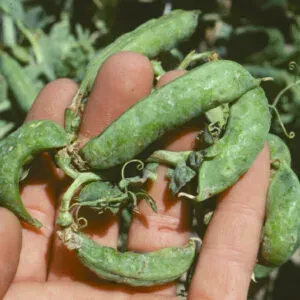
Description
Symptoms
The primary symptom of the disease is the appearance of a mild mosaic pattern on the leaves, characterized by light green to yellow mottling. This pattern is often subtle and lacks the sharp contrast seen in other viral infections.
Unlike more aggressive viruses, PMMoV usually does not cause severe leaf distortion, curling, or significant stunting. This mildness often results in the infection being overlooked during routine field inspections.
In some cases, infected plants may show slightly reduced internode length or a subtle decline in overall vigor. Changes in flower color or morphology are observed infrequently but can occur under specific environmental conditions.
Pods on infected plants may exhibit slight mottling or a lack of natural sheen. While the seeds themselves may not show overt symptoms, their development can be impaired, leading to a reduction in seed size and quality.
The symptoms typically manifest on the youngest leaves first, indicating the systemic movement of the virus throughout the plant after the initial infection has been established.
Pathogen
The causative agent of the disease is the Pea mild mottle virus (PMMoV), which belongs to the Tobamovirus genus. This virus is a highly infectious pathogen known for its ability to persist in various environmental conditions.
PMMoV is characterized by high stability and can remain viable in plant debris, soil, and contaminated seeds. Its transmission occurs primarily through mechanical contact between infected and healthy plants, as well as through contaminated tools and machinery.
The virus has a relatively broad host range, infecting pea (Pisum sativum), soybean (Glycine max), bean species, and several leguminous weed hosts that act as reservoirs for the pathogen.
Upon infection, the virus particles infiltrate the plant cells and utilize the host's machinery for replication. It then spreads systemically through the phloem, reaching various organs, including stems, leaves, and reproductive structures.
The latent nature of the infection is a significant challenge, as plants may carry the virus for extended periods without showing severe disease symptoms, facilitating the silent spread of the pathogen.
Conditions for development
The development and spread of the virus are favored by conditions that promote active plant growth. The optimal temperature range for PMMoV replication is between 18 and 25 degrees Celsius.
High plant density in fields significantly increases the risk of infection, as dense canopies promote frequent mechanical contact between neighboring plants, allowing for the easy transmission of the virus through micro-wounds.
The presence of wild leguminous plants near the field margins is a critical factor, as these weeds serve as perennial sources of the virus, facilitating the transition of the infection to the crop.
Agricultural operations, such as cultivation or scouting, can inadvertently spread the virus if tools become contaminated with sap from infected plants. This is especially risky during humid or wet weather conditions.
Environmental stress factors that weaken the plant's physiological condition can make the crop more susceptible to the successful establishment of the virus after the initial exposure.
Why it matters
The harm caused by Pea mild mottle is largely related to sub-clinical yield losses. Because the virus diverts resources toward its own replication, the plant’s capacity for biomass accumulation and grain filling is significantly reduced.
In soybeans and peas, this often results in a lower number of pods per plant and a decrease in the total seed weight. The quality of seeds for subsequent planting is also compromised, potentially affecting future harvests.
Reduced photosynthetic efficiency in mottled leaves leads to a decline in overall plant productivity and lower nutrient quality, which is particularly detrimental if the crop is intended for forage purposes.
Infected plants exhibit weakened defense mechanisms, making them more vulnerable to secondary infections from soil-borne pathogens, bacteria, and fungi, which can lead to premature plant death in severe cases.
Economic losses arise not only from reduced yield but also from the increased need for intensive management, diagnostic testing, and the potential discarding of infected seed lots.
Protection
The cornerstone of managing Pea mild mottle is the use of healthy, certified, virus-free seed lots. Preventing the introduction of the pathogen into clean fields is the most effective strategy available.
Recommended management practices include:
- Vigilant removal of leguminous weeds in and around the field to eliminate primary virus reservoirs.
- Maintaining adequate spatial isolation between fields of different legume species to reduce the risk of cross-contamination.
- Stringent sanitation of farm equipment after working in potentially infested areas to prevent mechanical transmission.
During periods of wet weather, field operations should be minimized to avoid creating conditions that facilitate the transfer of the virus through leaf-to-leaf contact.
Currently, there are no curative chemical treatments for PMMoV, emphasizing the need for a preventive approach based on host resistance and robust phytosanitary practices.
Pathogens and affected parts
Affects crops · 1
Discussion
No discussions yet — be the first.