
Pea leafroll
Pea leafroll virus
Description
Symptoms
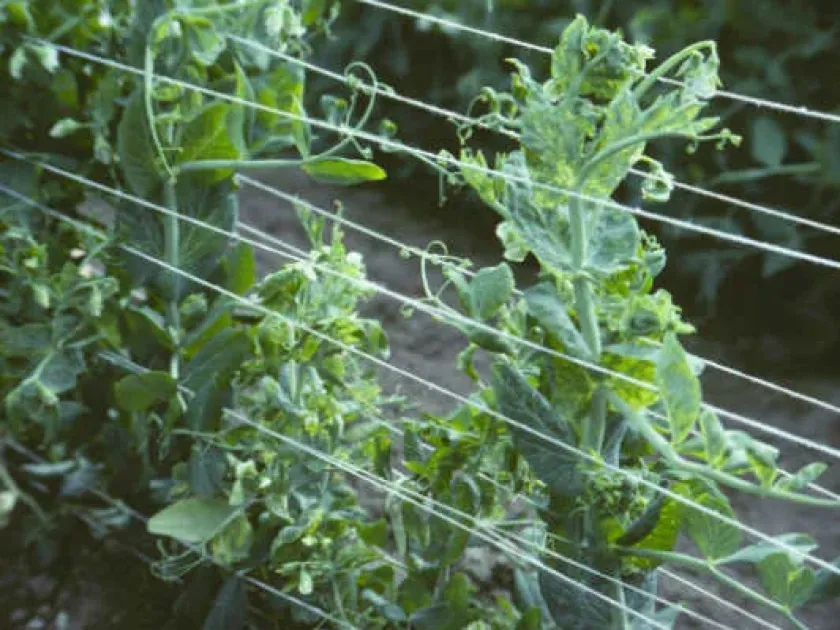
The primary visual symptom of pea leafroll is the upward curling of leaflets, which is often accompanied by a distinct yellowing (chlorosis) of the top leaves.
Infected pea plants show severe stunting, with significantly shortened internodes compared to healthy plants in the same field.
As the infection progresses, the leaves become brittle and may lose their green color, severely inhibiting the plant's ability to perform photosynthesis.
Flowering is usually restricted or absent, and if pods do form, they are often underdeveloped, misshapen, and contain shriveled, low-quality seeds.
The overall vigor of the plant declines significantly, making it look sickly and incapable of supporting a normal yield throughout the season.
Pathogen
The disease is caused by the Pea leafroll virus (PLRV), which is part of the Luteoviridae family of plant viruses.
This virus is phloem-limited, meaning it resides and replicates specifically within the vascular tissue, obstructing the transport of plant nutrients.
The virus is not sap-transmissible or seed-borne; it relies entirely on insect vectors for its spread within and between fields.
Aphids are the primary vectors for this virus, with the pea aphid (Acyrthosiphon pisum) being the most common transmitter in agricultural settings.
The virus is transmitted in a persistent, circulative manner, meaning the aphid must feed on an infected plant for a duration to acquire the virus.
Conditions for development
Outbreaks are heavily dependent on aphid population dynamics, which are often favored by mild, humid spring and early summer weather conditions.
Perennial legumes such as clover and alfalfa act as overwintering reservoirs for both the virus and its aphid vectors.
Proximity to fields of perennial forage crops increases the risk of early-season infection, as aphids migrate from these hosts to emerging pea crops.
Dry weather can sometimes lead to stress in pea plants, making them more susceptible to aphid colonization and subsequent viral infection.
The rate of spread is accelerated when winged aphid colonies migrate during peak wind or temperature conditions suitable for their movement.
Why it matters
The economic impact is primarily driven by significant yield losses, as stunted plants produce fewer and smaller pods with lower seed viability.
Infection disturbs the nitrogen-fixing capability of the legumes, negatively affecting soil fertility and the overall health of the crop cycle.
Viral infection leaves the plants immunocompromised, making them more susceptible to secondary fungal infections like root rot or powdery mildew.
Total crop failure can occur in fields with early-season high-pressure infestations, rendering the produce unsuitable for commercial sale.
Management costs increase due to the necessity of intensive insecticide applications to control aphid populations throughout the growing season.
Protection
Maintaining a significant spatial distance between pea fields and perennial legume forage crops is the most effective preventive measure.
Regular scouting for aphid presence and taking prompt action to suppress their numbers is critical for preventing virus transmission.
Strategic use of insecticides that target aphid vectors can help mitigate the spread of the virus during the critical early growth stages.
Selecting and planting resistant or tolerant pea varieties is highly recommended to decrease susceptibility to the viral strain.
Effective weed management around fields is necessary to remove alternative host plants that support aphids and the virus reservoir.
Discussion
No discussions yet — be the first.