
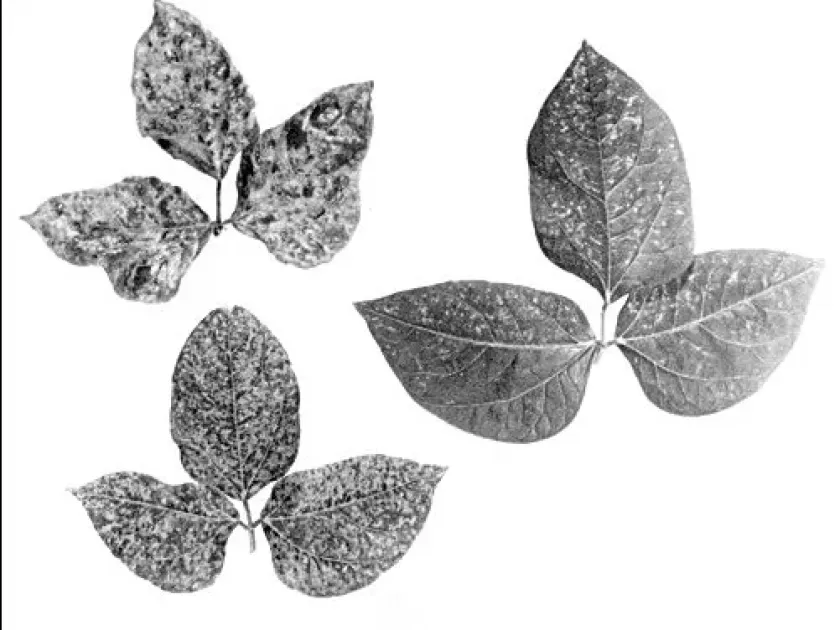
Description
Symptoms
The primary symptom of Pea green mottle is the characteristic mosaic pattern on leaves, appearing as alternating patches of dark green and light green or yellowish tissue. Infected plants frequently exhibit stunted growth, remaining significantly smaller than their healthy counterparts.
Leaves may show signs of deformation, such as curling, wrinkling, or an irregular surface texture. These changes reflect the internal physiological disruption caused by the viral replication process within the leaf cells.
In some cases, stems might display chlorotic stripes or necrotic lesions, which can eventually inhibit the transport of water and nutrients throughout the plant. Such systemic damage inevitably leads to a decline in plant vigor and overall yield potential.
Flowering is typically reduced in intensity, and if pods do form, they are often stunted, malformed, or prone to premature abscission. This direct impact on the reproductive organs significantly decreases the final grain harvest.
The severity of visual symptoms can vary based on the specific crop cultivar, the plant's growth stage at the time of initial infection, and environmental conditions such as temperature and humidity levels during the season.
Pathogen
The causative agent of this disease is the Pea green mottle virus (PGMV), which belongs to the genus Comovirus. It is a single-stranded RNA virus that functions as an obligate parasite, requiring living plant tissues to sustain its life cycle.
The virus lacks its own metabolic machinery and relies entirely on the host plant's cellular structures to replicate its genetic material and synthesize viral proteins. Once inside, the virus moves systematically through the plant's vascular system, particularly the phloem.
Transmission primarily occurs through mechanical means, such as contact between infected and healthy plants or via contaminated farm equipment. Furthermore, sap-sucking insects, most notably various species of aphids, act as primary vectors for spreading the virus across fields.
Perennial leguminous weeds serve as vital natural reservoirs for the virus during the off-season. These plants allow the pathogen to survive and persist in the environment, ready to be transmitted back to cultivated crops when conditions become favorable.
Seed transmission can also play a role in the long-distance spread of the disease. Consequently, using certified, pathogen-free seeds is critical for maintaining healthy field conditions and preventing the introduction of the virus into new areas.
Conditions for development
Warm and humid weather conditions are ideal for the development and spread of Pea green mottle. Such conditions promote rapid reproduction and high activity levels of aphid vectors, which are the main engines for the virus's dissemination.
Dense plant stands provide a favorable microclimate for insect vectors and facilitate mechanical transmission of the virus. When leaves of adjacent plants touch each other frequently, the movement of the virus from an infected plant to a healthy one becomes much easier.
The presence of wild legumes and other weeds on field borders or nearby areas constitutes a significant risk factor. These plants act as early-season nurseries for both the virus and its aphid vectors, leading to localized outbreaks that quickly expand.
Cultural practices that cause physical injury to the plants, such as mechanical cultivation, can increase the risk of infection. If equipment is not properly sanitized, it can act as a bridge, moving viral particles from a diseased patch to a healthy section of the field.
Plants subjected to environmental stress, such as drought or nutritional deficiencies, are generally more susceptible to viral infections. Maintaining optimal soil fertility and adequate water supply can bolster the plant's resilience against the virus.
Why it matters
The harm caused by Pea green mottle is primarily measured in substantial yield losses, which can reach 30 to 50 percent during severe epidemic years. These losses directly affect the economic sustainability of legume production.
Systemic viral infection disrupts the plant's metabolic pathways, leading to chlorosis and decreased photosynthetic efficiency. This reduced energy production prevents the plant from reaching its full potential, resulting in smaller seeds and overall poor crop quality.
Soybeans are also susceptible to this disease, making it a critical concern for diversified farming operations. The economic impact includes both the immediate reduction in harvest and potential rejection of seed lots due to the presence of the pathogen.
Infected plants become increasingly vulnerable to secondary pathogens, including various fungal and bacterial infections. This compounded stress often leads to premature senescence and death of the plant canopy before the seeds fully mature.
Management costs also increase due to the necessity of insecticide applications to control aphid populations. While these measures help limit transmission, they represent an ongoing operational expense for farmers throughout the growing season.
Protection
Preventative measures form the cornerstone of Pea green mottle management. Utilizing certified, high-quality, and virus-free seed is the most effective way to prevent the initial introduction of the disease into a field.
- Regular monitoring of fields to detect early symptoms and removal of symptomatic plants to limit the spread.
- Rigorous weed control, particularly of perennial legumes that serve as viral reservoirs.
- Strategic application of insecticides to suppress aphid populations during critical periods of crop development.
- Implementation of spatial isolation, keeping new plantings separated from previous years' legume fields.
- Strict sanitation protocols for farm machinery and tools to prevent mechanical transfer of the virus.
Breeding for and planting resistant or tolerant cultivars remains the most sustainable and successful approach to controlling Pea green mottle. Modern varieties offer increased defense mechanisms that significantly reduce the impact of the disease.
Optimizing agronomic practices, such as choosing appropriate sowing dates and ensuring balanced crop nutrition, allows plants to establish strong root and shoot systems early. This helps them withstand and overcome periods of high infection risk more effectively.
Pathogens and affected parts
Affects crops · 1
Discussion
No discussions yet — be the first.