
Panaeolus campestris
Panaeolus campestris
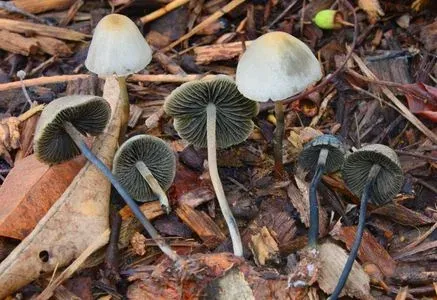
Description
Pathogen
Panaeolus campestris is a mushroom species belonging to the Bolbitiaceae family, widely recognized for its saprotrophic nature in grassland and agricultural environments.
From an agronomical perspective, this species is not considered a plant pathogen as it does not possess the mechanisms required to infect or degrade living plant tissues.
The fungus functions primarily as a decomposer, breaking down organic matter, manure, and humus components in the upper layers of the soil profile.
Its biological activity is confined to the recycling of dead organic material, which plays a role in natural soil nutrient cycling rather than causing plant disease.
The presence of Panaeolus campestris is essentially ecological, serving as an indicator of nutrient-rich soil conditions often found in managed agricultural fields.
Conditions for development
The development of Panaeolus campestris is driven by the availability of abundant decomposing organic matter, particularly cattle dung and organic-rich soil amendments.
Optimal growth conditions involve high humidity levels and mild temperatures, typically during periods of spring or autumn rainfall in agricultural fields.
The fungus thrives in pastures and fields where livestock grazing leads to localized concentrations of nutrients and organic waste in the soil surface.
Dense crop canopies or improper soil management that maintains high surface moisture levels can further stimulate the formation of mushroom fruit bodies.
Neutral to slightly alkaline pH levels in the soil are generally preferred by this species, which frequently aligns with soil conditions found in productive agricultural landscapes.
Why it matters
There is no direct damage caused by Panaeolus campestris to cultivated crops, as it lacks the physiological capacity to parasitise agricultural plants.
Indirectly, large colonies might temporarily compete for soil nitrogen during the active decomposition phase of organic matter, which can slightly affect nutrient availability for crops.
For livestock producers, the presence of the fungus in pastures is largely neutral, although it is advised to manage grazing areas to prevent the accumulation of excess organic waste.
The fungus does not produce toxins that affect crop safety or soil health, and it remains a component of the beneficial microbial and fungal community of the soil.
It is not categorized as a disease-causing agent, so no chemical fungicides are necessary or recommended for the control of this specific saprotrophic species.
Protection
Effective management of Panaeolus campestris involves the proper composting of manure before application to fields, ensuring the decomposition process is completed.
Good agricultural practices, such as maintaining adequate field drainage and proper tillage, help to create soil conditions less suitable for surface-growing fungi.
Crop rotation and balanced fertilization help regulate the amount of organic residue, effectively reducing the nutrient source for saprotrophic development.
Mechanical cultivation of the soil can disrupt the mycelial network, making it harder for the fungus to establish large colonies across the field surface.
- Ensure manure is well-composted before application.
- Implement drainage systems to prevent waterlogging.
- Maintain balanced fertilization programs.
Discussion
No discussions yet — be the first.