
Padina pavonica
Padina pavonica
Description
Symptoms
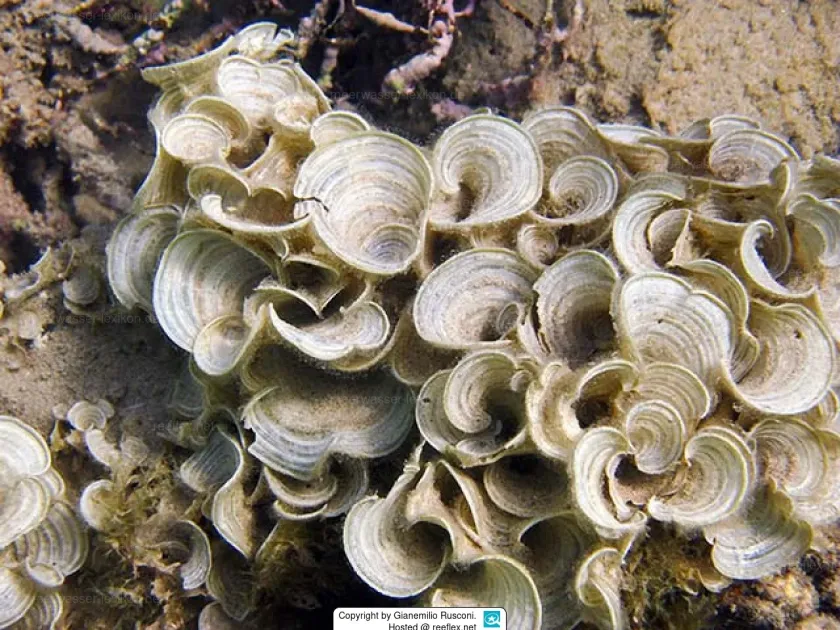
Padina pavonica, commonly known as the peacock's tail, is a brown alga characterized by its distinct fan-shaped thallus with concentric, calcified rings.
Its unique morphology often features alternating light and dark zones, which can be mistakenly interpreted as fungal spotting or colony growth by those unfamiliar with marine biology.
The texture of the organism is stiff due to the deposition of calcium carbonate on its surface. This rigidity gives it a "crusty" appearance, further contributing to confusion with certain plant pathogens.
The edges of the fan are often in-rolled and contain thin, hair-like structures. When observed under low magnification, these reproductive patterns could potentially be misidentified as specialized plant disease spores.
However, these structures are purely reproductive components of the alga and have no pathogenic interaction with vascular plants or crops.
Pathogen
Scientifically, Padina pavonica is strictly classified as a marine macroalga belonging to the class Phaeophyceae. It is in no way a pathogen of terrestrial or freshwater plants.
This organism performs photosynthesis using its own chlorophyll pigments. It does not possess the mechanisms to infect, feed on, or destroy plant tissue.
The taxonomy of this species places it within the order Dictyotales. It is a fundamental component of marine ecosystems, contributing to biodiversity rather than causing plant disease outbreaks.
Misclassification of this species as a plant disease is likely a legacy of inaccurate historical databases or linguistic errors in technical translation.
Agronomic literature confirms that there is zero causative link between Padina pavonica and any known agricultural crop blight or infection.
Conditions for development
Padina pavonica thrives exclusively in marine environments. It is commonly found in tropical and warm temperate seas, particularly in the Mediterranean region.
It prefers shallow, sunlit areas with stable salinity and clear water. These specific habitat requirements prevent it from ever occurring in a field, garden, or greenhouse.
The development of this alga depends heavily on water temperature and the availability of calcium in the marine substrate.
As a marine organism, it lacks the ability to adapt to soil-based substrates or freshwater irrigation systems used in agricultural production.
Environmental fluctuations in marine ecosystems influence the growth cycles of this species, entirely independent of agricultural practices.
Why it matters
There is no economic or agronomic harm associated with Padina pavonica. It is not an invasive weed or a crop pathogen in any capacity.
Conversely, the organism is studied for its beneficial extracts, such as alginates and secondary metabolites used in the pharmaceutical and cosmetic industries.
It does not compete for resources with crops, nor does it inhibit the growth of surrounding vegetation in a way that would require control measures.
The species holds no status in international phytosanitary lists of dangerous pests or pathogens.
Labeling this beneficial marine organism as a disease is non-factual and does not reflect current biological or agronomic understanding.
Protection
No control or protective measures are necessary for Padina pavonica in an agricultural setting because it does not act as a disease agent.
Farmers should rely on official phytosanitary diagnostics when encountering unexplained symptoms on crops, rather than assuming the involvement of marine organisms.
Proper plant identification protocols involve histological analysis and laboratory culture, which would immediately rule out marine algae as potential pathogens.
Education regarding the distinction between marine flora and terrestrial plant pathogens is the best way to prevent the misapplication of control measures.
Applying herbicides or fungicides to control this species is both unnecessary and environmentally irresponsible, as it would cause harm without providing any benefit.
Discussion
No discussions yet — be the first.