
Ovulariosis
Ovularia
Description
Symptoms
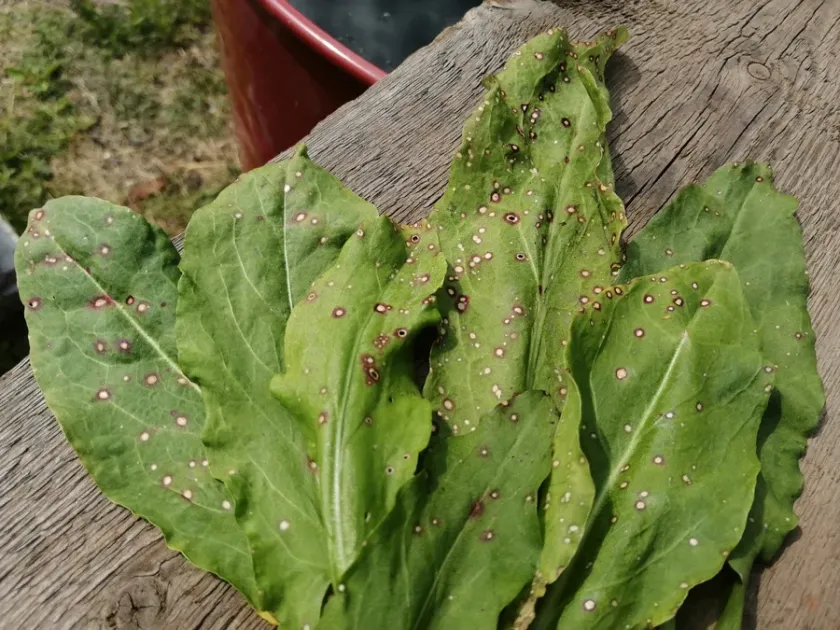
The disease is characterized by the appearance of spots on leaves, which serve as the primary diagnostic feature of the infection.
These spots are initially small and necrotic, eventually expanding into circular or irregular patches of brown or greyish color.
Under humid conditions, a visible velvety or dusty coating often develops on the underside of the leaves, representing fungal sporulation.
As the infection progresses, severe chlorosis occurs, followed by the premature wilting and death of the leaf tissue.
In advanced cases, the fungal colonization may extend to petioles and stems, severely hindering the nutrient transport within the plant.
Pathogen
Ovulariosis is a fungal disease caused by various species of the Ovularia genus, which are classified as hyphomycetes.
These pathogens function as obligate or facultative parasites, depending on the specific host plant and the environmental context.
The fungus produces conidia, which act as the primary spores responsible for the dispersal of the disease throughout the field.
Survival of the pathogen is typically achieved through mycelium or conidia persisting on infected crop residues left on the soil surface.
Molecular research confirms the high variability of Ovularia species, which allows them to adapt to diverse agricultural environments.
Conditions for development
High humidity and moisture are the most critical factors driving the germination of Ovularia conidia and subsequent infection.
Moderate temperatures ranging between 15°C and 25°C provide the optimal metabolic environment for the rapid growth of the fungus.
Poor aeration in dense crop stands creates a microclimate that retains moisture and encourages the secondary spread of the disease.
Persistent rainfall and heavy morning dews significantly increase the rate of new infection events on healthy plant tissues.
Poor soil drainage and waterlogging can weaken the plant's natural defenses, making it more susceptible to fungal entry.
Why it matters
The primary economic impact of ovulariosis is the reduction of total photosynthetic area, leading to decreased plant biomass.
This deficit in carbohydrates directly results in lower yield quantity and poor quality of the harvested produce.
Weakened plants show a significantly higher susceptibility to other pathogens, which can lead to complex disease issues.
If left unmanaged, the cumulative effects of ovulariosis can lead to substantial financial losses for commercial producers.
The persistent nature of the inoculum in the soil creates a long-term risk for subsequent cropping cycles in the same area.
Protection
Integrated pest management remains the most effective strategy, focusing on crop rotation to reduce the primary inoculum load.
Sanitation practices, such as the removal or deep incorporation of crop debris, are essential for limiting the survival of the fungus.
The application of contact or systemic fungicides should be timed with the onset of symptoms or during high-risk weather conditions.
Selecting and planting resistant or tolerant cultivars offers the most sustainable long-term protection against ovulariosis.
- Maintaining optimal plant spacing to improve air circulation.
- Balanced fertilization to prevent soft, overly succulent growth.
- Monitoring fields regularly to facilitate early disease detection.
Discussion
No discussions yet — be the first.