
Tomato yellow spot virus
Orthotospovirus tomatoflavi
Description
Symptoms
Initial signs of Orthotospovirus tomatoflavi infection appear as chlorotic mottling, yellow spotting, or faint ringspots on the youngest, developing leaves.
Stunting and leaf distortion are commonly observed, leading to reduced plant height and inhibited biomass accumulation compared to healthy plants.
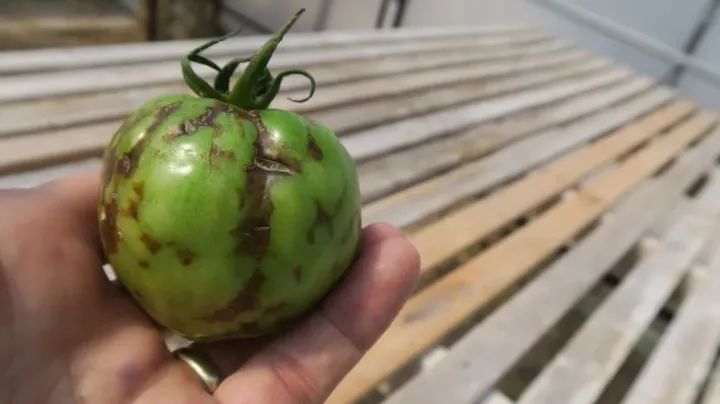
Fruit symptoms are particularly devastating, manifesting as distinct chlorotic or necrotic rings, uneven ripening, and surface blotchiness that renders the fruit unmarketable.
In systemic infections, stems may display dark, elongated streaks or necrotic sections that weaken the structure of the plant and cause premature wilting.
The appearance of symptoms can be highly dependent on the host cultivar and environmental stress factors, which often mask the initial stages of the infection.
Pathogen
The causal agent is Orthotospovirus tomatoflavi, a virus from the Tospoviridae family, known for its ability to infect a wide range of horticultural and ornamental plants.
The virus particles have a unique structure protected by a lipid envelope, which is a characteristic feature of viruses within the Orthotospovirus genus.
Transmission occurs exclusively through thrips, with the Western flower thrips (Frankliniella occidentalis) being the most efficient vector of this pathogen.
The virus enters the plant through the feeding activities of the vector, after which it replicates within the plant cells and moves systemically throughout the entire organism.
Persistence of the virus within the insect vector is a key biological factor, ensuring the transmission potential lasts throughout the adult lifespan of the thrips.
Conditions for development
Disease outbreaks are closely linked to the population density of the insect vector, which thrives in warm and relatively dry environmental conditions.
Greenhouse environments provide an ideal setting for the rapid spread of the virus due to the controlled microclimate and the high density of host plants.
Weed hosts surrounding field crops act as critical reservoirs for the virus, allowing it to persist during the off-season and spread to new plantings.
Movement of infected nursery transplants is a frequent cause of the rapid long-distance introduction of the pathogen into clean growing areas.
Poor sanitation practices in greenhouses, such as failing to eliminate weeds or improperly cleaning tools, significantly contribute to the development of the disease.
Why it matters
The virus is considered a major economic threat, as infection leads to significant yield losses and reduces the quality of the harvested produce.
Once a plant is infected, there are no curative treatments, meaning the crop loss is typically absolute for that specific plant.
Economic damage is compounded by the high costs associated with rigorous thrips control programs and the potential for crop rejection due to viral symptoms.
The presence of this virus can lead to severe trade restrictions, as it is often listed as a quarantine pathogen in many agricultural regions globally.
Continuous monitoring and preventative measures are essential, as the virus can quickly destroy the profitability of a commercial horticultural operation.
Protection
The most effective strategy relies on an integrated approach focusing on vector control and the strict use of disease-free plant propagation materials.
Early detection through consistent monitoring is vital to mitigate the spread of the virus within a crop stand.
- Installation of insect-proof screens to exclude thrips from greenhouses.
- Consistent use of blue or yellow sticky traps to detect early arrival of vectors.
- Rigorous weed management in and around growing areas to remove viral reservoirs.
- Timely application of effective insecticides to reduce thrips populations.
- Removal and destruction of infected symptomatic plants as soon as they are identified.
Sanitation of tools and equipment between rows or greenhouse bays is necessary to prevent accidental transmission during routine cultivation tasks.
Choosing resistant or tolerant cultivars, where available, remains the most sustainable and efficient method of reducing the long-term risk of viral infection.
Discussion
No discussions yet — be the first.