
Tomato spotted wilt virus
Orthotospovirus tomatanuli
Description
Symptoms
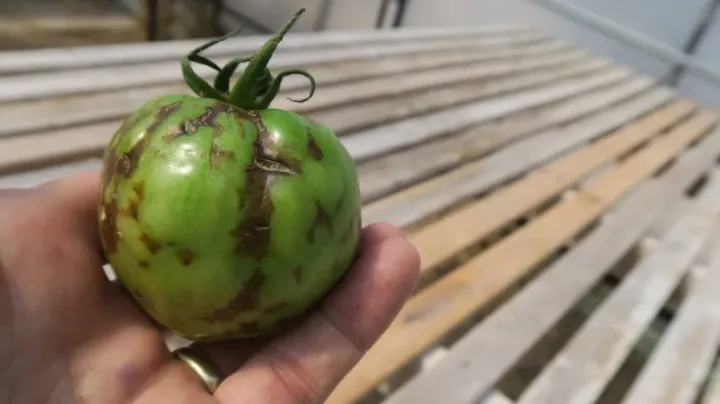
Symptoms of TSWV infection are highly variable and can mimic other diseases or nutrient deficiencies. Common signs include circular ringspots, which may be yellow, brown, or black, appearing on leaves and fruits.
Infected plants often exhibit stunted growth, terminal bud necrosis, and wilting of shoots. Leaves may show bronzing, distortion, or mosaic patterns, which are indicative of the systemic nature of the viral infection.
Fruit damage is a major economic concern, as the virus causes irregular ripening, prominent rings, and spotting. Such produce is unmarketable, leading to substantial post-harvest losses.
In many cases, the plant may show symptoms on only one side or specific branches before the infection becomes generalized. This localized beginning often leads to misdiagnosis by growers.
In young seedlings, infection is often fatal, leading to total collapse of the plant. In older plants, the persistent stress prevents the formation of healthy fruit and leads to premature senescence.
Pathogen
The causal agent of this disease is the Tomato spotted wilt virus (TSWV), which is the type species of the genus Orthotospovirus. It is a negative-sense single-stranded RNA virus known for its incredibly wide host range.
TSWV does not transmit through seeds or soil, and mechanical transmission is rare in field conditions. The virus is obligately transmitted by several species of thrips, with Frankliniella occidentalis being the most efficient vector.
The virus acquisition occurs during the larval stages of the thrips as they feed on infected plant tissues. Once acquired, the virus replicates within the insect's body, and the vector remains infectious for its entire lifespan.
The biological cycle of the virus is closely tied to the lifecycle of its vector. The virus needs to persist within the insect host, meaning management of the vector population is the only way to break the transmission cycle.
Because the virus is systemic, once it enters a plant, it travels through the phloem to all parts, making it impossible to cure the plant once infection has been established.
Conditions for development
The spread of TSWV is dictated by the population dynamics of thrips. Warm, dry weather conditions promote rapid thrips reproduction and migration, significantly increasing the infection rate in a crop.
Greenhouse environments provide an ideal setting for the virus, as the controlled climate allows thrips to survive and breed throughout the year, especially if biosecurity measures are lacking.
Weed hosts surrounding the production area are critical for the survival of the virus. Many common weeds act as symptomless reservoirs that provide a constant supply of TSWV for incoming thrips.
The movement of plant material, such as seedlings or transplants, is the primary way the virus is introduced into new geographic areas or clean greenhouses if the thrips are present.
Agricultural practices that encourage dense foliage or fail to manage moisture can create microclimates that favor thrips, thereby indirectly increasing the incidence of TSWV outbreaks.
Why it matters
The economic impact of TSWV is severe, as it is one of the most destructive viral diseases in agriculture worldwide. It can lead to complete crop loss in highly susceptible varieties.
Beyond the direct yield reduction, the labor-intensive requirement for roguing (removing infected plants) and the cost of repeated insecticide applications significantly erode farm profitability.
The virus affects a vast range of vegetable crops, including peppers, tomatoes, lettuce, and potatoes, as well as many ornamentals, complicating crop rotation and integrated pest management strategies.
There is no chemical cure for viral infections in plants. Once a field is infested with TSWV, the grower faces years of management difficulty as the virus remains endemic in the local weed population.
Market rejection of produce due to cosmetic blemishes caused by the virus results in massive financial losses, often exceeding the cost of production for the entire season.
Protection
Integrated Pest Management (IPM) is the gold standard for TSWV control. This includes using blue or yellow sticky traps to monitor thrips populations and timing insecticide applications based on threshold levels.
Biosecurity is paramount. This involves screening greenhouse vents, maintaining a weed-free perimeter, and ensuring that all incoming transplants are certified as virus-free.
The use of TSWV-resistant cultivars has proven to be the most sustainable management tool. Breeders continue to develop varieties that can tolerate the virus and maintain yields even under pressure.
Biological control agents, such as predatory mites (Amblyseius spp.) and beneficial insects like minute pirate bugs (Orius spp.), can help suppress thrips populations if managed correctly.
Strict sanitation protocols, including the immediate destruction of symptomatic plants and the sterilization of equipment, are necessary to prevent the further spread of the virus within the field or greenhouse.
Discussion
No discussions yet — be the first.