
Iris yellow spot
Orthotospovirus iridimaculaflavi
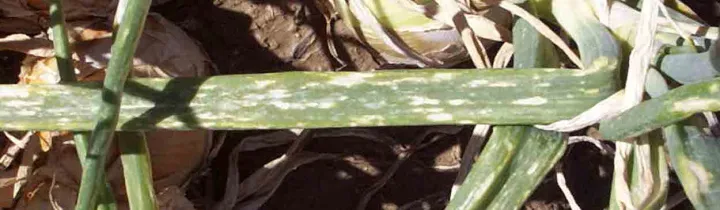
Description
Symptoms
The disease manifests as distinct yellow spots, rings, or streaking patterns on the leaves. As the disease progresses, these areas may become necrotic and dry out.
Plants infected with the virus often show stunted growth, reduced height of flowering stalks, and smaller, malformed flowers that lack typical color patterns.
The foliage may appear chlorotic, and the overall plant vigor declines significantly as the virus interferes with photosynthesis and nutrient transport.
In severe cases, the entire plant may collapse due to the loss of root vitality and increased susceptibility to secondary infections that target weakened tissue.
Diagnostic symptoms are usually most visible during active growth periods when the contrast between the yellow spots and healthy green tissue is most pronounced.
Pathogen
The causative agent of the disease is the Orthotospovirus iridimaculaflavi, a virus from the Tospoviridae family. It is a systemic pathogen that affects the vascular system of the host plant.
The viral particles contain genetic material enveloped in a lipid membrane, which allows them to effectively infect plant cells and hijack their metabolic processes.
Transmission occurs primarily through insect vectors, specifically thrips. Once these insects feed on infected tissue, they become carriers and transmit the virus to healthy plants.
Mechanical transmission is also a significant concern, especially during horticultural activities like dividing rhizomes, pruning, or cutting flowers with non-disinfected tools.
The virus can persist in the rhizomes of infected plants, ensuring its survival from one season to the next and facilitating long-distance spread via trade.
Why it matters
The primary damage caused by the virus is the destruction of the plant's aesthetic and commercial value, making infected specimens unsuitable for trade.
Because there is no cure for viral infections in plants, the disease leads to the inevitable loss of infected plant stock and potential degradation of entire collections.
The virus causes long-term decline in plant health, preventing proper blooming and leading to the eventual death of the rhizome system during winter dormancy.
Economic losses are compounded by the costs of pest control programs and the labor involved in roguing and disposing of diseased plants to protect the rest of the field.
The presence of the virus creates a high risk of spread to adjacent healthy beds, necessitating strict quarantine and hygiene protocols within the growing area.
Protection
Management starts with rigorous sanitation practices, including the immediate removal and destruction of any plant showing suspicious symptoms to prevent further spread.
Effective control of thrips is essential for limiting virus transmission. A strategic chemical control program using systemic insecticides should be implemented.
It is vital to source plant material from reputable suppliers that guarantee virus-free rhizomes, avoiding the accidental introduction of the pathogen into your garden.
Strict disinfection of all pruning and digging tools using bleach or alcohol solutions is mandatory to prevent mechanical spread between healthy and infected plants.
- Regular monitoring for thrips populations.
- Eliminating host weeds around the field.
- Ensuring spatial separation between old and new plantings.
Discussion
No discussions yet — be the first.