
Peanut yellow spot virus
Orthotospovirus arachiflavi
Description
Symptoms
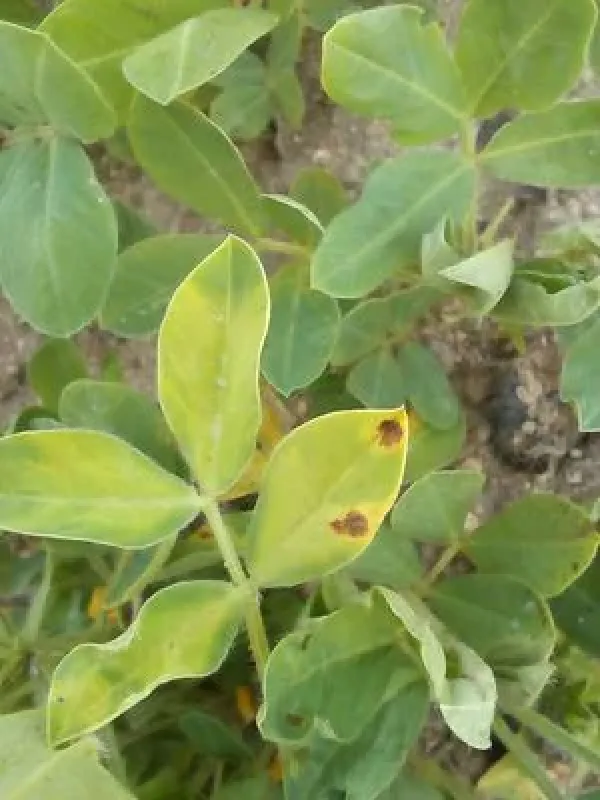
The earliest visual signs include the appearance of chlorotic spots, rings, or line patterns on the leaves. These symptoms are often accompanied by subtle leaf distortions, such as curling or crinkling, as the virus inhibits normal development.
Affected plants typically exhibit significant stunting and shorter internodes. This dwarfed appearance makes them easily distinguishable from healthy plants in the field, as they fail to reach their full canopy potential.
As the infection progresses, chlorotic areas may transition into necrotic lesions. These necrotic spots can lead to premature leaf senescence and shed, significantly reducing the plant's photosynthetic capability and energy production.
Systemic symptoms often manifest as wilting that persists even when soil moisture is adequate. This is due to the impairment of the vascular system, preventing the effective transport of water and nutrients throughout the plant.
In the final stages, plants show reduced pod production, with the few pods formed being shriveled or underdeveloped. The overall harvest quality is severely compromised, leading to lower marketability of the peanut yield.
Pathogen
Peanut yellow spot virus (PYSV), scientifically classified within the genus Orthotospovirus, is a devastating viral pathogen affecting peanut crops globally. It is an obligate parasite that relies on specific insect vectors for its transmission.
The virus is primarily transmitted by thrips, particularly Scirtothrips dorsalis, in a persistent circulative manner. Once the insect acquires the virus during its larval stage, it remains infectious for its entire lifespan, posing a constant threat to the crop.
The host range of this virus is significantly broad, including several legumes and solanaceous crops. Weed species around the fields act as reservoir hosts, maintaining the virus in the environment even when peanut is not actively growing.
As a member of the Tospoviridae family, the virus consists of tripartite single-stranded RNA. This genetic structure is prone to mutations, which frequently leads to the emergence of new strains that can challenge existing resistant cultivars.
Viral replication occurs primarily within the host's cytoplasm, interfering with cellular processes and causing systemic infection throughout the plant tissues, which eventually compromises the plant's overall health.
Conditions for development
The incidence and spread of the virus are heavily correlated with the population dynamics of its thrips vector. High temperatures and drought conditions favor rapid thrips reproduction and movement, increasing the rate of viral transmission.
The presence of wild host plants surrounding the field is a major risk factor. During the off-season, these weeds serve as essential virus reservoirs, facilitating the primary infection of newly planted peanut fields.
Weather patterns that promote the migration of winged adult thrips from infected areas to healthy fields are critical for the rapid spread of PYSV. Strong winds can transport these vectors over significant distances.
Optimal conditions for viral development within the plant are found in warm climates, where temperatures facilitate efficient systemic movement of the virus. Rapid plant growth during these periods can sometimes mask symptoms initially.
Field management practices that lead to nutrient imbalances, specifically excessive nitrogen, can create lush canopy growth that is highly attractive to thrips, indirectly increasing the vulnerability of the crop to infection.
Why it matters
The economic impact of the virus is significant, with potential yield losses ranging from moderate to catastrophic. Reduced pod size and weight directly translate to lower farmer profitability and economic instability.
Quality reduction is a major concern, as infected peanuts often have lower oil content and protein levels. This makes the harvest unsuitable for high-value food processing or certified seed production.
Plants weakened by the virus become highly susceptible to secondary pathogens, including various root rot fungi. This compounding of stress factors often leads to the death of the plant long before reaching maturity.
There are no chemical curative methods for viral diseases in crops. Once a plant is systemically infected, it cannot be cured, meaning that the disease management is entirely focused on prevention, which increases production costs.
In regions where the virus is invasive, quarantine regulations may be strictly enforced. This can limit the movement of agricultural products and require expensive phytosanitary inspections, impacting regional trade.
Protection
Integrated Pest Management (IPM) is the most effective approach, focusing on controlling the thrips population using systemic insecticides during the critical seedling stage to minimize early infections.
Cultural practices are paramount, including the systematic removal of weeds and alternative hosts in and around the field to eliminate the virus reservoir and reduce the initial thrips infestation pressure.
Planting resistant or tolerant cultivars is the most sustainable long-term solution. Breeding programs are continuously working to introduce new genetic resistance traits into high-yielding peanut varieties.
Implementing proper spacing and crop rotation strategies helps to break the infection cycle. Avoiding fields with a history of high viral incidence is a recommended preventive measure for sustainable farming.
The use of reflective mulches or barrier crops can deter thrips from landing on the peanut plants, providing a physical intervention that reduces the frequency of feeding and viral transmission events.
Discussion
No discussions yet — be the first.