
Description
Symptoms
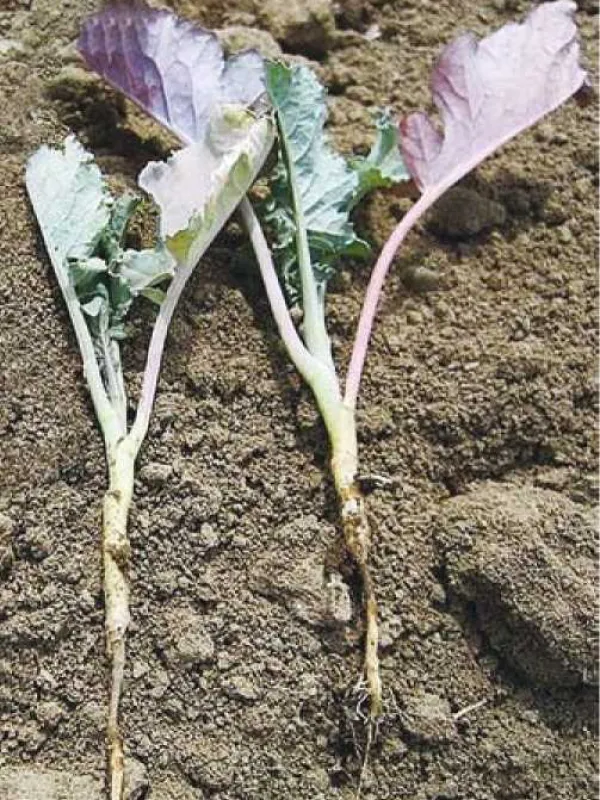
Early symptoms of root olpidium infection include reduced vigor and stunted growth of seedlings. The root system often appears underdeveloped, showing signs of limited branching compared to healthy root systems.
Upon closer inspection, the roots may exhibit yellowing or brown discoloration. In severe infections, the outer layers of the roots can become necrotic and decay due to the colonization by the fungal parasite.
Because the roots are damaged, the plants exhibit systemic symptoms such as chlorosis of the lower leaves, loss of turgor pressure, and wilting, which is particularly noticeable during periods of high temperature.
The impaired root function prevents the efficient uptake of water and essential nutrients. As a result, the plant may exhibit symptoms of nutrient deficiency even if the soil itself is well-fertilized.
In greenhouses, the disease can lead to a uniform loss of seedling stands, resulting in significant gaps and poor uniformity in the overall crop production.
Pathogen
Root olpidium is caused by the obligate parasite Olpidium brassicae, a fungus belonging to the Chytridiomycota phylum. This pathogen is specialized in infecting the root systems of various plant species.
The life cycle of the pathogen involves the production of motile zoospores. These zoospores use flagella to move through moisture in the soil, seeking out the roots of a susceptible host to initiate an infection.
When environmental conditions become unfavorable, the fungus produces resting spores known as cystosori. These structures allow the pathogen to survive for several years in the soil, waiting for the presence of a suitable host plant.
A critical aspect of Olpidium brassicae is its role as a biological vector. It is known to transmit various plant viruses, such as the tobacco necrosis virus, which can cause significant economic losses in different crops.
The host range is quite broad and includes various members of the Brassicaceae family, as well as peanuts, lettuce, tobacco, and sugar beet. It thrives primarily in moist, soil-based cultivation environments.
Conditions for development
The primary driver for the development of root olpidium is high soil moisture. The motile zoospores require a film of water to migrate from one plant root to another, making over-irrigation a major risk factor.
Moderate temperatures are ideal for the rapid proliferation of the fungus. This makes it particularly problematic for greenhouse production during the spring season when soil temperatures are in the optimal range.
High planting densities and poor greenhouse ventilation contribute to the maintenance of humidity levels that favor the spread of the pathogen through the soil and irrigation systems.
The use of unsterilized soil or contaminated irrigation water is a frequent source of primary infection. Once introduced, the resting spores are difficult to eradicate from the soil profile.
Excessive nitrogen application can sometimes exacerbate the issue by producing succulent, sensitive roots that are more easily penetrated by the fungal zoospores during the early stages of infection.
Why it matters
The main danger posed by Olpidium brassicae is its role in significant crop failures and the reduction of overall stand density, which necessitates costly replanting and delays the harvest schedule.
By acting as a vector for viruses, the pathogen can turn a seemingly mild root infection into a major disease outbreak. This can lead to complete loss of crop quality and marketability of the produce.
Plants that survive the infection are often weakened, leading to reduced yields and inferior fruit or leaf quality, which directly impacts the profitability of the agricultural operation.
The persistence of the fungus in the soil creates a long-term challenge, forcing farmers to implement strict crop rotation cycles or invest in intensive soil disinfestation techniques before replanting.
In intensive cultivation systems, such as hydroponics or nursery propagation, the pathogen can spread rapidly through shared water reservoirs, affecting a large number of plants within a very short timeframe.
Protection
Preventative measures are paramount. The use of disease-free propagation material and the sterilization of growing media (using steam or solarization) are the most effective ways to avoid an initial infestation.
Good irrigation management is crucial to limiting the spread of the pathogen. Ensuring proper drainage and avoiding waterlogged soil conditions will inhibit the movement of zoospores.
Implementing a proper crop rotation strategy is essential. By avoiding the planting of susceptible crops in the same area for several years, growers can effectively reduce the resting spore population in the soil.
Biological control agents, such as beneficial microorganisms (Bacillus species), can be applied to the root zone to create a protective barrier against fungal colonization.
In cases of confirmed outbreaks, the use of registered fungicides may be necessary. These should be applied according to local regulations, ideally as part of an integrated pest management program to minimize the development of resistance.
Pathogens and affected parts
Affects crops · 1
Discussion
No discussions yet — be the first.