
Powdery mildew of flax
Oidium lini
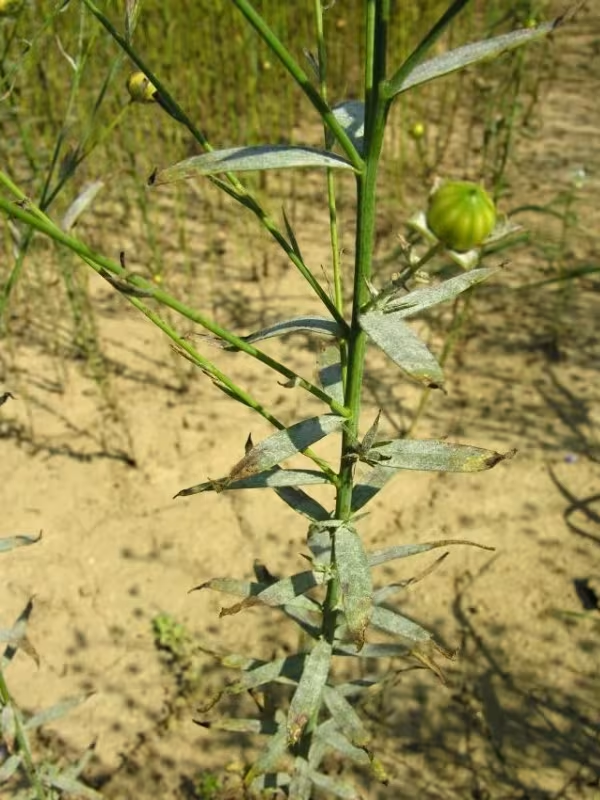
Description
Symptoms
The primary symptom is the appearance of a characteristic white, cobweb-like coating on leaves, stems, and seed pods. As the spores mature, the coating becomes denser and appears powdery.
Initially, spots appear as small, isolated patches that eventually merge, covering the entire surface of the plant. Underneath the coating, plant tissues often turn yellow and then brown.
Severe infestations lead to premature wilting and drying of the leaves. Lower leaves typically die first, significantly weakening the plant's overall health.
Infection of the reproductive organs results in deformation of the seed pods and poorly developed seeds, which reduces the quality of the harvested material.
- White powdery coating on stems
- Yellowing and curling of leaves
- Premature leaf drop
- Deformation and drying of seed pods
Pathogen
The disease is caused by the fungus Oidium lini, which belongs to the group of imperfect fungi. It is a highly specialized parasite that mainly affects fiber flax and oilseed flax during their active growth stage.
The fungus develops primarily as an ectophyte, forming a fine, dense layer of mycelium and conidial spores on the plant surface. Infection spreads through conidia, which are easily carried by air currents.
The biology of the pathogen is closely linked to the crop's growth phases. After conidia germinate, hyphae penetrate the plant epidermis, forming haustoria to extract nutrients from the host tissues.
The pathogen's life cycle is characterized by rapid sporulation, allowing the infection to spread across large areas of the field in a very short time.
The pathogen can persist in the soil or on plant debris in the form of mycelium, making crop rotation essential for managing the disease prevalence.
Conditions for development
The fungus thrives in moderate temperatures ranging from 18 to 25 degrees Celsius. High humidity is a critical factor, as it promotes rapid germination of conidia.
Overcrowded flax stands create a microclimate with high humidity and poor aeration, providing the perfect environment for the rapid development of powdery mildew.
Fluctuating day and night temperatures, accompanied by heavy dew, significantly accelerate sporulation and the spread of the infection throughout the field.
Imbalanced mineral nutrition, particularly excess nitrogen coupled with potassium and phosphorus deficiencies, lowers the plant's natural resistance to fungal infections.
Poor agricultural practices, such as failure to manage weed populations, increase the risk of infection accumulation and subsequent spread to the main crop.
Why it matters
Powdery mildew significantly degrades the quality of the fiber in fiber flax. The stems become brittle, which reduces the yield of long fibers during primary processing.
Infestation of vegetative organs inhibits photosynthesis, preventing the plant from accumulating enough nutrients to form high-quality, mature seeds.
In cases of early infection, yield losses can be substantial, and the germination rate of the resulting seeds is typically very poor.
The infection compromises the plant's immune system, making it susceptible to secondary bacterial and fungal pathogens that further damage the crop.
Economic losses arise from reduced product value and the additional costs associated with unplanned chemical interventions to control the disease.
Protection
The primary defense strategy is the use of flax varieties resistant to Oidium lini, which minimizes the risk of infection even under adverse weather conditions.
Maintaining a crop rotation cycle that returns flax to the same field only every 5–7 years is essential to reduce the infectious load in the soil.
Optimizing seed rates ensures proper plant density, which improves airflow through the stand and prevents the build-up of moisture favorable to the fungus.
Balanced application of potassium and phosphorus fertilizers strengthens cell walls, making them more resistant to the penetration of the fungal mycelium.
Chemical control involves the timely application of systemic fungicides during the growing season as soon as the first signs of the white coating are detected.
Discussion
No discussions yet — be the first.