
Nimbyosis
Nimbya
Description
Symptoms
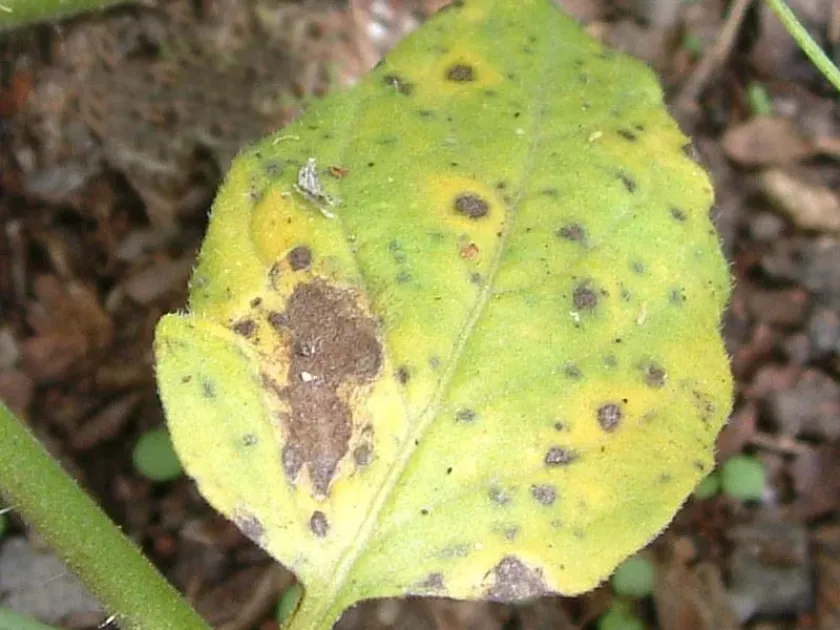
The initial symptoms of nimbyosis typically appear as small spots on the leaf blades. Over time, these spots expand, turning brown or dark-brown, often surrounded by a characteristic yellow halo.
On the surface of the infected areas, one can often observe the development of fungal sporulation, appearing as a grayish or olive-colored coating. Subsequently, the necrotic tissues may fall out, leaving ragged holes.
Infection can spread to stems and petioles, causing deformation and general weakening of the plant. Severe infection leads to premature drying and leaf drop, significantly reducing the photosynthetic area.
Affected plants appear stunted, showing slower growth compared to healthy specimens. Visual diagnosis is often difficult due to the similarity of symptoms with other leaf spot diseases, requiring laboratory confirmation.
A characteristic feature is the focal distribution of the disease across the field, indicating the presence of a primary source of infection. Under high humidity, spots may merge, covering most of the leaf surface.
Pathogen
The causal agent of nimbyosis is the genus Nimbya, belonging to the Pleosporaceae family. These phytopathogens are filamentous fungi capable of active sporulation and rapid spread.
Morphologically, the genus Nimbya is similar to Alternaria but possesses distinct conidial structures that allow for taxonomic separation. The fungus persists in the soil and on crop residues.
The life cycle includes the production of conidia, which are dispersed by wind, rain splashes, or insects onto healthy plant tissues. Pathogen penetration occurs through stomata or directly through the epidermis.
Fungal mycelium develops in the intercellular spaces of host tissues, releasing toxins that trigger cell death. The host specificity depends on the particular fungal species and its adaptation to the host plant.
The fungus exhibits high phenotypic plasticity, enabling survival in various environmental conditions. Spores are highly resistant to adverse external factors, complicating soil sanitation efforts.
Conditions for development
Optimal conditions for infection development include high air humidity and moderate temperatures. Prolonged rainy periods or heavy morning dews significantly promote spore germination on leaf surfaces.
The temperature optimum for mycelial development usually ranges from +18 to +25 degrees Celsius. Under these favorable conditions, the pathogen’s incubation period shortens, leading to rapid outbreaks.
Dense crop stands, where air circulation is restricted, create a humid microclimate that increases the risk of epiphytotics. Poor aeration prevents leaves from drying quickly after rainfall.
Failure to rotate crops and leaving unharvested residues on the field provide a perfect environment for the accumulation and overwintering of the pathogen. Weeds can also act as secondary reservoirs for the disease.
Balanced plant nutrition, particularly the adequate supply of potassium, improves plant immunity and reduces the likelihood of successful pathogen colonization.
Why it matters
Nimbyosis causes significant economic losses by reducing crop yields. Leaf infection disrupts photosynthesis, leading to insufficient biomass accumulation and stunted development.
Product quality decreases significantly; infected fruits or seeds are prone to rot, losing commercial value and shelf life. This limits the marketability of the harvested produce.
Severe infections can kill young plants, decreasing stand density and necessitating costly reseeding or additional pesticide applications. The disease acts as a stress factor, opening doors for secondary infections.
Logistics and storage costs increase if infected produce enters the supply chain, as it is susceptible to secondary decay. Nimbyosis reduces overall competitiveness of the farm's produce.
The need for complex protection measures increases production costs. Control requires proactive management to ensure profitability and crop health in commercial agriculture.
Protection
The primary control strategy involves strict crop rotation, allowing a 3-4 year interval before planting susceptible crops in the same field. This breaks the fungal life cycle.
Thorough removal and destruction of crop residues are mandatory, as they serve as the main source of inoculum in the soil. Deep plowing helps facilitate the rapid decomposition of infected materials.
Using resistant varieties and hybrids is the most sustainable and effective prevention method. Plant breeding consistently targets the development of forms with improved resistance.
Fungicide application should be based on phytosanitary monitoring data. Systemic fungicides, particularly triazoles and strobilurins, show high efficacy in suppressing pathogen activity.
- Treating seeds before planting
- Regular weeding to reduce reservoirs
- Optimizing plant spacing for better airflow
- Applying potassium fertilizers to strengthen tissues
Discussion
No discussions yet — be the first.