
Velvet tobacco
Nicotiana velutina
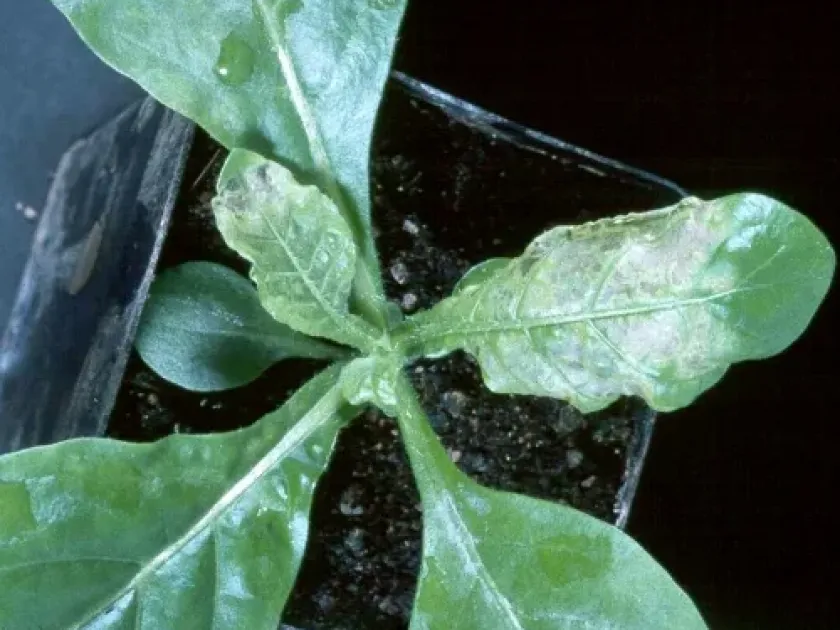
Description
Pathogen
Nicotiana velutina, commonly known as velvet tobacco, is a species of the Solanaceae family. In agronomy, it is recognized as a persistent weed that serves as a significant reservoir for various plant viruses and phytoplasmas affecting cultivated crops.
The plant is characterized by its velvety, pubescent foliage, which aids in moisture retention and serves as a defense mechanism against certain environmental stressors.
As a member of the Nicotiana genus, it shares biological traits with tobacco and tomato, making it a natural host for diseases that easily jump to economically important crops.
It typically exhibits an annual or short-lived perennial growth habit, which allows it to thrive in disturbed soils and neglected agricultural areas, where it produces large amounts of seeds.
The botanical classification of this species underlines its adaptability, as it thrives in arid to semi-arid environments where other competing vegetation may struggle.
##signs##The appearance of velvet tobacco is marked by rosettes of soft, hairy leaves that develop into erect stems, often reaching significant heights under favorable moisture conditions.
Infected neighboring crops often show classic signs of viral disease, including leaf mottling, yellowing, severe crinkling, or stunted development, even if the weed itself shows no symptoms.
During the flowering stage, the plant is easily identified by its tubular, pale-colored blossoms, which bloom primarily during the warmer months of the year.
Its pubescent texture is a key diagnostic feature, distinguishing it from other broadleaf weeds commonly found in Solanaceae production areas.
The root system is robust and capable of penetrating deeper soil horizons, which provides the plant with an edge in competitive environments.
##conditions##Velvet tobacco favors well-drained, sandy, or loam soils and is highly adapted to the hot, dry climates typical of semi-arid agricultural zones.
The species demonstrates remarkable tolerance to extreme heat and prolonged drought, allowing it to dominate areas where other vegetation would fail to establish.
Dispersal is primarily facilitated by wind-borne seeds and the movement of contaminated equipment during soil preparation and harvest activities.
Rapid growth is typically triggered by precipitation events, enabling the weed to quickly emerge and compete with seeded crops for light and space.
Human activity, particularly tillage, facilitates the germination of dormant seeds stored in the soil bank by bringing them closer to the surface.
##harm##The primary concern is the plant's role as an asymptomatic host for the Tobacco Mosaic Virus (TMV) and other pathogens, leading to consistent disease pressure in fields.
By competing for nutrients and water, velvet tobacco can significantly reduce crop biomass, often resulting in yield losses that exceed 30% in high-density patches.
The presence of the weed promotes the aggregation of insect vectors, such as aphids, which further increases the spread of viruses throughout the field.
Stunted crop growth due to early-season competition often results in higher susceptibility to secondary fungal infections and poor general field health.
The weed also adds costs to agricultural production through the necessity of extra weeding cycles and potential contamination of harvested grain or vegetable batches.
##control##Effective management begins with strict crop rotation and the maintenance of clear field margins to prevent the weed from encroaching on cultivated zones.
- Mechanical removal (tilling or hoeing) before the flowering stage to prevent seed set.
- Application of systemic herbicides on non-crop borders to reduce the initial weed population.
- Deep plowing to bury weed seeds and prevent germination in the following season.
- Frequent field inspections to identify and eliminate early-season rosettes before they reach maturity.
- Equipment sanitation protocols to stop the mechanical transfer of seeds between different field sites.
Integrating pre-emergent and post-emergent herbicide strategies can provide robust control, provided they are applied according to crop safety guidelines.
Long-term control is best achieved by sustaining vigorous crop growth, which naturally suppresses weed competition through canopy shading and efficient nutrient uptake.
Discussion
No discussions yet — be the first.