
Grapevine ringspot virus
Nepovirus avii
Description
Symptoms
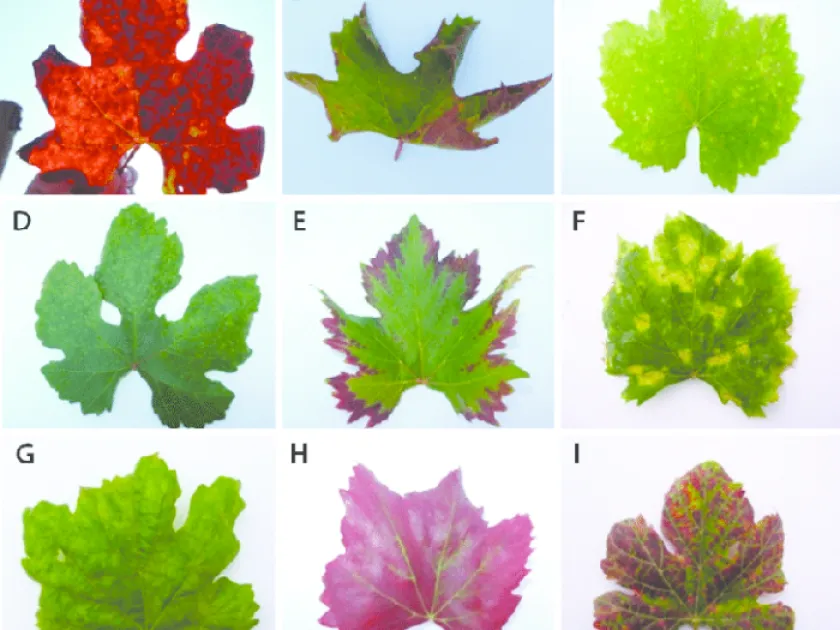
The primary symptom of this disease is the appearance of chlorotic spots on grape leaves, which develop into rings, wavy lines, or a mosaic pattern.
During the early growing season, leaves often show signs of deformation, becoming asymmetrical with irregular margins or exhibiting severe curling.
Shortened internodes on the shoots lead to a stunted, bushy growth habit, which is a classic indicator of viral stress in the vine.
The disease causes poor fruit set, flower shedding, and the development of unevenly sized berries, significantly reducing overall harvest quality and quantity.
In some cases, necrotic spots may develop on the internal tissues of the vine wood, causing permanent damage to the vascular system of the plant.
Pathogen
The disease is caused by the Grapevine fanleaf virus (GFLV), a member of the Nepovirus genus characterized by spherical virus particles.
It is a systemic disease, meaning the virus spreads through the plant's vascular tissues, disrupting nutrient transport and normal developmental processes.
The virus is primarily transmitted by soil-dwelling nematodes of the Xiphinema genus, which acquire the virus while feeding on infected roots.
Propagation through infected grafting material is a major factor in the spread of the virus to new vineyard plots worldwide.
Mechanical transmission is also possible through the use of non-sterilized pruning tools and machinery during vineyard maintenance operations.
Conditions for development
The prevalence of the disease is closely tied to the density of the nematode population, which thrives in moist, well-aerated soil environments.
The virus persists within the root system of the vine, making the infection chronic and difficult to eradicate from an established plantation.
The disease tends to spread in patches within a vineyard, as nematodes move slowly through the soil from infected roots to adjacent healthy plants.
Weed populations in the vineyard can serve as alternative hosts for both the virus and the vector nematodes, contributing to its persistence.
Environmental stress, including temperature fluctuations and drought, can exacerbate visible symptoms and weaken the vine's resistance to further infection.
Why it matters
Viral infection leads to progressive decline and degeneration of the vines, rendering the vineyard commercially non-viable over time.
Yield losses can be severe, often exceeding 50% due to fruit drop and the production of small, inferior quality grape clusters.
Infected plants exhibit reduced vigor, making them more susceptible to cold damage, fungal pathogens, and other environmental stressors.
The presence of the virus necessitates costly removal of entire vineyard blocks, as the pathogen can remain in the soil for several years.
The long-term economic impact is substantial due to the need for land fallowing and replanting with certified virus-free rootstock.
Protection
The most effective strategy is the exclusive use of certified, virus-free planting material sourced from reputable, tested nurseries.
Regular vineyard scouting is essential to detect early symptoms, allowing for the immediate rogueing and destruction of infected vines and their roots.
If nematode populations are identified in the soil, pre-plant soil fumigation or the use of nematicides is required to eliminate the vectors.
After clearing an infected area, it is recommended to keep the land fallow for several years or plant cover crops that discourage nematode proliferation.
- Strict adherence to quarantine regulations for imported vine cuttings.
- Sanitation of pruning shears and other tools with disinfectant between vines.
- Effective weed management to eliminate potential reservoir hosts.
Discussion
No discussions yet — be the first.