
Neofusicoccum parvum
Neofusicoccum parvum
Description
Symptoms
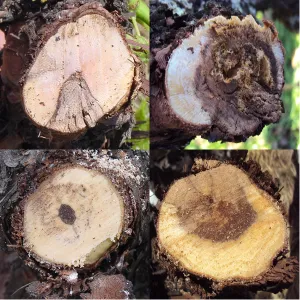
The most characteristic symptom of infection is the development of wood necrosis. In cross-sections of infected trunks or cordons, this often appears as V-shaped (wedge-shaped) dark lesions that reflect the progression of the mycelium.
Foliar symptoms are often indicative of the underlying wood decay. Leaves may show interveinal chlorosis, followed by necrosis, while the leaf tissue dries out and becomes brittle. These symptoms often appear suddenly during hot summer months.
Small black pimple-like structures, which are the fungal fruiting bodies (pycnidia), may appear on the bark of dead or dying branches. These structures are most easily observed under humid conditions when they release spore masses.
Inflorescences and clusters are also susceptible. Infected berries may shrivel, turn brown, or drop prematurely. The presence of such symptoms often points to a severe systemic infection within the vine's vascular structure.
Over time, the cumulative effect of the disease leads to a steady decline in plant vigor. Ultimately, the plant may suffer from "apoplexy" or sudden death, especially when stressed by high temperatures or heavy crop loads.
Pathogen
Neofusicoccum parvum is a highly aggressive ascomycete fungus belonging to the Botryosphaeriaceae family. It is recognized as one of the most significant pathogens involved in grapevine trunk diseases (GTDs) worldwide.
The fungus functions as an endophyte, colonizing plant tissues without immediate external symptoms. It remains in a latent state until the host plant undergoes stress, at which point the fungus shifts to a pathogenic mode, causing extensive tissue damage.
Reproduction occurs through the production of pycnidia, which release numerous conidia. These spores are disseminated via wind and rainwater, facilitating the spread of the disease within vineyards and across nearby plantations.
Once inside the plant, the fungal mycelium invades the vascular system, specifically the xylem. This colonization disrupts the upward transport of water and nutrients, leading to the gradual decline and eventual death of the affected plant parts.
Due to its high genetic diversity and environmental resilience, Neofusicoccum parvum poses a persistent threat. It can survive for extended periods in dead wood, making it a constant challenge to manage in perennial cropping systems.
Conditions for development
The primary pathway for Neofusicoccum parvum entry is through wounds created during pruning or mechanical harvesting. Freshly cut surfaces are highly susceptible to colonization by airborne spores.
Environmental conditions play a crucial role in disease development. High humidity and temperatures ranging from 20°C to 30°C are optimal for spore germination and rapid mycelial growth within the wood tissues.
Plant stress serves as a major catalyst for the disease. Factors such as drought, poor soil nutrition, or damage from frost make the vine significantly more vulnerable to colonization by the pathogen.
Improper vineyard management practices, such as failing to remove infected wood or lack of sanitation, contribute to a high inoculum density in the vineyard environment, increasing the risk of recurring infections.
Vineyard layout and canopy density can also influence the spread. Poor aeration and high humidity within the canopy create microclimates that favor the survival and movement of fungal spores during the growing season.
Why it matters
The destructive potential of this fungus lies in its ability to permanently destroy the internal vascular structure of the plant. This makes the disease difficult to manage, as the damage is often irreversible once visible symptoms occur.
Economic losses are significant, involving reduced crop yield, diminished fruit quality, and the necessity of replacing entire blocks of vines earlier than the planned vineyard life cycle.
The disease affects a wide range of woody plants, including various fruit trees. This broad host range makes it a quarantine concern in many regions, limiting the options for crop diversification.
Vineyard rehabilitation is extremely costly and time-consuming. Because the pathogen can persist in soil and wood debris, replanting in the same area often carries a high risk of re-infection.
The lack of effective curative treatments means that the disease forces a shift towards long-term management strategies, focusing on prevention and the mitigation of losses rather than eradication.
Protection
Strict sanitation is the cornerstone of Neofusicoccum parvum control. All infected wood must be removed, taken out of the vineyard, and destroyed by burning to minimize the reservoir of spores.
Pruning management is critical. It is recommended to prune during dry, cold weather conditions to minimize the susceptibility of pruning wounds and to reduce the likelihood of spore dispersal by rain.
- Apply protective wound sealants immediately after pruning to physicalize the entry points.
- Ensure equipment is disinfected between plants to prevent mechanical transfer of spores.
- Prioritize the use of high-quality, certified nursery stock to ensure the vineyard starts with healthy vines.
Preventive fungicide applications at the time of pruning can help protect wounds during the period of maximum vulnerability, although they do not provide a cure for established infections.
Emerging research on biological control, specifically the use of Trichoderma species, offers potential. These beneficial fungi can compete with Neofusicoccum parvum for space and nutrients, effectively suppressing its growth.
Discussion
No discussions yet — be the first.