
Description
Symptoms
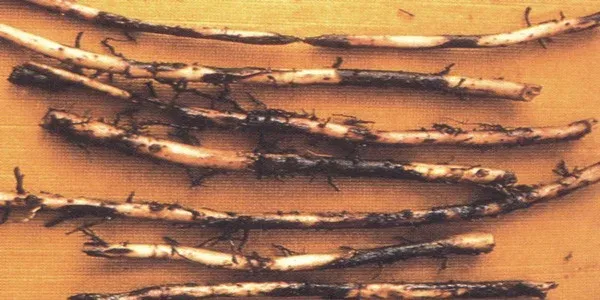
The primary symptom of infestation is the presence of small, reddish-brown or black necrotic lesions on the roots of the banana plant.
These lesions gradually coalesce, eventually girdling the root and causing the complete destruction of the primary and secondary root system.
As the root system fails, the aerial parts of the plant show signs of stress, including stunted growth, yellowing of leaves, and premature wilting.
In cases of severe infestation, the plant loses its ability to anchor in the soil, leading to the toppling of the banana mat, even under light wind conditions.
A longitudinal cross-section of an infected root reveals characteristic reddish-brown tunnels, which are the pathways created by the nematodes during feeding.
Pathogen
The pathogen responsible for this disease is the endoparasitic nematode Radopholus similis, which is a major pest of banana plantations worldwide.
This nematode is a migratory endoparasite, meaning it continuously moves through the root cortex, destroying cells and consuming the nutrient-rich cytoplasm.
The entire life cycle of the nematode, from egg to adult, is completed in approximately 20 to 25 days depending on the ambient temperature.
Both larvae and adult females are capable of infecting healthy roots, making them highly efficient at spreading the infection within the root system.
The pathogen causes degradation of cell walls through the secretion of enzymes, which creates large cavities within the root tissues where the population thrives.
Conditions for development
Optimal development and reproduction of Radopholus similis occur at temperatures ranging from 24°C to 30°C, which are typical for tropical banana regions.
Soil moisture plays a critical role in the mobility of the nematodes, as they rely on water films in soil pores to migrate towards new root tips.
Heavy or waterlogged soils often aggravate the disease, as the nematode moves more easily through saturated soil environments compared to dry conditions.
Infested planting materials, particularly suckers and rhizomes, are the most frequent means of introduction of the nematode into clean cultivation areas.
Weed hosts in the field can harbor the nematode population even when banana plants are absent, making eradication efforts significantly more complex.
Why it matters
The burrowing nematode is arguably the most destructive pest in commercial banana production, causing significant yield losses globally.
The impairment of the root system limits the plant's ability to take up water and nutrients, which directly impacts fruit size, quality, and total crop yield.
Root damage serves as an entry point for various secondary pathogens, particularly fungi, which accelerate root rot and hasten the death of the plant.
Once established in a field, the nematode is extremely difficult to eliminate, often requiring intensive and costly chemical management programs.
The physical loss of banana mats due to toppling results in substantial labor costs for replanting and overall reduction in plantation longevity.
Protection
The foundation of effective management is the use of nematode-free planting materials derived from tissue culture (micropropagation) techniques.
Hot water treatment (HWT) of rhizomes before planting is a proven method to kill the nematodes embedded deep within the tissue without harming the plant.
Chemical control using nematicides is used as a management tool to suppress population levels and protect the root systems in high-risk areas.
Implementation of strict quarantine measures and the decontamination of farm equipment are essential to prevent the spread of the pathogen between plots.
- Crop rotation with non-host species for long periods.
- Paring of rhizomes to remove superficial infected tissue.
- Soil solarization in appropriate nursery environments.
- Regular monitoring of root systems for early signs of lesions.
- Application of organic amendments to enhance plant vigor and soil health.
Pathogens and affected parts
Affects crops · 1
Discussion
No discussions yet — be the first.