
Description
Symptoms
The primary symptom is the development of irregular necrotic spots on leaves and stems. These lesions often exhibit concentric zoning, making them resemble other common leaf spot diseases.
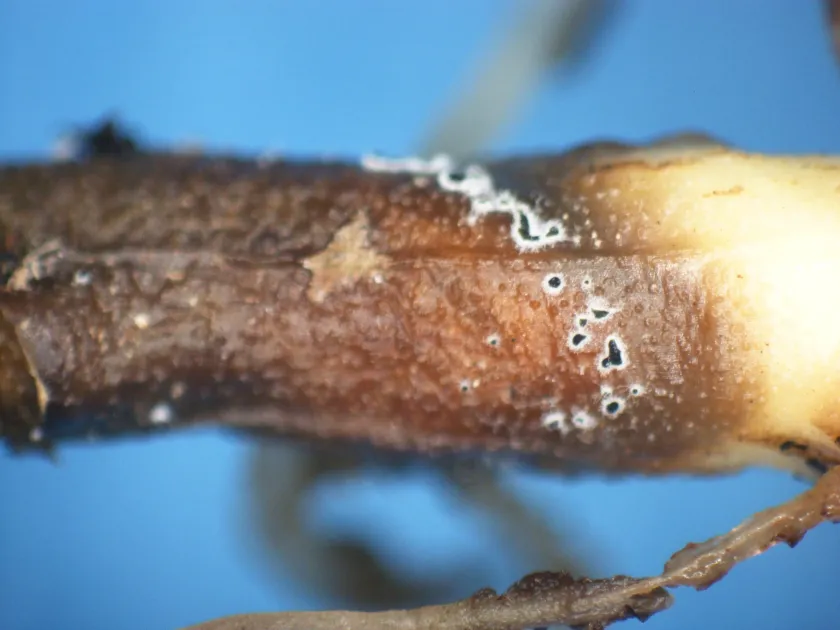
In the center of the lesions, especially under high humidity, small, dense cushion-like sporodochia appear. These structures look like tiny dark, black, or greenish-black dots arranged in concentric patterns.
As the disease progresses, the infected tissue turns yellow, then brown, and eventually dies. Severe infections can lead to the complete drying of leaves, significantly reducing the plant's photosynthetic capacity.
Infected rice plants often show stunted growth. If the infection occurs at an early stage, it can lead to sparse plant stands and general suppression of the plant's vegetative biomass.
Under prolonged humid conditions, the spots can coalesce to form large necrotic patches on the leaf blades. Close inspection usually reveals a characteristic fungal growth consisting of massed conidia.
Pathogen
The disease is caused by the imperfect fungus Myrothecium verrucaria, which belongs to the class of Deuteromycetes. This pathogen is highly saprophytic and can survive in the soil on plant debris for long periods.
The fungus develops mycelium within the host tissues, forming characteristic fruiting bodies known as sporodochia. These structures typically appear as dark or black, cushion-like clusters containing numerous conidia.
It is a facultative parasite that affects a wide range of crops, including cereals, vegetables, and ornamental plants. Its aggressiveness is heavily dependent on the plant growth stage and environmental conditions.
The life cycle involves the production of conidia, which are disseminated by wind, rain splashes, or agricultural machinery. This rapid dispersal mechanism allows the infection to spread across the field effectively.
Myrothecium poses a significant threat to rice crops by infecting leaves and stems, causing severe necrosis. An infestation in rice fields can result in substantial yield losses and reduced grain quality.
Conditions for development
High humidity and moisture are the key factors driving the development of Myrothecium leaf spot. Favorable conditions for conidia germination and host infection occur during periods of prolonged rainfall.
Temperature plays a crucial role, as the pathogen is most active under moderate to high temperatures. Warm weather combined with excess moisture significantly shortens the incubation period of the disease.
Poor agricultural practices, such as high plant density, hinder air circulation. This creates a microclimate in the lower crop canopy that is ideal for fungal spore proliferation.
Mechanical damage to plants, caused by field operations or insect activity, creates entry points for the infection. The fungus easily penetrates weakened tissues, initiating an outbreak.
The presence of large amounts of crop residue on the field increases the disease pressure. The pathogen overwinters in the soil and on debris, serving as a primary source of inoculum for the next season.
Why it matters
The damage caused by Myrothecium is reflected in reduced crop productivity and poor market quality. In rice, the disease directly impacts panicle filling and grain weight.
Massive infection leads to premature leaf senescence, which prevents the proper accumulation of nutrients. This inevitably results in a significant reduction in overall yield.
Infected plants become more susceptible to other secondary pathogens and environmental stresses. The infection weakens the plant's immune system, making it less resilient to adverse conditions.
Infected seeds can harbor the pathogen, leading to reduced germination and seedling vigor. The fungus can persist on the seed surface, ensuring the spread of the disease to new planting sites.
Economic losses include the costs of additional fungicide applications and the direct loss of harvested product. During severe epidemics, yield losses can be substantial.
Protection
The foundation of control lies in crop rotation and maintaining spatial isolation between fields. It is essential to avoid continuous monocropping to prevent the buildup of soil-borne inoculum.
Deep plowing to bury crop residues significantly reduces the overwintering inoculum level. Regular field sanitation and the removal of post-harvest debris are mandatory management practices.
Using high-quality, disinfected seeds prevents the introduction of the pathogen to new areas. Seed treatment with broad-spectrum fungicides helps protect seedlings during the early stages of growth.
If symptoms appear, the application of systemic fungicides is necessary. The choice of active ingredients should be based on regional regulations for the specific crop and efficacy against Deuteromycetes.
Balanced fertilization, particularly with potassium and phosphorus, enhances the plant's natural resistance to fungal infections. Conversely, excessive nitrogen can lead to soft tissues that are more vulnerable to colonization.
Pathogens and affected parts
Affects crops · 1
Discussion
No discussions yet — be the first.