
Myriosclerotinia curreyana
Myriosclerotinia curreyana
Description
Symptoms
Early symptoms of the disease include a noticeable change in the coloration of Juncus stems, which lose their healthy green appearance. Infected parts gradually turn yellow and then brownish, indicating a severe disruption of chlorophyll function and tissue death.
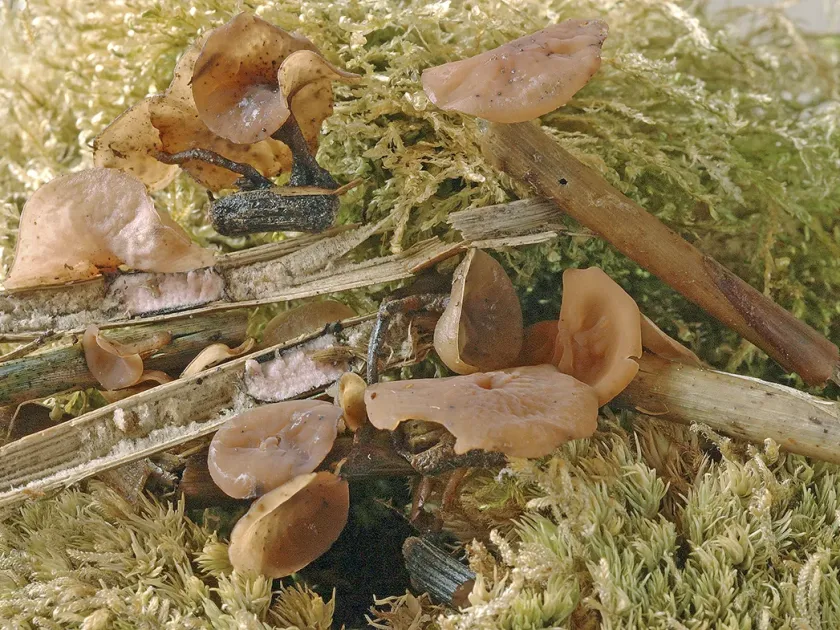
A diagnostic feature of this infection is the presence of black, elongated or distorted sclerotia found within the hollow stems of the host. Cutting the stem open typically reveals these hard, dark fungal structures resting inside the degraded plant cavity.
In conditions of high humidity, a fine, whitish mycelial mat may appear on the surface of the infected stems. As the disease progresses, this growth leads to stem deformation, bending, or curling, which significantly reduces the plant's structural integrity.
As the colonization intensifies, the affected stem tissue loses its turgor and becomes extremely brittle. Infected plants often show signs of stunted growth or premature wilting, which can lead to the collapse of individual stalks under their own weight.
In advanced stages, the internal anatomy of the Juncus stem is entirely replaced by the fungus's reproductive and survival structures. This effectively turns the stem into a vector for releasing more spores back into the environment, promoting rapid localized spread.
Pathogen
The causal agent of this disease is the ascomycete fungus Myriosclerotinia curreyana, belonging to the Sclerotiniaceae family. Its life cycle involves the formation of sclerotia — dense, melanized survival structures that enable the pathogen to persist in harsh environmental conditions.
This fungus is highly specialized, primarily attacking plants within the Juncus genus (rushes). The infection cycle initiates in spring when the fungal sclerotia germinate to produce apothecia, which then release spores that are dispersed by wind or splashing water.
Once the fungal spores land on susceptible Juncus tissues, they germinate and colonize the stem, penetrating the epidermal and parenchymal layers. The mycelium grows throughout the internal stem cavity, secreting enzymes that degrade plant tissues to extract nutrients.
The biology of Myriosclerotinia curreyana is intrinsically linked to moisture availability. It has evolved to thrive in wetland ecosystems, utilizing the high humidity characteristic of these environments to optimize its metabolic and reproductive processes.
The synchronicity between the host's growth stages and the fungus's reproductive cycle ensures that infection occurs at the most vulnerable time for the Juncus plants, guaranteeing the continued survival and spread of the pathogen within the host population.
Conditions for development
High relative humidity is the most critical environmental driver for the development of Myriosclerotinia curreyana. The fungus is endemic to floodplains, wet meadows, and coastal zones where moisture levels remain consistently elevated.
Moderate temperatures during the spring season are optimal for the germination of sclerotia stored in the soil or plant debris. Once active, the fungus can rapidly colonize nearby host tissues if environmental conditions remain damp and cool.
Dense plant stands provide a protected microclimate that minimizes evaporation, allowing spores to survive and infect host stems more easily. Poor air circulation in these crowded patches is a major contributor to the severity of the outbreak.
The accumulation of dead Juncus stalks from previous years serves as the primary reservoir for the fungus. Sclerotia embedded in this organic debris can remain viable for several years, acting as a constant source of primary infection for new growth.
Hydrological changes in a habitat that result in stagnant water or waterlogged soils are highly conducive to the expansion of this disease. Proper site drainage can be an effective way to lower the infection risk by modifying the microenvironment.
Why it matters
The disease causes a reduction in the vigor and productivity of Juncus populations. Infected individual plants eventually perish, which leads to gaps in the vegetation and potentially facilitates the invasion of competing weeds or other plant species.
For ornamental Juncus cultivars used in landscape gardening, infection by Myriosclerotinia curreyana results in a complete loss of aesthetic appeal. The unsightly brown, withered stems can destroy the visual harmony of garden ponds or wetland features.
By compromising the integrity of the stems and hindering photosynthesis, the disease drains the plant's energy reserves in the rhizomes. This makes the host significantly more susceptible to secondary stressors, including other pathogens and extreme weather.
Economic damage is observed in the harvest of rushes used for weaving or craft materials. When a significant portion of the harvest is infected, the stems become too brittle and decayed to be of any commercial utility, leading to direct financial losses.
The unchecked spread of the fungus can alter the composition of local plant communities. By targeting specific Juncus species, Myriosclerotinia curreyana acts as an ecological pressure that can lead to a shift in the local flora dominance over time.
Protection
Rigorous sanitation practices are the first line of defense. It is essential to collect and destroy all infected plant material, particularly stems containing sclerotia, to reduce the overall inoculum load in the affected area.
Cultural practices such as improving site drainage and ensuring proper spacing between plants can help reduce the humidity around the base of the stalks. Increased airflow significantly hinders the fungus's ability to infect new tissues.
Chemical control involving fungicides may be utilized in severe cases or high-value plantings. Treatment should ideally be applied during the early stages of the growing season to protect healthy tissue from primary spore infections.
Prevention involves sourcing healthy, disease-free planting material to avoid introducing the pathogen to pristine habitats. Monitoring established sites and isolating infected patches early can prevent the spread of the disease to unaffected sections.
For sustainable long-term management, rotating sites or restoring natural hydrological cycles can reduce the conditions that favor the fungus. Combining these methods provides the most effective protection for Juncus-dominated landscapes.
Discussion
No discussions yet — be the first.