
Cercospora leaf spot of fig
Mycosphaerella caricae
Description
Symptoms
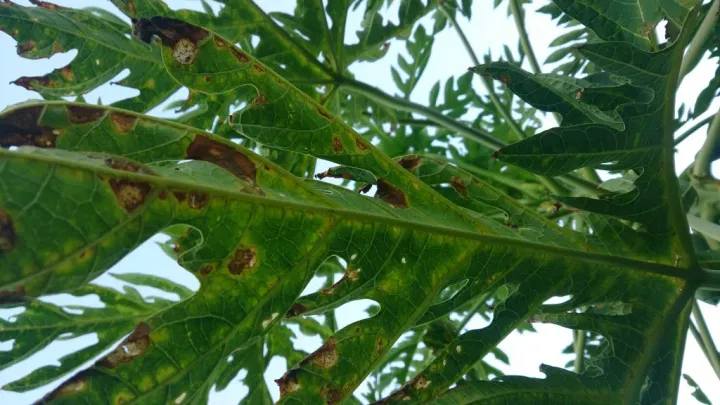
The most visible symptom is the appearance of numerous small, irregular spots on the leaves, which initially look like pale green or light brown discolorations.
As the infection advances, these spots enlarge and change color to a dark brown or reddish-brown, often surrounded by a characteristic yellow halo.
Under conditions of high humidity, you may observe a dark, velvety growth on the underside of the leaves, which represents the sporulation of the fungus.
Heavily infected leaves begin to wither, turn yellow, and fall from the tree prematurely, leading to early defoliation of the fig tree.
In severe cases, the lesions can also manifest on the stems and developing fruits, potentially causing fruit drop or significant cosmetic damage.
Pathogen
Cercospora leaf spot in fig trees is caused by the fungus Mycosphaerella caricae, which is also identified in its asexual stage as Cercospora fici.
The pathogen is an ascomycete fungus that survives in dormant conditions within infected plant debris, fallen leaves, and sometimes on tree bark.
When environmental conditions become favorable, the fungus produces conidia which act as the primary source of infection for the new season's growth.
These spores are primarily disseminated by wind currents and water splashes during rainfall or overhead irrigation, allowing the pathogen to move between trees.
Once settled on a susceptible leaf surface, the fungal spores germinate and penetrate the tissue, eventually establishing a network of mycelium within the plant cells.
Conditions for development
High humidity and warm temperatures are the most critical environmental factors for the rapid development and spread of Mycosphaerella caricae.
The pathogen thrives best when temperatures range between 20°C and 28°C, especially if the leaves remain wet for an extended period.
Poor orchard management, such as planting trees too closely, restricts airflow and increases the humidity around the foliage, making the environment ideal for infection.
Overhead irrigation systems that wet the leaves create the perfect surface conditions for the fungus to germinate and enter the leaf tissue.
Poorly drained soils or stagnant air in home gardens can also contribute to creating a microclimate that supports persistent disease pressure.
Why it matters
The primary damage caused by this disease is the reduction of the leaf surface area, which directly impairs the tree's photosynthetic capability.
Premature leaf drop prevents the tree from storing enough energy for winter survival and fruit production, leading to weakened growth in the following season.
Fruit quality is also significantly degraded, as the tree cannot provide the necessary sugars and nutrients to the maturing figs due to canopy loss.
Long-term infestation without proper intervention can lead to general decline of the fig tree, making it more susceptible to other pests and diseases.
Economic losses in commercial orchards are substantial due to the reduced yield and the reduced marketability of spotted, low-quality fruit.
Protection
Sanitation is the cornerstone of control: it is essential to collect and destroy all fallen leaves and infected twigs to remove the primary inoculum.
Pruning the tree to improve airflow and increase light penetration is a crucial cultural practice that helps keep the canopy dry.
In commercial and home settings, applying copper-based fungicides during the dormant season and early growth stages can significantly limit initial outbreaks.
Switching from overhead irrigation to drip irrigation is highly recommended to keep the foliage dry and reduce the risk of spore transmission.
- Use disease-resistant varieties if available in your climate.
- Apply balanced fertilizers to boost overall tree vigor.
- Monitor the garden regularly to catch infections at the onset.
- Use systemic fungicides if the infection becomes widespread.
Discussion
No discussions yet — be the first.