
Myxomycetes
Mycetozoa
Description
Symptoms
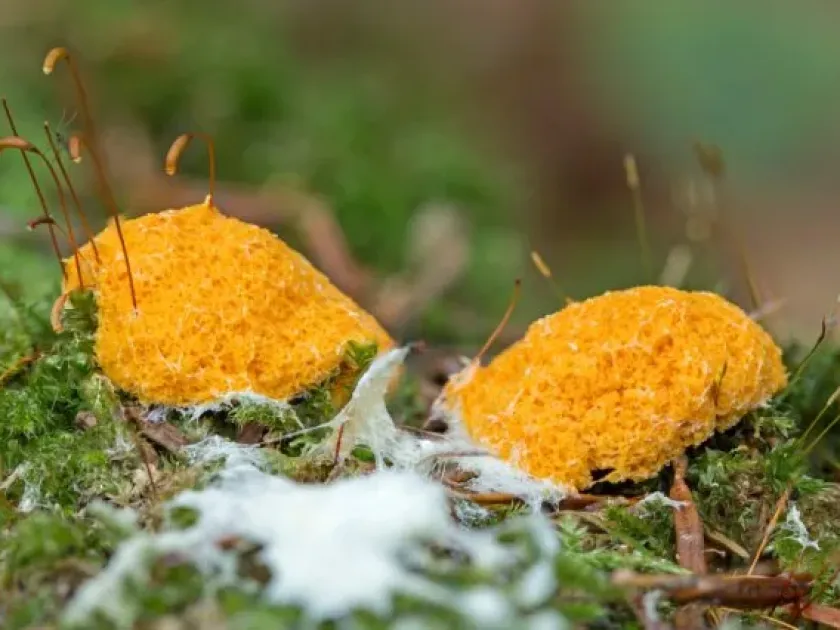
The primary symptom of myxomycetes is the appearance of conspicuous slimy or foamy masses, which can vary in color from white and yellow to orange or grey.
In the early stages, these organisms appear as gelatinous or jelly-like structures on stems, leaves, or mulch, which can be easily wiped away.
As they mature, they transition into dry, dusty structures known as sporangia, which release a cloud of spores upon contact or disturbance by wind.
Unlike parasitic fungi, myxomycetes typically remain on the surface of the plant tissue, creating a physical barrier rather than invading the cells.
These signs are most commonly observed on low-lying vegetation, turfgrass, and organic mulch that stays consistently moist throughout the growing season.
Pathogen
Myxomycetes, often referred to as slime molds, are unique organisms that exhibit characteristics of both fungi and amoeboid protists during their life cycle.
Their vegetative state is known as a plasmodium, a multi-nucleated mass of protoplasm capable of movement across surfaces to feed on organic matter.
They are technically saprotrophs, meaning they feed on bacteria, fungal spores, and decaying organic debris rather than living plant tissues.
Although they do not infect plants in a parasitic way, their presence indicates high moisture levels and poor airflow in the immediate plant environment.
The biological complexity of these organisms makes them distinct from common phytopathogenic fungi, requiring a different approach to their management.
Conditions for development
The development of myxomycetes is heavily reliant on high humidity and prolonged moisture, often triggered by heavy rains or excessive irrigation.
They thrive in temperate environments with temperatures ranging between 15 and 25 degrees Celsius, particularly during cloudy and humid weather conditions.
Poor circulation in dense plant canopies or thick turf areas creates trapped pockets of moisture that favor the expansion of the plasmodium phase.
Accumulation of organic mulch, leaf litter, and other decomposing plant materials provides the necessary nutrient base for their rapid spread.
Lack of proper soil drainage combined with stagnant water at the base of plants acts as a catalyst for their colonization of the lower stem portions.
Why it matters
The main damage is aesthetic and physiological, as the slimy layer blocks sunlight and air exchange, hindering the photosynthesis process in the affected leaves.
By smothering the surface of the plant, myxomycetes can create a localized high-humidity microclimate that facilitates the entry of secondary bacterial pathogens.
Ornamental plants and golf course turfs are particularly susceptible to quality loss, as the crusty or slimy patches significantly reduce their visual appeal.
Prolonged blockage of leaf stomata by the organism can lead to chlorosis and premature senescence of the foliage due to metabolic stress.
While they rarely kill a healthy plant directly, their presence is a clear signal of underlying management issues regarding irrigation and canopy density.
Protection
Prevention focuses on improving air circulation and drainage to ensure that surfaces dry quickly after rainfall or irrigation events.
Mechanical removal by washing off the slime with a forceful jet of water during early morning hours can effectively disperse and kill the organism.
Reducing the thickness of organic mulch and preventing the accumulation of debris around the base of plants will significantly lower the chances of outbreak.
Fungicides are generally ineffective against myxomycetes, so cultural practices such as proper spacing and irrigation management are the preferred control methods.
Regular mowing of turf and thinning out dense plant groups will decrease moisture retention and prevent the development of ideal conditions for these organisms.
Discussion
No discussions yet — be the first.