
Muskmelon vein yellowing virus
Muskmelon vein
Description
Symptoms
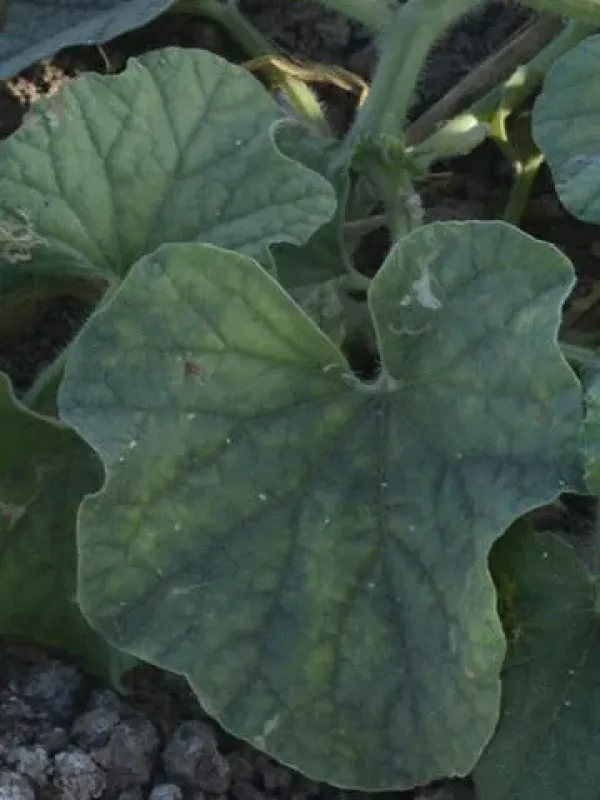
The hallmark symptom of this virus is the yellowing of the leaf veins, which creates a distinct and visible network pattern against the green tissue. Eventually, this chlorosis spreads across the entire leaf blade.
Affected melon plants typically exhibit severe stunting and reduced internode length. The overall appearance of the plant is dwarfed, and the foliage may look yellowed and unhealthy compared to neighboring, non-infected plants.
Leaf curling and mosaic-like mottling are also common symptoms. In many cases, the growth tips become distorted, and the leaves may display an upward curling, which is a classic indicator of viral stress.
The virus significantly impacts the reproductive phase of the plant. A high incidence of flower and fruit abortion is common, leading to a drastically reduced fruit set and poor development of the remaining fruit.
- Interveinal and vein yellowing
- Significant stunting (dwarfing)
- Leaf mosaic and distortion
- Premature fruit and flower drop
- Reduced fruit weight and quality
Pathogen
The causal agent of this disease is the Muskmelon vein yellowing virus (MuVYV), a member of the genus Ipomovirus within the Potyviridae family. It is a single-stranded RNA virus that primarily impacts the Cucurbitaceae family.
The virus relies on a vector for transmission and survival. The whitefly Bemisia tabaci is the primary carrier, transmitting the virus in a semi-persistent or persistent manner, which facilitates the rapid spread of the disease within melon fields.
Various wild cucurbits and weeds act as reservoir hosts for the virus. These plants allow the pathogen to survive between growing seasons and provide a source of inoculum for the primary infestation of newly planted crops.
Inside the host plant, the virus replicates within the phloem cells. The systemic movement of the virus particles via the vascular tissue leads to a complete disruption of the plant's metabolic pathways and photosynthetic efficiency.
Genomic studies of the virus have highlighted its high adaptability to different environmental conditions, making it a persistent threat in regions where melon cultivation is intensive and whitefly populations are high.
Conditions for development
The development of the disease is strictly tied to the life cycle of the whitefly vector. High temperatures and moderate humidity levels create an ideal environment for Bemisia tabaci to multiply rapidly.
Fields with dense weed infestations or those located near abandoned cucurbit crops are at a higher risk. Weeds provide the necessary shelter for whiteflies to harbor the virus before migrating to the primary crop.
Environmental stress, such as water deficit or poor soil management, can exacerbate the impact of the virus. Stressed plants are often more susceptible to rapid systemic colonization by the viral particles.
In greenhouse environments, the disease can spread extremely quickly due to stable temperatures and the absence of natural predators of the whitefly, leading to total crop failure if left unmanaged.
Wind direction can also influence the spread of the disease, as whiteflies are capable of flying or being carried over significant distances to infect healthy field plots.
Why it matters
The primary damage caused by MuVYV is the significant reduction in marketable yield. Infected melon plants often produce undersized, deformed fruits that do not meet commercial quality standards.
The economic impact involves both the direct loss of harvest and the high costs associated with repeated insecticide applications required to keep the whitefly population at manageable levels.
Viral infection leaves the plants immunocompromised, making them highly susceptible to secondary pathogens, such as root rots or leaf spots, which can lead to rapid wilting and death of the plant.
The nutritional and organoleptic quality of the fruit is negatively affected. Consumers often reject fruits from infected plants due to poor sugar content, lack of aroma, and unattractive physical appearance.
If the infection occurs early in the season, the entire plantation can be lost, as the plants fail to produce any viable commercial yield, leading to massive financial losses for producers.
Protection
The most effective strategy for controlling the virus is the aggressive management of whitefly populations. This involves a rotation of systemic insecticides to prevent the development of pest resistance.
Cultural practices are essential; keeping the field and surrounding areas free of weeds is crucial to eliminating the primary virus reservoirs that sustain the infection cycle.
Choosing resistant or tolerant hybrid varieties of melon is the best long-term prevention strategy. Breeders continue to work on developing plants that can withstand the virus better than local landraces.
Monitoring the whitefly population using yellow sticky traps is a recommended practice. This helps growers detect the arrival of the vector early and apply control measures before the virus spreads.
Sanitation after harvest is non-negotiable. All plant debris must be destroyed or buried immediately to prevent the virus from overwintering and appearing in the next season's crop cycle.
Discussion
No discussions yet — be the first.