
Mulberry mosaic
Mulberry mosaic agent
Description
Symptoms
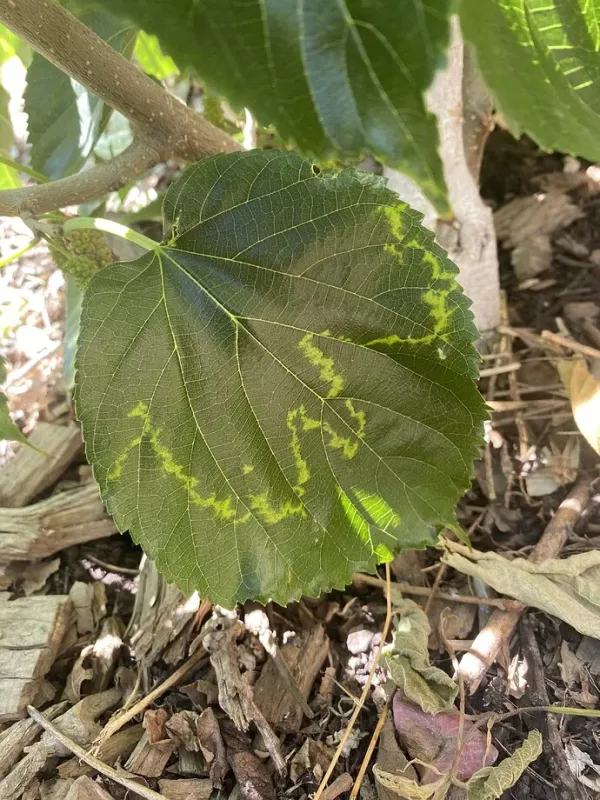
The primary external manifestation of mulberry mosaic is the appearance of a characteristic pattern on leaf blades. Leaves develop spotting, alternating between light yellow or cream areas and dark green sections, creating a mosaic effect.
As the disease progresses, marked deformation of the leaf blade occurs. Leaf margins may become wavy or curled, which significantly hinders the plant's photosynthetic capacity.
General growth suppression of the affected tree is often noted. Internodes become shortened, and shoots appear thin and weak, making infected trees visually distinct within a plantation.
In cases of severe infection, premature leaf drop may occur, which significantly weakens the tree before the winter dormancy period.
Symptoms can appear on young apical leaves or encompass the entire crown, depending on the viral strain and the susceptibility of the specific cultivar.
Pathogen
The causative agent of the disease is the Mulberry mosaic virus, which belongs to the group of plant-pathogenic viruses.
This is a systemic viral infection, where the pathogen reproduces within plant cells and spreads through the vascular tissues.
The virus persists in the tissues of perennial plants, acting as an obligate parasite that relies entirely on the host organism for survival and replication.
In natural conditions, the pathogen is most frequently transmitted through infected grafting material during pruning or propagation processes.
The virus can also be transmitted by sap-sucking insect vectors, such as aphids or mites, when they feed on healthy tissues after visiting infected plants.
Why it matters
The main danger of mulberry mosaic lies in the significant reduction of productivity, which is critical for farms involved in sericulture.
A decrease in the active leaf surface area leads to reduced nutrient accumulation, which directly impacts fruit yield and overall tree vigor.
The disease leads to a substantial weakening of the tree's immune system, making it highly susceptible to secondary infections and pest infestations.
In the long term, the virus causes premature aging of the tree and shortens its life cycle, necessitating the early removal of entire orchards.
Economic losses also stem from the reduced quality of raw materials used in the food and textile industries, as affected tissues lose their commercial properties.
Protection
The cornerstone of control is the use of healthy, virus-free planting stock that has undergone rigorous phytosanitary inspection.
It is essential to strictly follow disinfection protocols for horticultural tools after working with each individual tree to prevent mechanical transmission of the virus.
An important preventive measure involves controlling insect vectors like aphids and mites through timely and effective insecticidal treatments.
If heavily infected specimens are detected, it is recommended to completely remove them from the site and burn them to prevent the spread of the infection to healthy trees.
- Regular monitoring of orchard health during the growing season.
- Utilization of cultivars with genetic resistance to viral pathogens.
- Maintaining spatial isolation of nurseries from older, potentially infected plantations.
Discussion
No discussions yet — be the first.