
Mucilago crustacea
Mucilago crustacea
Description
Symptoms
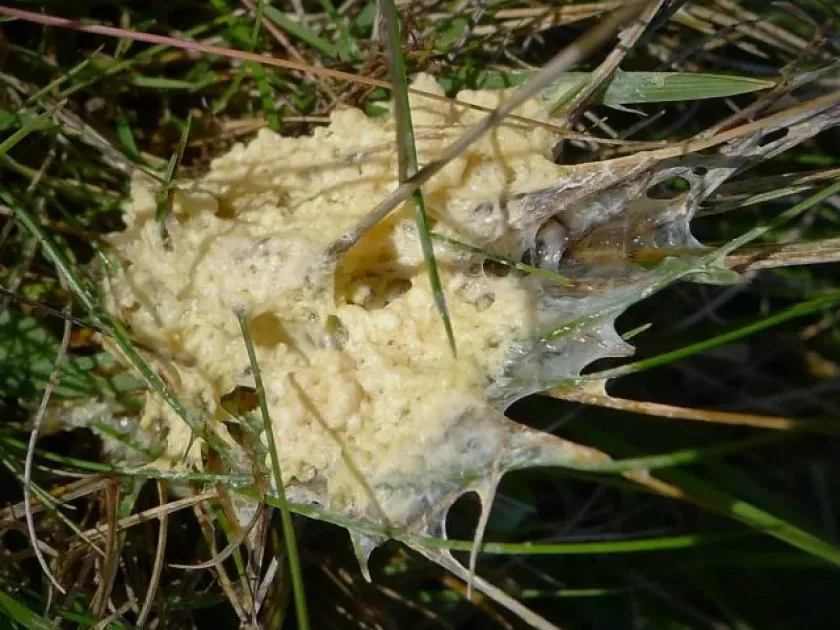
The most distinctive sign is the sudden appearance of white, foamy masses on stems, foliage, or even the surface of the soil around the plant base.
Over time, these foamy masses harden into a thick, crusty substance that may cover large areas of the plant, often appearing as if a white or grayish plaster has been applied to the stem.
Upon touching the dried crust, it often crumbles into a dark, dusty powder, which consists of millions of microscopic spores ready for dispersal by wind or water.
Plants affected by Mucilago crustacea may show signs of yellowing or wilting, primarily because the physical coverage of the stem blocks stomata and impedes gaseous exchange.
- White, frothy masses appearing on plant stems.
- Transformation of foam into a hard, shell-like crust.
- Discoloration or yellowing of the foliage near the affected area.
- Presence of a dark brown spore powder when the crust is broken.
Pathogen
Mucilago crustacea, commonly known as a type of slime mold, belongs to the class Myxomycetes. While it is not a parasitic pathogen that extracts nutrients from plants, it is frequently observed growing on stems and foliage, creating a crusty layer that interferes with normal plant physiology.
Unlike true fungi, this organism exists in a motile stage known as a plasmodium, which moves across surfaces to ingest bacteria, organic matter, and other microscopic food sources.
As the environment changes or food resources are depleted, the plasmodium concentrates to form fruiting bodies, which appear as white or yellowish crusts that later become brown and powdery.
It is important to classify this as an external colonizer rather than an internal systemic disease, as its primary impact is physical and mechanical rather than biochemical.
The life cycle is highly dependent on environmental moisture, allowing the organism to transition from a mobile state to a dormant, spore-producing state within a short timeframe.
Conditions for development
This slime mold thrives in environments characterized by high humidity, particularly following prolonged rainy periods or in locations with poor air circulation.
Gardens or fields with dense foliage and heavy, moisture-retaining soils are particularly susceptible to outbreaks, as they maintain the humidity levels required for plasmodium migration.
Temperature plays a significant role, with moderate ranges (typically 18°C to 25°C) being the most conducive to the growth and development of the plasmodium phase.
Locations near ground level, such as low-lying areas or under mulch layers, provide the ideal microclimate for the organism to establish itself before climbing onto living plants.
Excessive irrigation, especially overhead sprinkling, significantly increases the risk of the organism spreading from the soil onto the aerial parts of the vegetation.
Why it matters
The damage caused by Mucilago crustacea is primarily related to its physical presence, which blocks essential life processes such as photosynthesis and transpiration.
The crust can cause localized necrosis of the epidermal tissue by preventing oxygen exchange and trapping moisture against the stem, which may encourage secondary bacterial infections.
From a commercial and ornamental perspective, the mold creates a significant aesthetic issue, rendering flowers, fruits, or foliage unsellable due to the unsightly crusty layer.
In seedlings or sensitive plants, the pressure and coverage of the mold can cause stunting or even death if the stem is entirely girdled by the growing organism.
While the plant may survive, the reduction in overall vitality makes it more susceptible to environmental stressors and genuine pathogenic diseases.
Protection
Prevention is centered on improving air circulation, which can be achieved through proper spacing, regular pruning, and the removal of excessive leaf litter around the plant base.
Watering practices should be adjusted to keep foliage dry, preferring drip irrigation over overhead watering to prevent the spread of spores and the creation of humid conditions.
If caught early, the foamy masses can be physically washed off with a strong stream of water before they harden into permanent crusts, preventing spore formation.
In ornamental settings, fungicides containing copper can serve as a deterrent, as they create a chemical surface environment that is less hospitable to the slime mold.
Cleaning up organic debris at the end of the season is critical, as it eliminates the primary source of nutrients and the potential overwintering sites for the mold.
Discussion
No discussions yet — be the first.