
Mucilago
Mucilago
Description
Symptoms
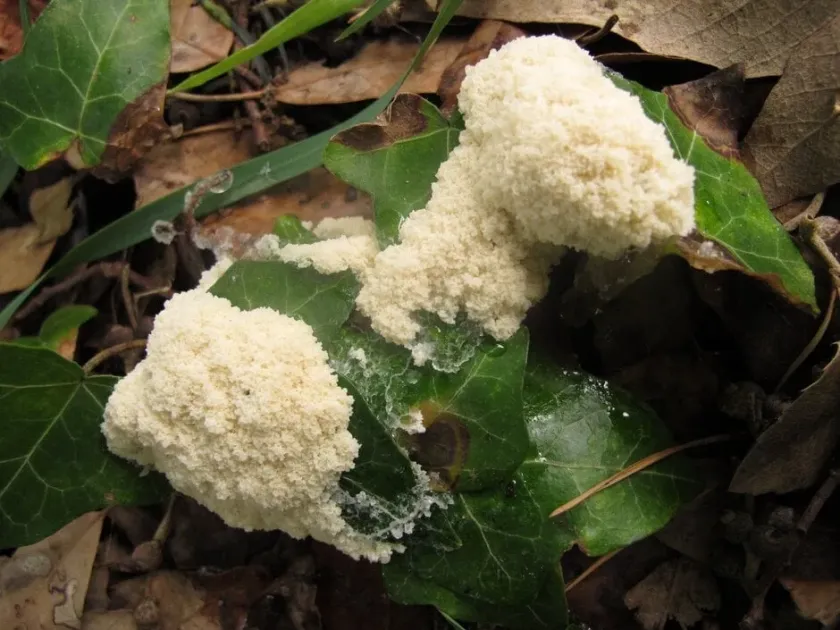
The primary symptom of this organism is the appearance of a spongy, white or yellowish mass on stems, leaves, or the soil surface, resembling foam.
Over time, this substance hardens into a crusty, greyish or brownish layer that adheres firmly to the plant tissue.
The organism does not penetrate the plant cells, but rather encrusts the surface, obstructing photosynthesis and gas exchange.
These growths are typically most visible in the early morning, especially after periods of high humidity or heavy rainfall.
The infection usually occurs in patches and does not spread systemically within the plant, remaining strictly an external issue.
Pathogen
The causative agent is Mucilago crustacea, which is classified as a myxomycete, or a slime mold, rather than a true parasitic fungus.
Biologically, it behaves as a mobile mass that feeds on bacteria and decaying organic matter on the surface of substrates.
It uses plant stems merely as a structural support to climb off the ground and complete its reproductive cycle by forming spores.
The life cycle involves a motile plasmodial stage that transitions into stationary spore-bearing structures when conditions become dry.
These spores are exceptionally resilient, allowing the organism to survive harsh environmental conditions for extended periods.
Conditions for development
High humidity and moisture are the most critical factors for the rapid development and spread of this slime mold.
Temperatures ranging from 15 to 25 degrees Celsius, combined with low sunlight, provide the perfect environment for its growth.
Accumulations of damp organic debris on the soil surface serve as a primary nutrient source and reservoir for the organism.
Poor ventilation within dense plant canopies creates stagnant, humid pockets that favor the colonization of these slime molds.
Over-irrigation or poorly drained soils contribute significantly to the persistence and recurrence of the slime mold in garden beds.
Why it matters
The main negative impact is the restriction of sunlight and air access to plant tissues, leading to reduced photosynthetic efficiency.
While not inherently toxic, the persistent moisture trapped under the crust can promote secondary infections by opportunistic bacteria.
For ornamental plants, the presence of the unsightly crust ruins the aesthetic value and marketability of the product.
Plants may exhibit slowed growth or reduced vigor due to the physical stress imposed by the encrustation on their stems and foliage.
Agricultural operations can be hindered by the presence of these molds, potentially complicating harvest or routine management tasks.
Protection
Improved sanitation practices, such as removing organic litter and plant debris, are the most effective ways to prevent colonization.
Ensuring proper plant spacing and airflow significantly reduces the humidity levels that the slime mold requires to thrive.
If detected early, the slimy masses can be easily washed off with a strong stream of water or manually wiped away without damaging the plant.
Chemical fungicides are generally ineffective against myxomycetes, so management should focus on cultural and environmental control.
Adjusting irrigation schedules and enhancing soil drainage will help create a less hospitable environment for these organisms in the long term.
Discussion
No discussions yet — be the first.