
Description
Symptoms
The primary symptom of the disease is a distinct mosaic pattern on the leaves, characterized by alternating patches of light green and dark green tissue.
Plants often exhibit leaf distortion, puckering, and blistering. In severe cases, the foliage may become thread-like or malformed, severely limiting the plant's photosynthetic capacity.
Stunting is a common observation, as the growth of internodes is significantly suppressed, leading to small, bushy plants that fail to develop properly.
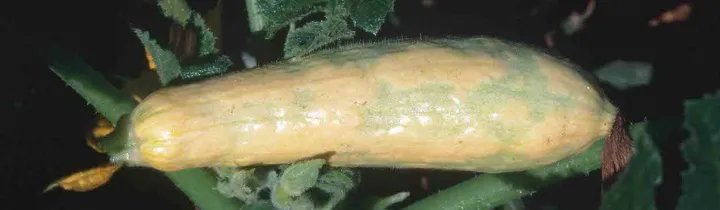
Fruit symptoms include uneven coloring, mottling, and irregular shapes. In many cases, the fruit quality is so poor that it is unmarketable for fresh consumption.
Latent infection is also possible, where the virus is present but symptoms are mild, yet the plant's overall vigor and yield potential are significantly compromised.
Pathogen
Watermelon mosaic virus (WMV) is a plant pathogenic virus belonging to the Potyviridae family. It is one of the most common and damaging viruses affecting cucurbit crops worldwide.
The virus has a positive-sense single-stranded RNA genome. It is transmitted in a non-persistent manner, primarily by various species of aphids that feed on the plant tissues.
Transmission occurs very rapidly as the aphid probes the host plant. The virus can be picked up and transmitted within seconds, making control extremely challenging.
Aside from aphids, the virus can be spread mechanically via contaminated farm equipment, pruning tools, and even through handling by farm workers during field maintenance.
Reservoir hosts, including numerous wild cucurbit weeds and perennial plants, play a significant role in maintaining and spreading the virus throughout the growing season.
Conditions for development
The development of WMV outbreaks is strongly correlated with the population dynamics of aphids. Warm, dry weather conditions usually favor the migration of these vectors.
Weeds surrounding the field act as a year-round source of inoculum. If the area is not managed properly, aphids can easily transmit the virus from these weeds to emerging watermelon crops.
Poor spatial isolation between new plantings and older, already infected fields is a major factor that facilitates the rapid spread of the virus across large areas.
Environmental stress, such as drought, nutrient deficiency, or soil compaction, exacerbates the severity of the symptoms and reduces the plant's ability to cope with the infection.
Increased humidity can influence the breeding cycle of aphid populations, potentially increasing the pressure of virus transmission in specific microclimates within the field.
Why it matters
The economic impact of the virus is significant, as it leads to substantial yield reductions. Heavily infected plants may produce no harvestable fruit at all.
Fruit quality is drastically reduced, with loss of sweetness and distorted appearance, making the product unacceptable for premium market grades.
The virus weakens the plants, making them more susceptible to secondary infections by fungi and bacteria, which can lead to premature death of the entire crop.
If not managed, the disease can quickly spread across the entire plantation, potentially causing total failure of the farming enterprise for that season.
Costs associated with constant pest monitoring and chemical applications against aphids represent an additional financial burden on farmers who have to deal with this viral threat.
Protection
The most effective strategy is the management of aphid populations through the use of systemic insecticides, especially during the early stages of plant growth.
Sanitation is critical; farmers should remove and destroy weeds and infected plants within the field to minimize the reservoir of the virus.
The use of resistant or tolerant cultivars is the best long-term approach to mitigating the damage caused by the virus, as it reduces the dependence on chemical interventions.
Maintaining good field hygiene, including disinfecting all tools used for pruning or harvesting, helps to reduce the mechanical transmission of the pathogen.
Implementing spatial barriers or using reflective mulches can help deter aphids from landing on young plants, thereby reducing the rate of initial infection during the critical early stages.
Pathogens and affected parts
Affects crops · 1
Discussion
No discussions yet — be the first.