
Moroccan watermelon mosaic
Moroccan watermelon mosaic virus
Description
Symptoms
Key symptoms include the appearance of distinct mosaic patterns, characterized by alternating light and dark green patches on leaves. Infected leaves often exhibit severe deformation, crinkling, and a leathery texture that hinders photosynthesis.
Stunted growth is a hallmark of the infection, as the virus inhibits the plant's ability to produce necessary growth hormones. In advanced stages, necrotic spots or streaks may develop on stems and petioles, leading to premature wilting.
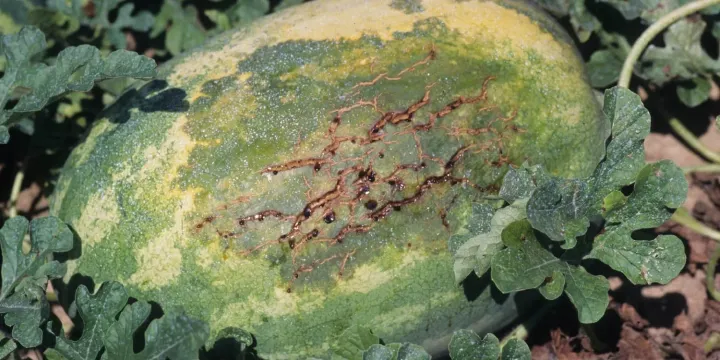
Fruit symptoms are particularly damaging to marketability, manifesting as malformation, bumpy surfaces, and irregular coloration. Often, heavy infection results in flower drop and a drastic reduction in the number of fruits set.
The severity of symptoms often depends on the timing of the initial infection; plants infected early in the season show much more profound physiological disruption. Late-season infections may appear milder but still result in reduced fruit weight and sugar content.
- Mottled and mosaic patterns on foliage
- Stunted plant height and vine development
- Leaf curling and distorted morphology
- Necrotic lesions on stems
- Deformed and unmarketable fruit
Pathogen
The causative agent of this disease is the Moroccan watermelon mosaic virus (MWMV), a member of the Potyvirus genus. It is a highly virulent plant virus known for causing significant damage to cucurbit crops worldwide.
The virus is primarily transmitted by various species of aphids in a non-persistent manner. This means that the aphids can acquire and transmit the virus after feeding on an infected plant for only a few seconds, facilitating rapid spread within a field.
Apart from insect vectors, the virus can be spread mechanically through contaminated pruning tools or during routine agricultural practices. The ability of the virus to persist in weed hosts provides a constant source of inoculum for new seasons.
The viral particle consists of a single-stranded RNA genome protected by a protein coat. Once inside the host cell, the virus hijacks the plant's machinery to replicate itself, leading to systemic infection throughout the organism.
Understanding the molecular biology of MWMV is essential for developing diagnostic tests and breeding programs. Research into the specific protein interactions between the virus and the host helps in identifying potential resistance genes.
Conditions for development
Outbreaks are heavily influenced by the presence of aphid vectors, which thrive in warm and dry weather conditions. A sharp increase in aphid populations directly correlates with the rapid dissemination of the virus across a cultivation area.
High planting densities in both field and greenhouse environments facilitate easier transmission of the virus between neighboring plants. Dense canopy cover creates a microclimate that can be attractive to insect vectors.
The presence of perennial weeds serves as a reservoir for the virus, allowing it to survive through the winter months. Fields that are not kept free of weeds are at a much higher risk of becoming infection hotspots.
Temperature fluctuations and stress factors, such as improper irrigation or imbalanced fertilization, can exacerbate the impact of the disease. While the virus itself is not affected by soil type, the vigor of the host plant is directly tied to environmental stability.
In greenhouses, the absence of natural predators for aphids and the constant movement of workers can lead to a quick, sustained epidemic. Strict environmental controls and sanitation are the only ways to manage the virus in controlled environments.
Why it matters
The primary economic impact is the massive reduction in yield and the complete loss of fruit quality. Deformed fruits are generally rejected by wholesalers and consumers, leading to significant financial loss for farmers.
The disease limits the effective productive life of the melon crop, forcing early termination of harvest. Reduced vigor also leaves plants susceptible to secondary infections by fungal pathogens or environmental stressors.
Management costs escalate significantly as growers attempt to control aphid populations and manage infected plant debris. The need for constant monitoring adds to the overall burden of labor on the farm.
Persistent presence in the environment means that farmers may need to alter their crop rotation plans, moving cucurbits to different plots of land. This complicates long-term agricultural planning and land management.
In severe epidemics, the virus can render an entire field non-productive within weeks, highlighting the need for aggressive preventative measures. The inability to cure an infected plant makes prevention the only viable strategy.
Protection
The most effective long-term strategy is the selection of genetically resistant or tolerant hybrids. Using certified, virus-free seeds is the first step in avoiding the introduction of the pathogen into your fields.
Implement an Integrated Pest Management (IPM) program to control aphid populations using biological, cultural, and chemical means. Regular spraying with systematic insecticides during peak pest activity is often required.
Practice good sanitation by removing and destroying infected plants as soon as they are spotted to reduce the inoculum load. Weeds must be controlled within and around the field to eliminate alternate hosts.
Disinfect all tools and equipment using approved sanitizing solutions to prevent mechanical transmission. Workers should be trained to identify early symptoms and take proper precautions when moving through the fields.
Consider the use of reflective mulches or crop covers in the early stages of growth to discourage aphid colonization. Proper field spacing and site selection away from older infected crops are also recommended tactics.
Discussion
No discussions yet — be the first.