
Description
Symptoms
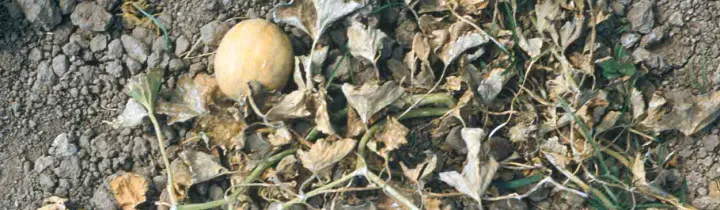
Initial symptoms are usually observed during the fruiting stage, characterized by a sudden wilting of the vines during the hottest part of the day.
As the disease progresses, the leaves turn yellow and eventually wither, causing the entire plant to collapse even if it appeared healthy earlier.
Examination of the root system reveals significant necrosis, with dark brown or black lesions and the presence of pinhead-sized perithecia on the root surface.
In severely affected fields, plant mortality leads to patches of dead vegetation scattered across the production area.
The reduced root mass prevents the plant from maintaining its physiological functions, leading to poor fruit development and significant yield reduction.
Pathogen
The disease is caused by the fungus Monosporascus cannonballus, which is a soil-borne pathogen belonging to the Ascomycota division.
This fungus is characterized by the production of perithecia, which are dark, spherical reproductive structures that persist in the soil for several years.
These structures are highly resistant to environmental stress, allowing the fungus to survive even in the absence of a suitable host crop.
The pathogen primarily affects the root systems of cucurbits, including melons, cantaloupes, and watermelons, causing severe vine decline.
Upon infection, the fungus colonizes the root cortex, destroying the vascular tissue and blocking the plant's ability to transport water and nutrients.
Conditions for development
Monosporascus species thrive in high-temperature environments, with optimal infection occurring in soils ranging from 25 to 30 degrees Celsius.
Intensive agricultural practices that involve continuous cropping of cucurbits accelerate the accumulation of the pathogen in the soil.
High soil salinity and excessive irrigation are known to stress host plants and facilitate the rapid spread of the fungus within the root zone.
The pathogen is easily disseminated between fields via contaminated soil transported by machinery, equipment, or flowing rainwater.
The longevity of the perithecia in the soil ensures that the disease remains a persistent threat in areas with suitable climate conditions.
Why it matters
The primary impact of the disease is a significant loss of marketable yield due to fruit size reduction and total plant death.
Infected plants produce fruits of low quality, often lacking sufficient sugar content and overall size, which renders them unsellable.
Economic damage is exacerbated by the long-term nature of the infection, which forces farmers to abandon traditional cucurbit growing areas.
Vine decline caused by this fungus can lead to total crop failure, leading to severe financial losses for producers and regional production instability.
The disease weakens the plants, making them more susceptible to other soil-borne pests, effectively destroying the entire production potential of a field.
Protection
Cultural control through long-term crop rotation is essential, often requiring a rest period of 5 to 7 years between cucurbit crops.
The use of grafting is a highly effective strategy, where susceptible melons are grafted onto resistant rootstocks to mitigate the impact of the fungus.
Soil fumigation prior to planting is an effective but costly method to significantly reduce the fungal spore population in the soil.
Sanitation practices, such as the complete removal and destruction of crop residues after harvest, are vital to minimize the survival of the pathogen.
- Implementing strict quarantine protocols for soil movement between fields.
- Choosing tolerant or resistant varieties where available.
- Using biological control agents to protect the root zone environment.
Pathogens and affected parts
Affects crops · 1
Discussion
No discussions yet — be the first.