
Monographella
Monographella
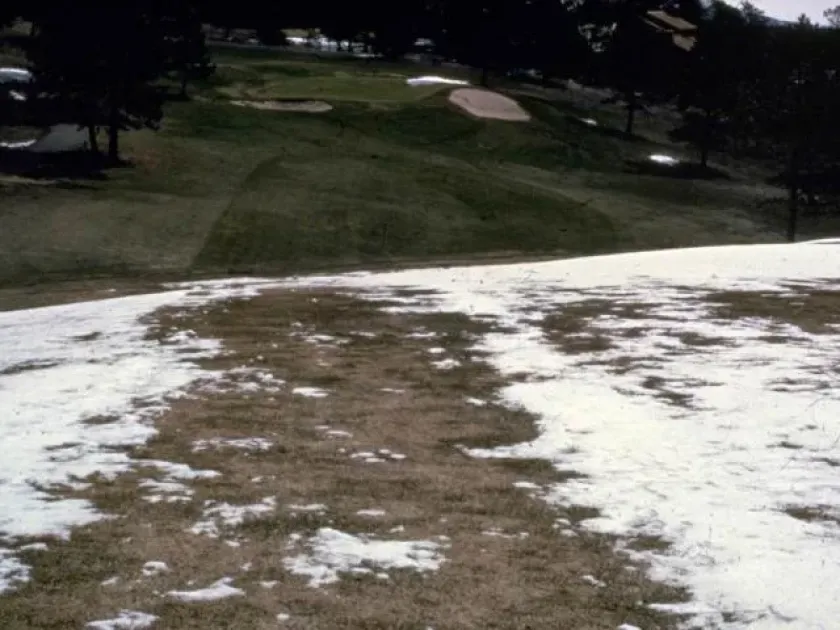
Description
Symptoms
The most visible symptom of the disease is a whitish, pinkish, or grayish mycelial mat that forms on the leaves and stems of the infected plants.
Early signs include the yellowing and wilting of the lower leaves, which eventually turn necrotic as the infection progresses throughout the plant structure.
Dark necrotic lesions often appear on the crowns and stem bases of affected plants, which restricts nutrient uptake and destabilizes the plant's structural integrity.
Infected areas of the field often show patches of dead or weak plants that failed to recover after the winter season, revealing gaps in the crop canopy.
- Whitish-pink mycelium on leaves.
- Necrotic brown lesions on stem bases.
- Stunted plant growth and leaf chlorosis.
- Decomposition of leaf tissues in moist conditions.
Pathogen
The causative agent of this disease is the ascomycete fungus Monographella nivalis, which is commonly recognized in its conidial stage as Fusarium nivale. This pathogen is specialized in infecting cereals under cool and wet conditions.
The fungus affects various winter cereal crops, including wheat, rye, and barley. It is capable of surviving in the soil on infected plant residues for extended periods.
The primary source of infection includes contaminated seeds and debris left over from previous harvests, which harbor the fungal spores until favorable weather arrives.
The biological profile of this pathogen allows it to thrive in low-temperature environments, often becoming active immediately following the melting of snow in early spring.
The fungal mycelium invades plant tissues, causing systemic physiological stress that often results in stunted growth or the total collapse of the stems.
Conditions for development
The development of Monographella infection is heavily dependent on specific environmental conditions, particularly persistent high humidity coupled with cold temperatures.
Prolonged autumn seasons with frequent rainfall and mild winters where the soil remains unfrozen under a thick snow cover are highly conducive to the pathogen's spread.
Fluctuating temperatures during winter thaws weaken the winter hardiness of the crops, making them significantly more susceptible to fungal colonization.
Fields with high planting density and poor air circulation create a localized microclimate that traps moisture, promoting rapid fungal growth at the soil level.
Over-fertilization with nitrogen before winter dormancy leads to excessive vegetative growth, which lacks sufficient strength to resist fungal attacks during the cold months.
Why it matters
The primary economic impact of this disease is the thinning of crop stands, which leads to a direct and significant reduction in potential grain yield.
Infected plants suffer from inhibited tillering capacity, causing the stand density to fall below the levels required for optimal harvest performance.
In severe cases, the disease can lead to widespread plant mortality, requiring expensive replanting of entire field sections to recover the production losses.
Plants that survive the infection are often weakened, making them easier targets for subsequent secondary infections or opportunistic pests throughout the growing season.
The financial losses are compound, involving not only the reduction in harvested volume but also the increased investment in chemical rescue treatments.
Protection
The most effective strategy is the systematic application of high-quality seed treatments containing broad-spectrum fungicides prior to the sowing season.
Implementing a strict crop rotation strategy is essential to break the infection cycle by removing the host plants from the field for several years.
Ensuring optimal sowing dates allows for plants to establish a healthy root system and enter dormancy with sufficient reserves to withstand early spring stressors.
Balancing nutrient applications by focusing on phosphorus and potassium fertilizers can improve plant vigor and winter hardiness against fungal pathogens.
Regular field scouting in early spring is necessary; if symptoms are identified, prompt application of foliar fungicides can effectively halt the progression of the disease.
Discussion
No discussions yet — be the first.