
Monilia
Monilia
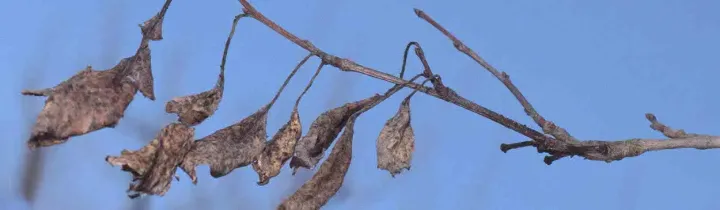
Description
Symptoms
The first symptom is blossom wilt, where flowers and young shoots suddenly droop, brown, and wither, resembling damage caused by fire or severe frost.
As the disease progresses, fruits develop brown rot spots that expand rapidly until they consume the entire fruit, turning it into a soft, rotten mass.
Small, powdery, greyish-tan tufts appear on the skin of the fruit, often arranged in concentric circles; these are the fruiting structures releasing new spores.
Infected fruits eventually lose their moisture, harden, and become shriveled, dark "mummies" that remain firmly attached to the branches throughout the winter.
Cankers often form on twigs and branches, sometimes accompanied by excessive sap exudation (gummosis), eventually leading to the dieback of the limb.
Pathogen
Monilia is a genus of fungi (family Sclerotiniaceae) responsible for severe plant diseases known as blossom wilt and brown rot. The most common species are Monilia fructigena and Monilia cinerea.
The fungus overwinters as mycelium in infected twigs, branches, or mummified fruits left on the tree or fallen on the ground during the cold season.
In spring, the pathogen produces conidia that are spread primarily by wind, rain splashes, and insects, infecting the plant through blossoms and small wounds.
It primarily attacks stone fruits such as cherries, plums, apricots, and peaches, as well as pome fruits like apples and pears during wet weather.
Once inside the host tissue, the fungus secretes enzymes that decompose plant cells, leading to rapid necrosis and decay of the affected areas.
Conditions for development
Monilia thrives in cool, wet, and humid conditions, particularly during the critical bloom period when temperatures range between 15°C and 20°C.
Prolonged spring rains, heavy morning dews, and high air humidity create an optimal environment for fungal germination and host tissue penetration.
Poor orchard sanitation, such as leaving mummified fruits on trees or debris on the ground, provides a continuous reservoir for reinfection each year.
Lack of proper pruning leads to dense foliage and poor air circulation, which prevents the drying of leaves and flowers, facilitating fungal growth.
Mechanical damage caused by insects, hail, or birds makes the fruit skin vulnerable, allowing the pathogen to enter the soft, sugary tissue easily.
Why it matters
The primary harm is the drastic reduction in marketable yield, which can lead to complete crop failure in severe epidemic years.
Blossom wilt causes significant damage to the plant's reproductive potential, while chronic infections lead to the dieback of structural branches.
Affected fruits are completely ruined and cannot be used for fresh consumption, storage, or processing, causing heavy economic losses for growers.
Monilia forces growers to rely on intensive fungicide programs, increasing production costs and leaving chemical residues on the final produce.
The disease weakens the overall vigor and longevity of the trees, making them more susceptible to secondary pests and environmental stressors.
Protection
Rigorous sanitation is the cornerstone of control: all diseased twigs, branches, and mummified fruits must be removed and destroyed by burning.
Apply protective fungicide treatments at critical stages, specifically during the "green tip" phase and immediately after the petal fall.
Control insect populations that cause physical damage to the fruit, as these wounds are primary entry points for Monilia spores.
Implement proper pruning strategies to open up the canopy, improving sunlight penetration and air circulation to keep humidity levels low.
- Sanitary pruning of dead or diseased branches.
- Removal and disposal of all mummified fruits.
- Timely application of copper-based fungicides.
- Monitoring for pest damage throughout the growing season.
- Ensuring healthy soil and balanced tree nutrition.
Discussion
No discussions yet — be the first.