
Metatrichia floriformis
Metatrichia floriformis
Description
Symptoms
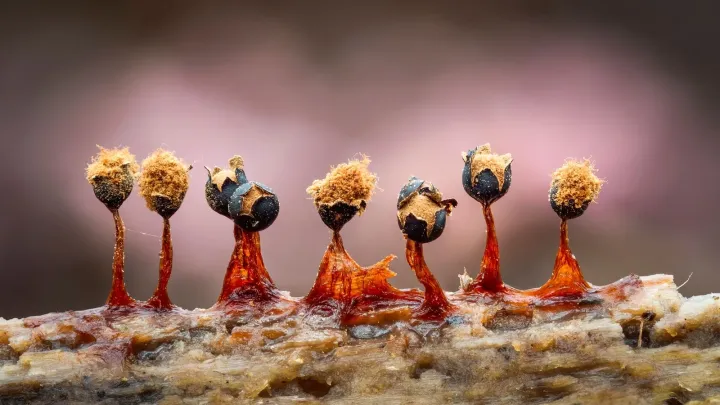
The most prominent sign of Metatrichia floriformis is the formation of small, urn-shaped sporocarps that are typically reddish-brown or orange.
These fruiting bodies often cluster together on the lower stems, leaf bases, or even soil surfaces adjacent to the plant.
At maturity, these structures can look like tiny flowers or ornaments, which is how the species earned its specific epithet floriformis.
When disturbed, these structures release a fine, brown or reddish powder, which consists of millions of microscopic spores.
The plant surface itself remains physically intact beneath the slime mold, as there is no penetration into the vascular system or parenchyma cells.
Pathogen
Metatrichia floriformis is a species of slime mold belonging to the family Trichiaceae. Unlike pathogenic fungi, it is a myxomycete that operates through a complex life cycle.
In its plasmodial stage, it is a mobile organism that feeds on microorganisms and decaying organic matter found in the soil or plant debris.
It is not a parasite in the traditional sense, as it does not actively feed on the living tissues of the host plant but rather uses the plant as a surface for sporulation.
The organism reproduces through spores, which are highly resilient and can be dispersed by wind, rain splashes, or insects over large distances.
Because it is a saprotroph, its presence on a plant is typically a byproduct of poor sanitation and a damp, nutrient-rich environment near the plant base.
Conditions for development
High relative humidity and poor air circulation are the primary environmental drivers that facilitate the growth and sporulation of this myxomycete.
The accumulation of decaying plant matter, such as fallen leaves or excessive mulch, provides the necessary food source for the plasmodium stage.
Stagnant water near the root zone or constant dampness on the lower foliage significantly increases the likelihood of colonization.
Moderate temperatures ranging from 15°C to 25°C provide the metabolic energy required for the rapid transition of the organism into its fruiting phase.
Overcrowded plantings that prevent sunlight from reaching the ground keep the environment cool and moist, promoting the development of the mold.
Why it matters
While Metatrichia floriformis is not a plant pathogen, it can cause harm by physically covering photosynthetic surfaces and blocking light absorption.
The aesthetic value of ornamental plants is severely diminished by the presence of these conspicuous sporocarps, making the plants unsellable.
Large colonies can be alarming to growers and consumers, often leading to unnecessary panic regarding the health of the entire crop.
The organism can act as a carrier, inadvertently transporting harmful bacteria or fungal spores on its surface to vulnerable plant tissues.
Its presence is a clear indicator of poor greenhouse or field management, suggesting that the current microclimate is also suitable for genuine plant diseases.
Protection
Management focuses on sanitation: removing all decaying organic matter and debris from the base of the plants is the most effective preventative measure.
Improving airflow through proper plant spacing and pruning helps to lower humidity levels and dries out the substrate faster.
Adjusting irrigation systems to avoid wetting the foliage and reducing soil moisture will discourage the formation of slime mold clusters.
Manual removal of infected plant parts and their immediate disposal can help contain an infestation if discovered in the early stages.
While chemical fungicides are generally unnecessary for this organism, keeping the environment clean is the best way to ensure it does not return.
Discussion
No discussions yet — be the first.